
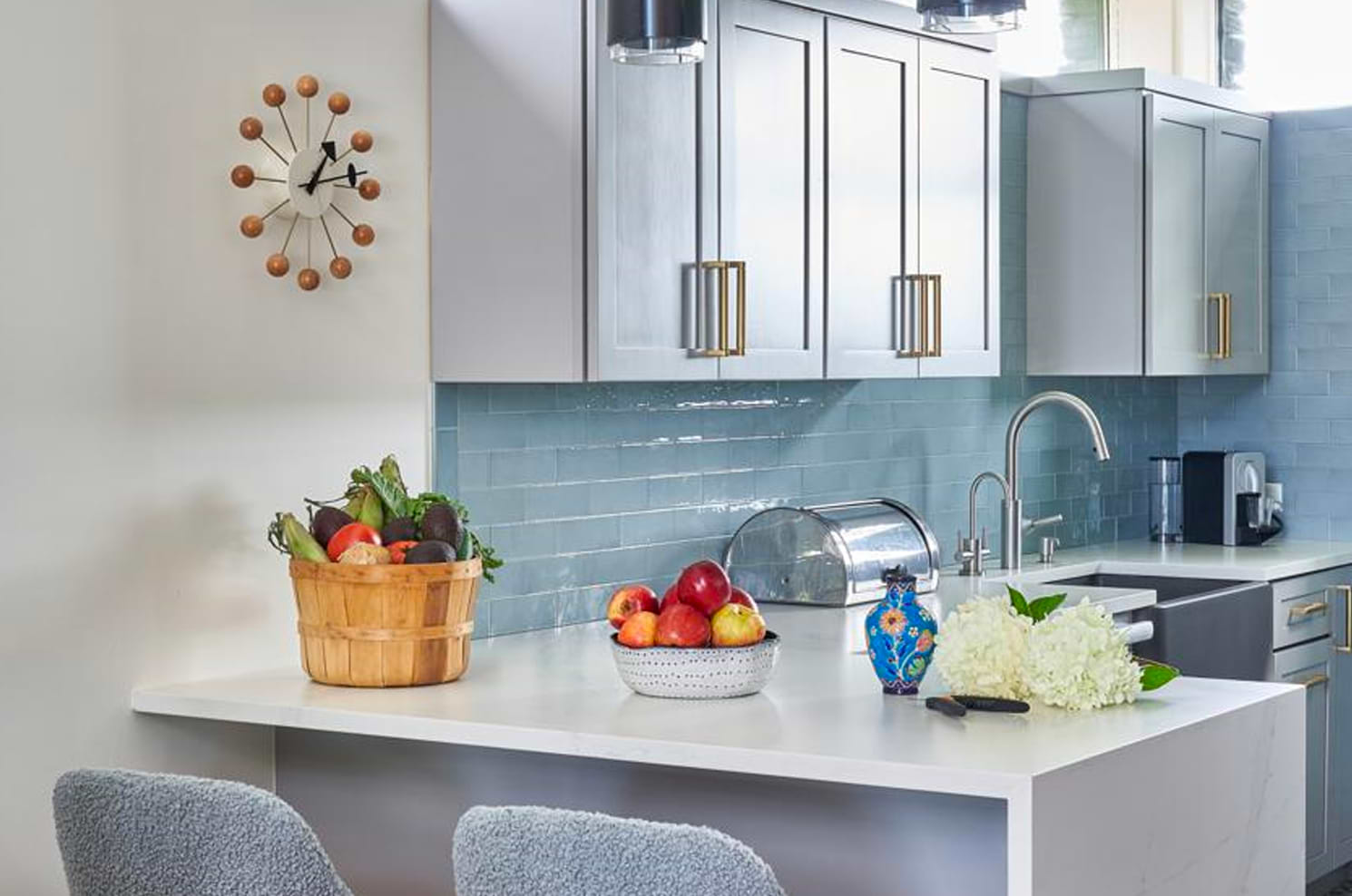
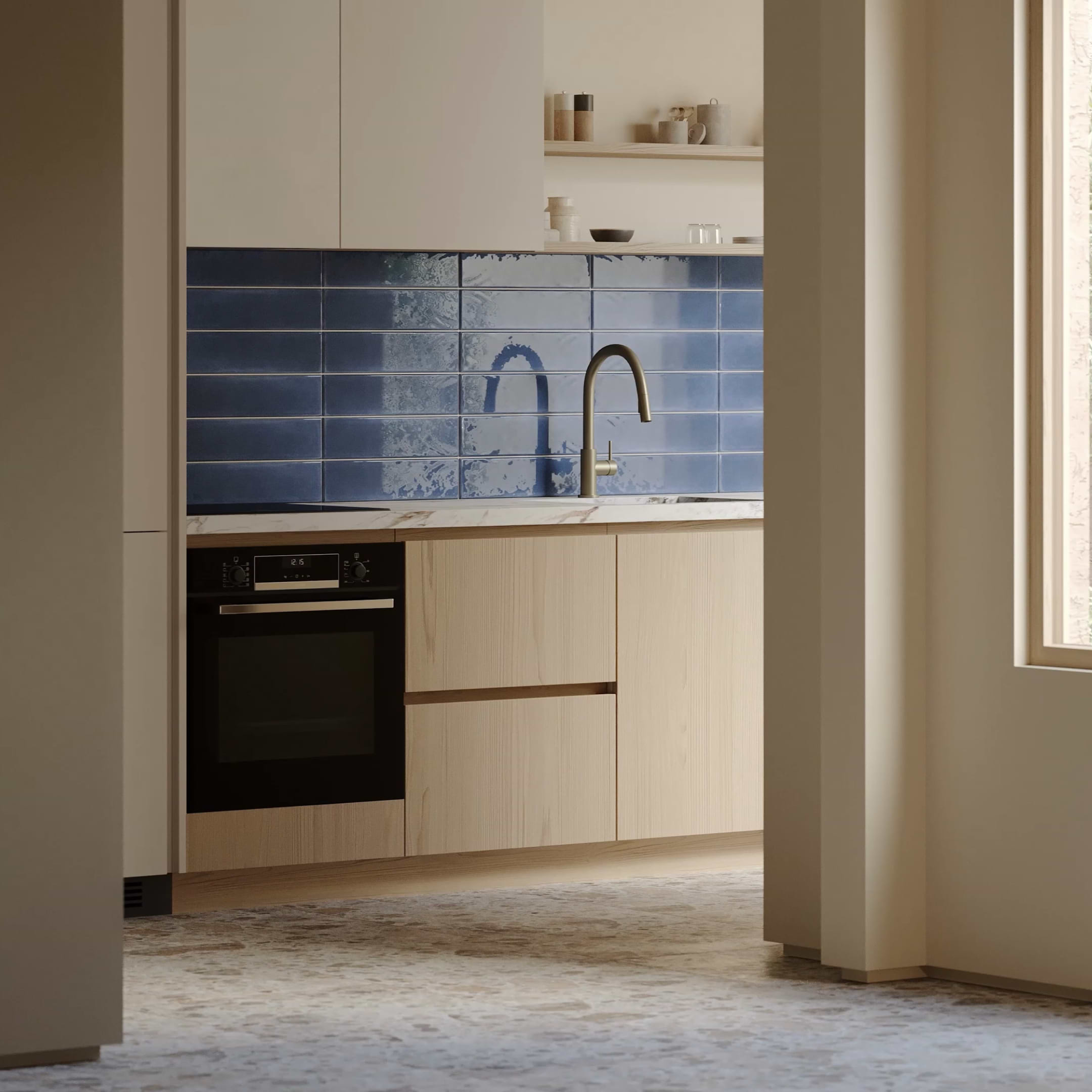

Blue tile continues to be one of the most versatile surface choices in residential design, offering a wide spectrum that ranges from soft, neutral-adjacent tones to deeply saturated statement hues. Whether used as a backsplash, shower wall, or feature surface, blue tile introduces color in a way that feels both timeless and highly adaptable.
From kitchens to bathrooms, blue tile balances visual interest with design longevity — making it equally suited to classic interiors and contemporary spaces.
Why Choose Blue Tile for Your Home?
Color has a measurable impact on how a space feels, and blue offers one of the broadest emotional ranges in interior design. Lighter shades such as powder blue, sky, and pale aqua create openness and calm, while deeper tones like navy, cobalt, and indigo introduce depth and visual impact.
Material pairing also plays a significant role in blue tile’s popularity. It works comfortably alongside warm woods, natural stone, marble, and brushed metals, allowing it to evolve with changing styles rather than feeling trend-specific.
What Styles of Blue Tile Are Popular Right Now?
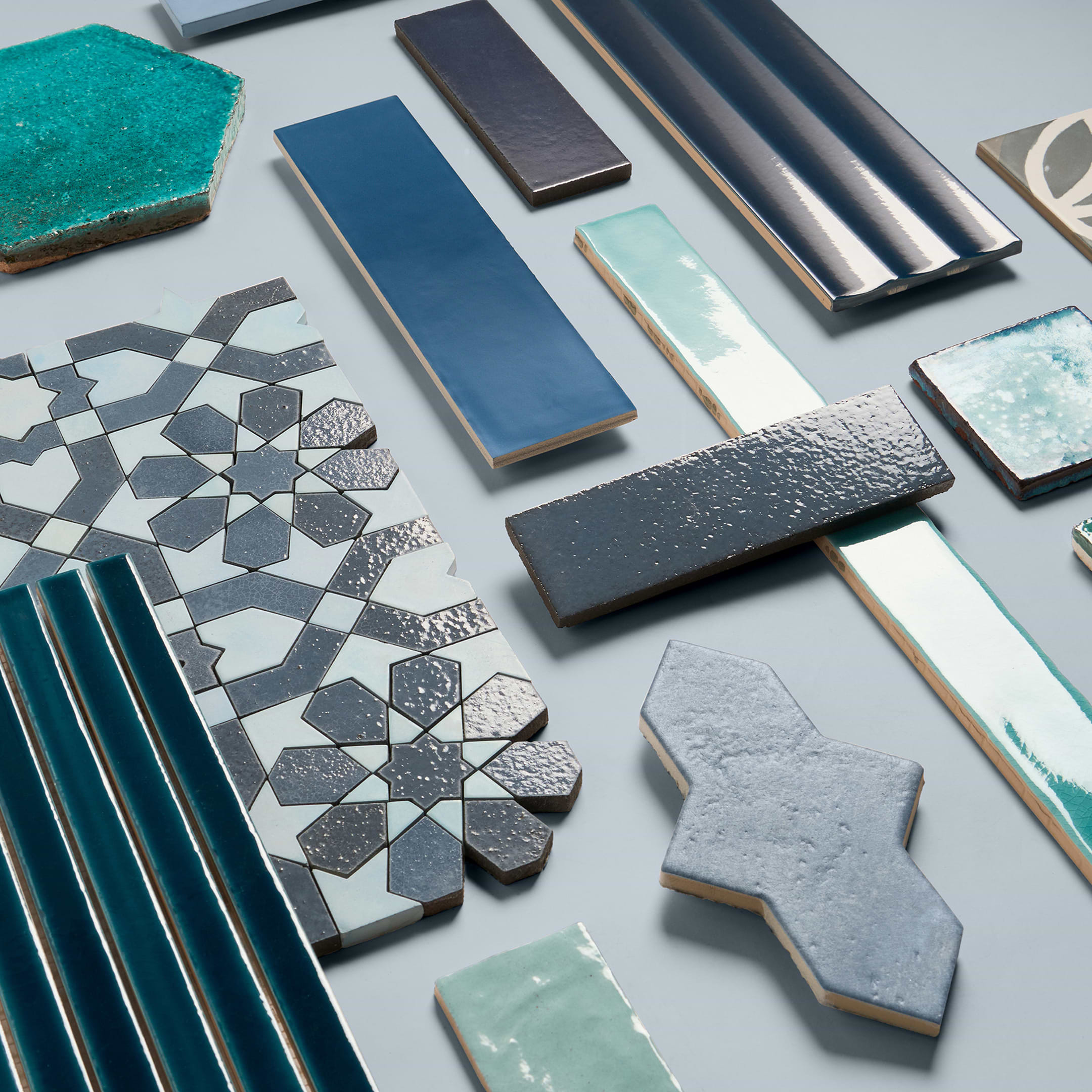
Modern blue tile design extends far beyond uniform glossy surfaces. Current trends emphasize variation, texture, and material character.
- Soft and airy blues: Powdery tones, misty blue-grays, and pale aqua create calming environments that function almost like refined neutrals.
- Classic navy and saturated tones: Deep blues such as indigo and cobalt introduce richness while maintaining timeless appeal.
- Artisanal and handcrafted looks: Subtle tonal variation, irregular edges, and glaze bring warmth and visual depth that feel collected rather than manufactured.
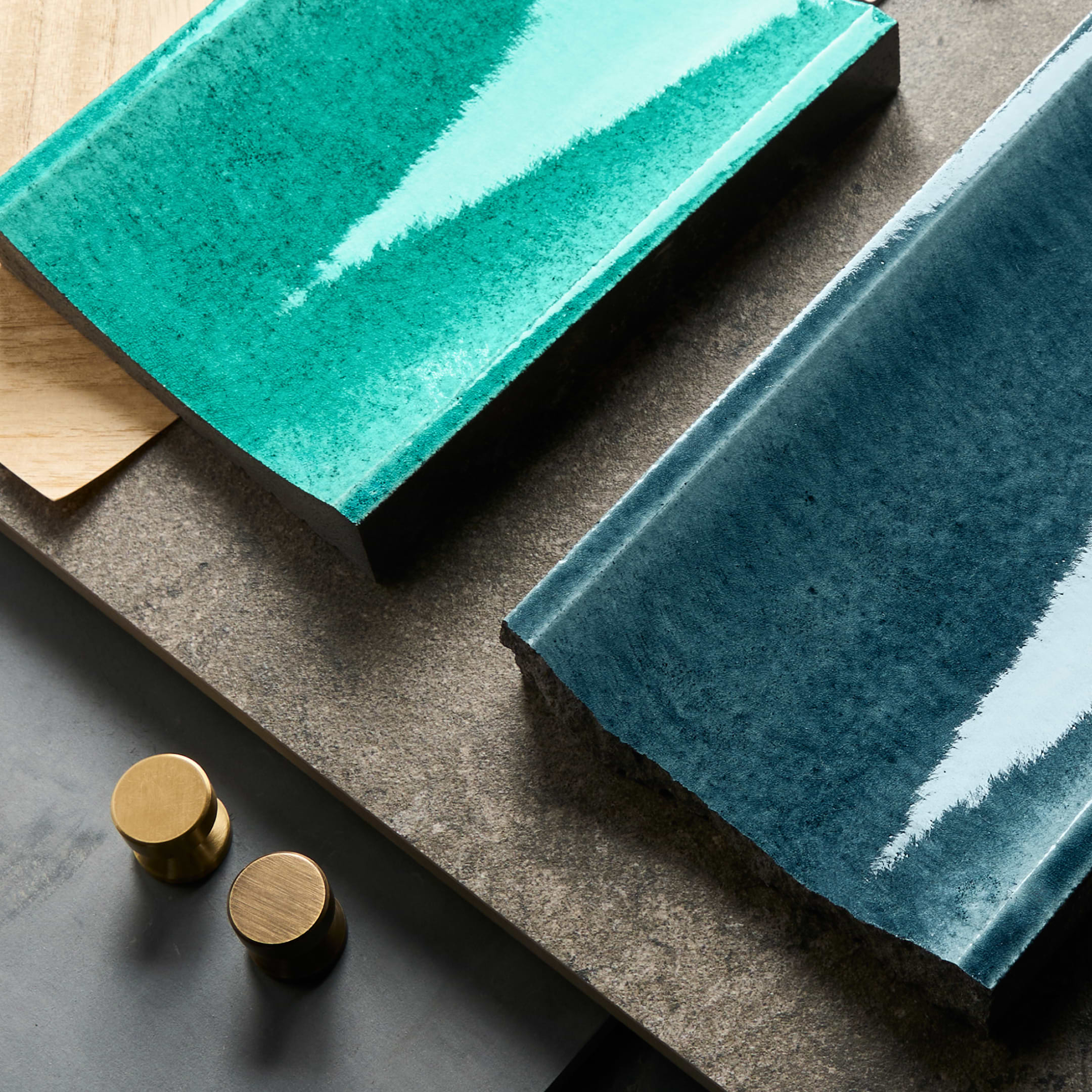
- Textured and dimensional surfaces: Fluted profiles, beveled edges, and sculptural relief patterns add depth and architectural interest.
- Matte and satin finishes: Softer surface finishes are increasingly popular for their refined, contemporary appearance and understated elegance.
How Can You Use Blue Tile in a Kitchen?
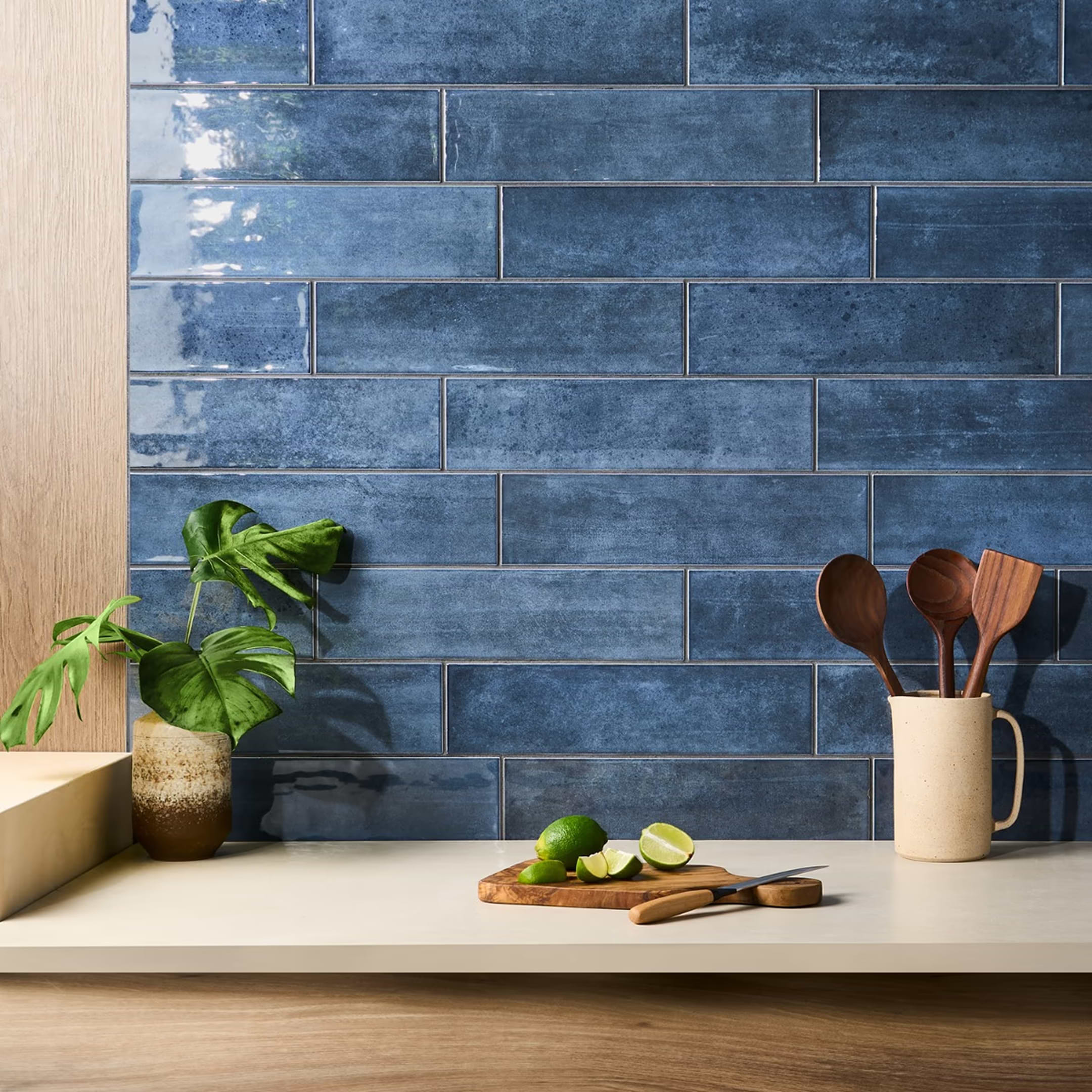
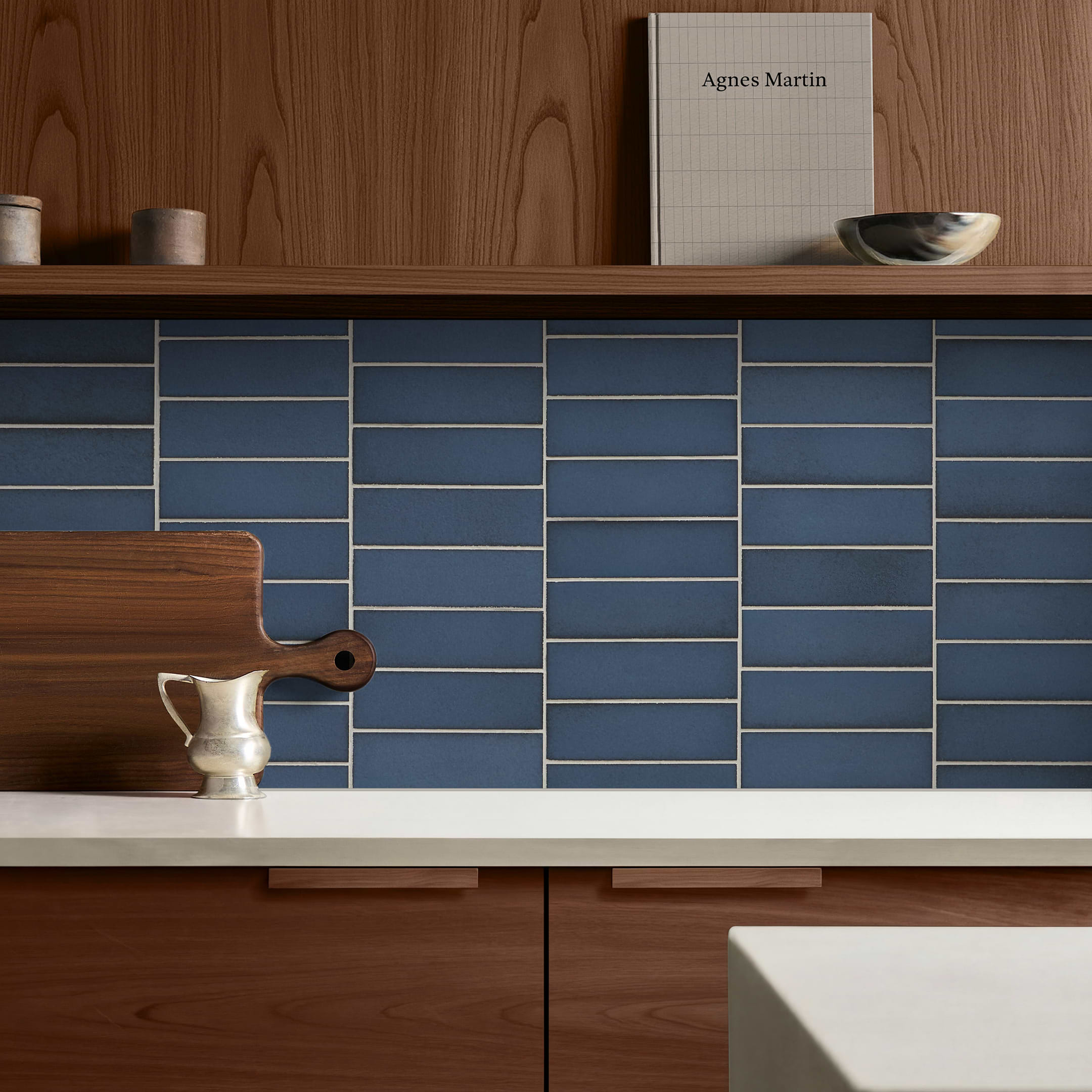
Blue kitchen tile offers flexibility across design styles, from traditional to modern. Lighter tones can act as a sophisticated neutral backdrop, particularly when paired with natural wood cabinetry or warm metallic finishes. Darker blues, on the other hand, introduce contrast against white or light cabinetry, creating a more defined and architectural look.
Layout choice significantly influences the final aesthetic. Traditional offset patterns deliver classic appeal, while vertical stacks, straight-set installations, or herringbone layouts introduce a more tailored, contemporary feel.
Extending blue tile beyond the backsplash — such as wrapping a full range wall or continuing into adjacent shelving areas — creates visual continuity and elevates the overall design.
How Does Blue Tile Work in Bathrooms?
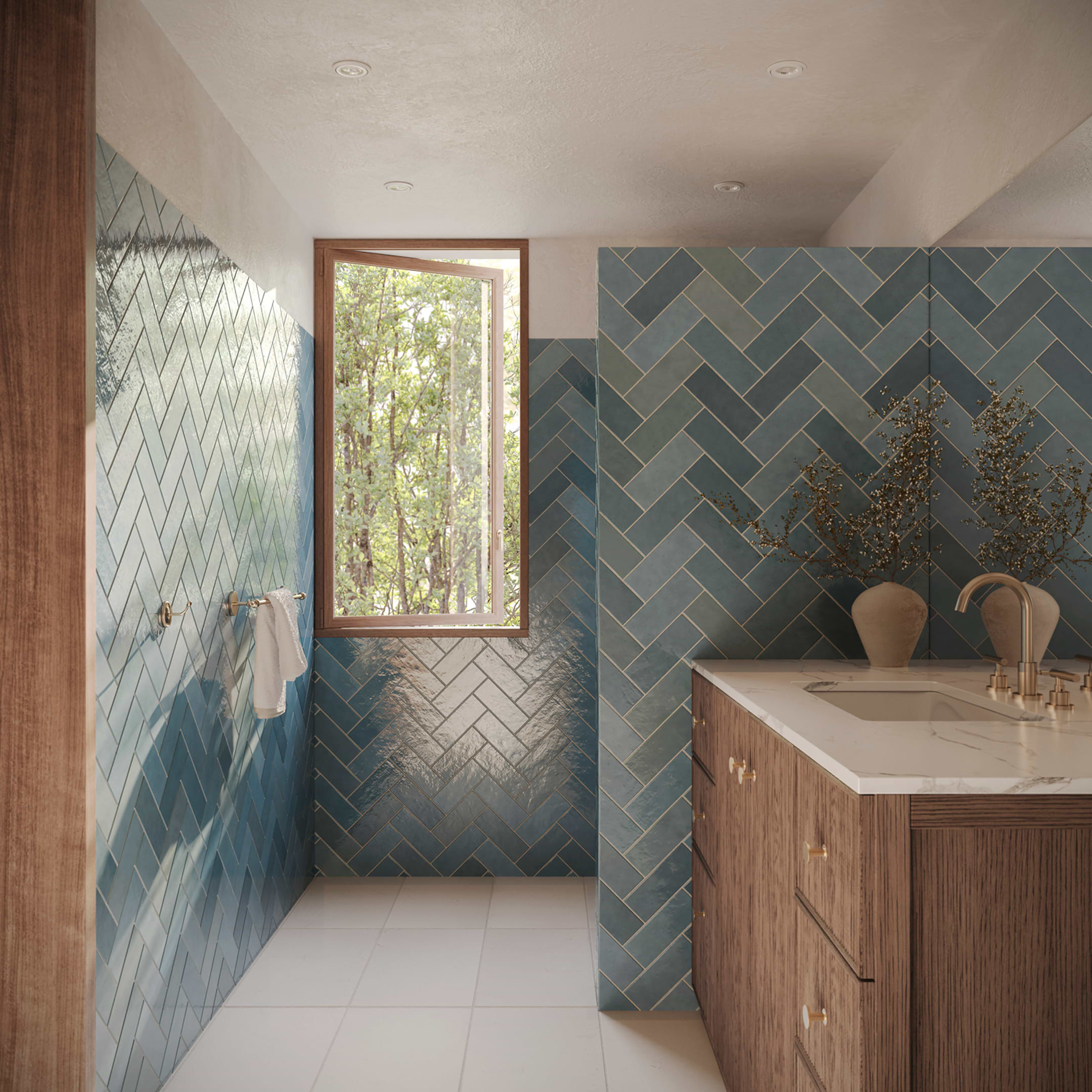
Blue bathroom tile feels naturally aligned with water-focused spaces, but today’s designs move beyond coastal themes into more refined territory. Soft tones create spa-like calm, while deeper hues introduce contrast and depth to showers, vanities, and accent walls.
Because tile formats allow flexibility around niches, corners, and fixtures, blue tile can be installed across full-height surfaces for a cohesive architectural effect. Pairing blue tile with stone, terrazzo, or neutral porcelain flooring helps balance color with material warmth.
What Colors Pair Well with Blue Tile?
Blue tile works across a wide range of material palettes, making it adaptable to different design directions.
- Warm wood tones add organic contrast and prevent cooler hues from feeling sterile.
- White and cream create a crisp, classic palette.
- Brass and champagne bronze introduce warmth and sophistication.
- Black accents provide modern definition and structure.
- Marble and natural stone soften the overall look with a layered texture.
- Combining multiple blue tones adds depth while maintaining cohesion.
Thoughtful material pairing ensures the blue tile feels integrated rather than overpowering.
Is Blue Tile Easy to Maintain?
Blue tile offers the same durability and low maintenance as other ceramic and porcelain surfaces. Routine cleaning with a non-abrasive household cleaner keeps surfaces looking fresh, while properly sealed grout helps protect against staining in wet environments like showers and backsplashes.
Gloss finishes tend to reflect light and wipe clean easily, while matte finishes may require slightly more attention but offer a softer aesthetic. With proper installation and care, blue tile maintains both its appearance and performance for years.
FAQ: Common Questions About Blue Tile
Is blue tile still in style?
Yes. Blue tile remains consistently popular because it spans a wide range of tones — from soft, neutral-adjacent hues to bold saturated shades — making it adaptable across design styles. Classic tones like navy and cobalt offer longevity, while lighter blues provide a fresh, contemporary feel.
What color cabinets pair best with blue tile?
Blue tile works well with both light and dark cabinetry. White and light wood create contrast and brightness, while warm wood tones add depth and balance. Dark cabinetry can create a more dramatic, architectural look when paired with saturated blues.
Does blue tile make a space feel smaller?
Not necessarily. Lighter blues can actually make spaces feel more open and airy, similar to soft neutrals. Darker blues add depth and can create a sophisticated focal point, especially when balanced with lighter surrounding materials and good lighting.
Is blue tile hard to maintain?
Blue tile is generally easy to maintain, particularly porcelain and ceramic options. Routine cleaning with a non-abrasive cleaner keeps surfaces looking fresh. Grout maintenance depends more on grout type and sealing than tile color.
What finishes work best for blue tile?
Gloss finishes reflect light and are often used on walls and backsplashes to brighten a space. Matte and satin finishes offer a softer, more contemporary look and can be ideal for floors or areas where slip resistance is important.
Can you mix different blue tiles in one space?
Yes. Mixing tones and textures within the same color family creates depth while maintaining cohesion. Combining a patterned or textured tile with a more subtle field tile is a common approach.
Final Thoughts: Why Blue Tile Remains a Design Favorite
Blue tile continues to resonate because it combines familiarity with flexibility. From subtle tonal surfaces to bold architectural statements, it adapts effortlessly across kitchens, bathrooms, and living spaces.
Whether used as a quiet backdrop or a defining feature, blue tile introduces color, depth, and lasting character — making it a reliable choice for both timeless and contemporary interiors.