
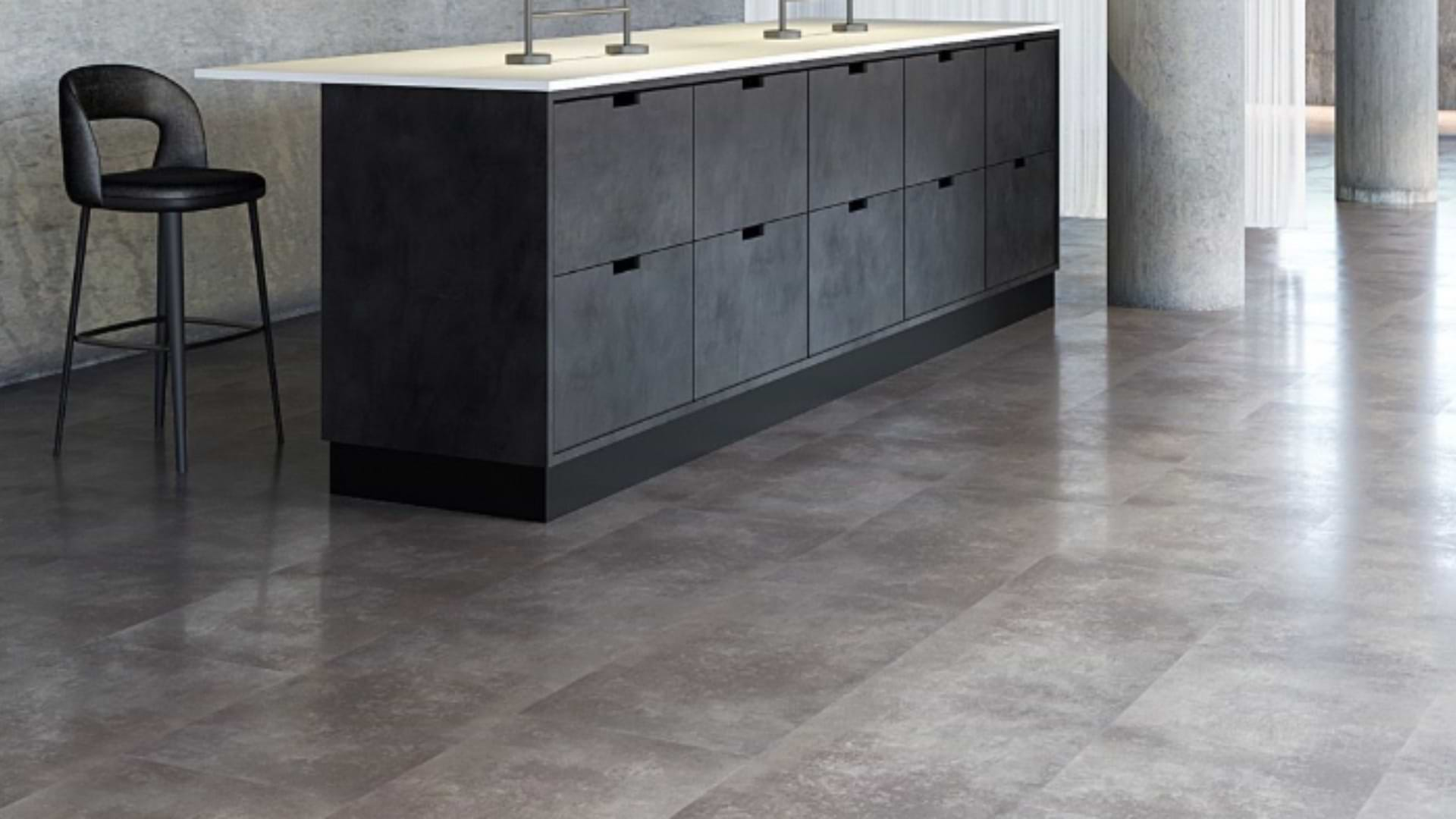
Concrete-look vinyl flooring captures the visual and textural appeal of concrete while offering a more flexible, design-friendly option. With subtle tonal variation and a clean, architectural feel, it provides a modern foundation without the hassle of traditional concrete installation. Built to perform in both residential and commercial spaces, this flooring combines durability, comfort, and moisture resistance with the sleek look of cement.
In this guide, we’ll explore styles, benefits, and installation tips for transforming your space with durable, contemporary concrete-look vinyl flooring.

What Are the Benefits of Concrete-Look Vinyl Flooring?
Concrete-look vinyl flooring offers a range of benefits that make it both practical and stylish. It’s budget-friendly without sacrificing the look of concrete, making it a smart choice for high-traffic areas, busy households, and spaces where you want the sleek appeal of concrete without the hassle of traditional installation.
-
Timeless and durable
Engineered for daily use, vinyl flooring resists scratches, dents, and moisture, making it well-suited for kitchens, basements, entryways, and high-traffic interiors.
-
Comfort underfoot
Unlike traditional concrete, vinyl offers a warmer, more forgiving surface underfoot—an important consideration for livable, long-term installations.
-
Designed for moisture-prone areas
Many concrete-look vinyl floors are water-resistant or waterproof, allowing for confident use over concrete subfloors where moisture can be a concern.
-
Versatile design
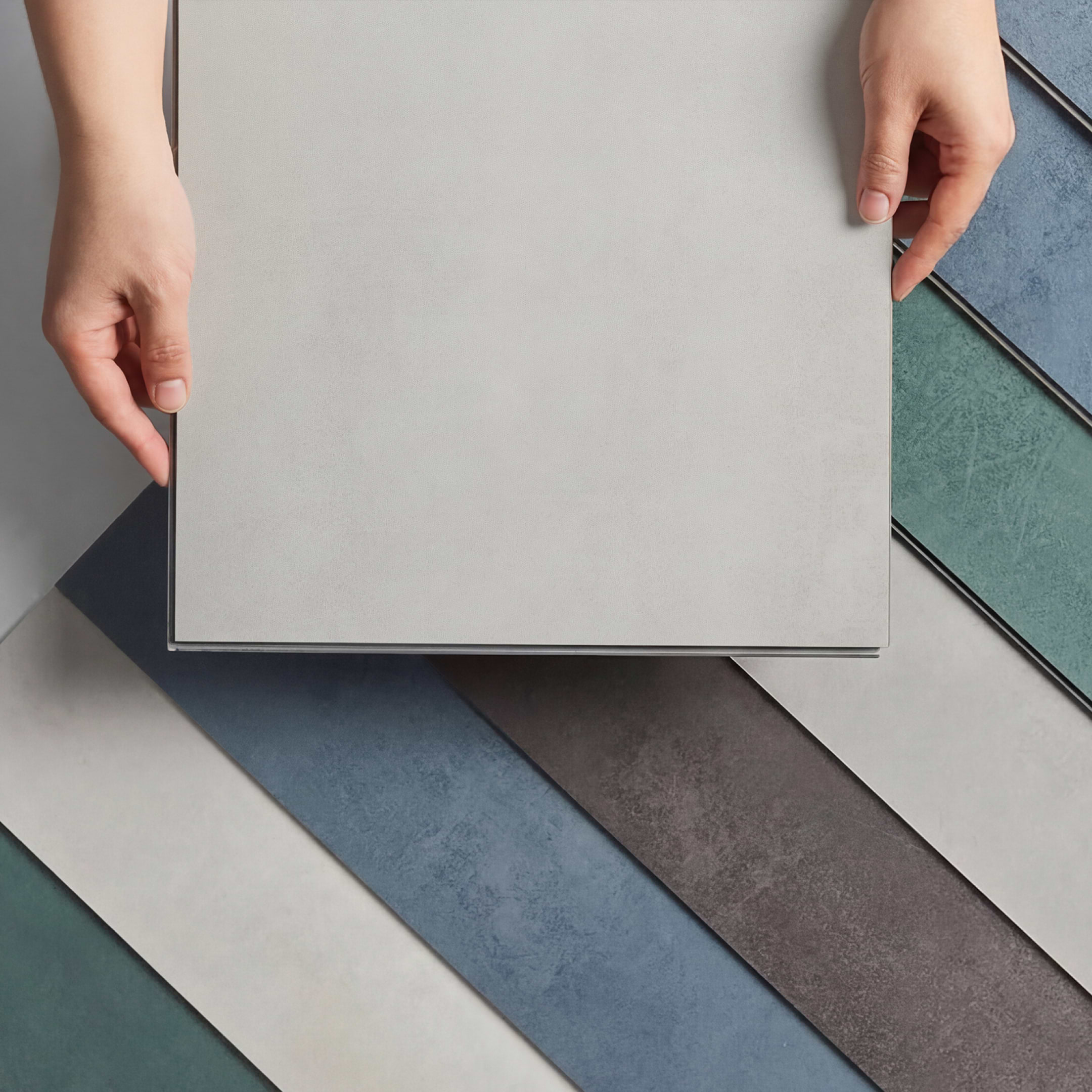
Available in a range of cement-inspired tones, from cool industrial grays to softer neutral variations, concrete-look vinyl flooring supports a wide spectrum of interior styles without overwhelming the design.
Comparing Concrete-Look Vinyl to Other Flooring Options
-
Concrete-look vinyl vs. real concrete
Vinyl delivers the same modern aesthetic with faster installation, greater comfort, and reduced maintenance—without sealing or polishing.
-
Concrete-look vinyl vs. porcelain tile
Porcelain offers durability but can feel colder and harder underfoot. Vinyl provides a softer alternative while maintaining a similar visual language.
-
Concrete-look vinyl vs. laminate
Concrete-look vinyl flooring typically performs better than laminate due to its moisture resistance and dimensional stability.
What Are the Main Styles of Concrete-Look Vinyl Tile?
Concrete-look vinyl flooring is offered in a range of refined visuals designed to suit different scales, moods, and project requirements. From classic cement interpretations to more expressive tonal variations, these styles highlight the versatility of concrete-inspired LVT.
Classic concrete-look vinyl tile
Timeless gray concrete visuals remain a cornerstone of concrete-look vinyl flooring. Subtle tonal variation and soft surface texture create an authentic cement appearance that works seamlessly across modern, minimalist, and industrial-inspired interiors.
Dark and charcoal concrete-look vinyl tile
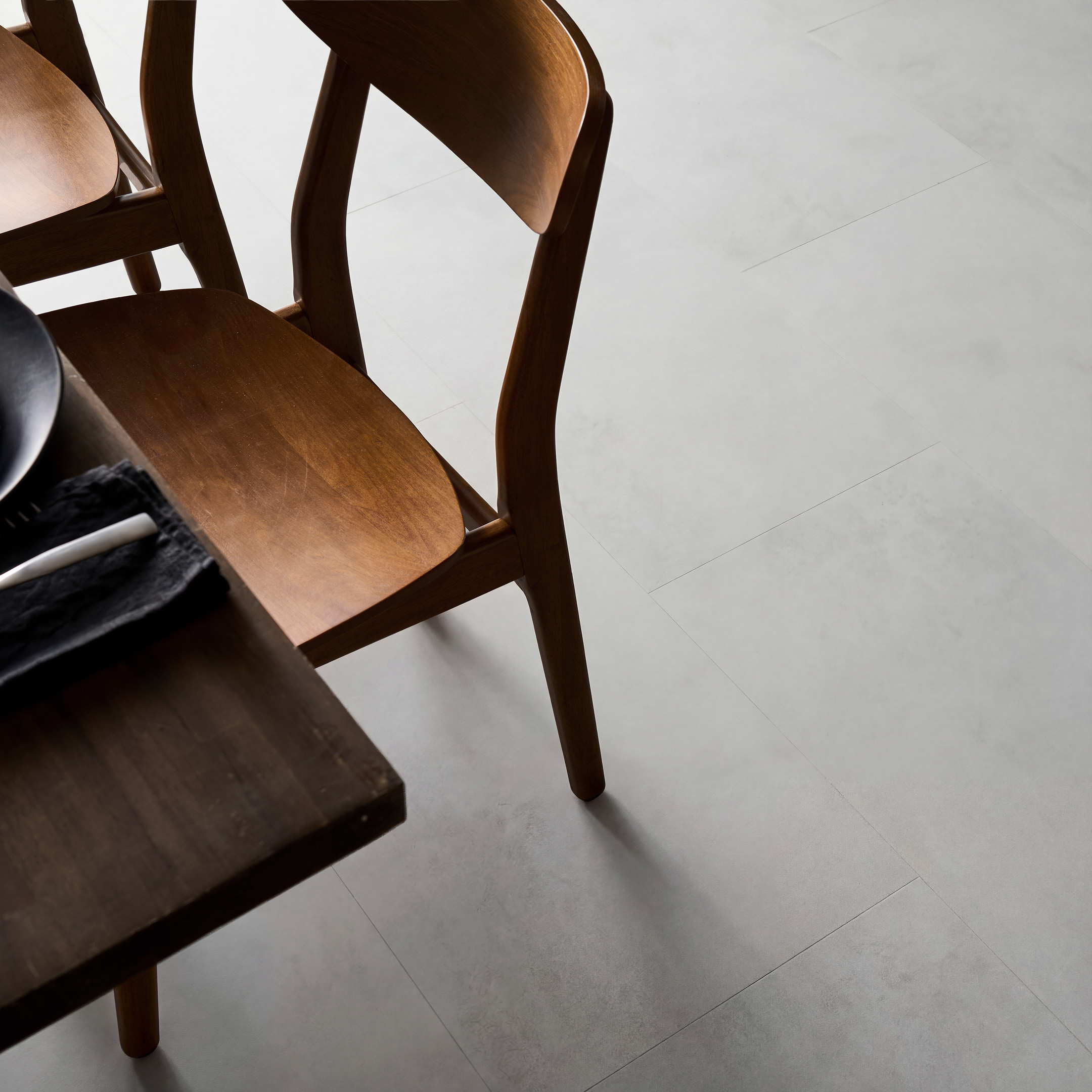
Deeper concrete tones, including charcoal and near-black hues, offer a bold yet balanced foundation. These saturated shades introduce contrast and visual weight, grounding interiors while maintaining a clean, architectural sensibility.
Light concrete-look vinyl tile
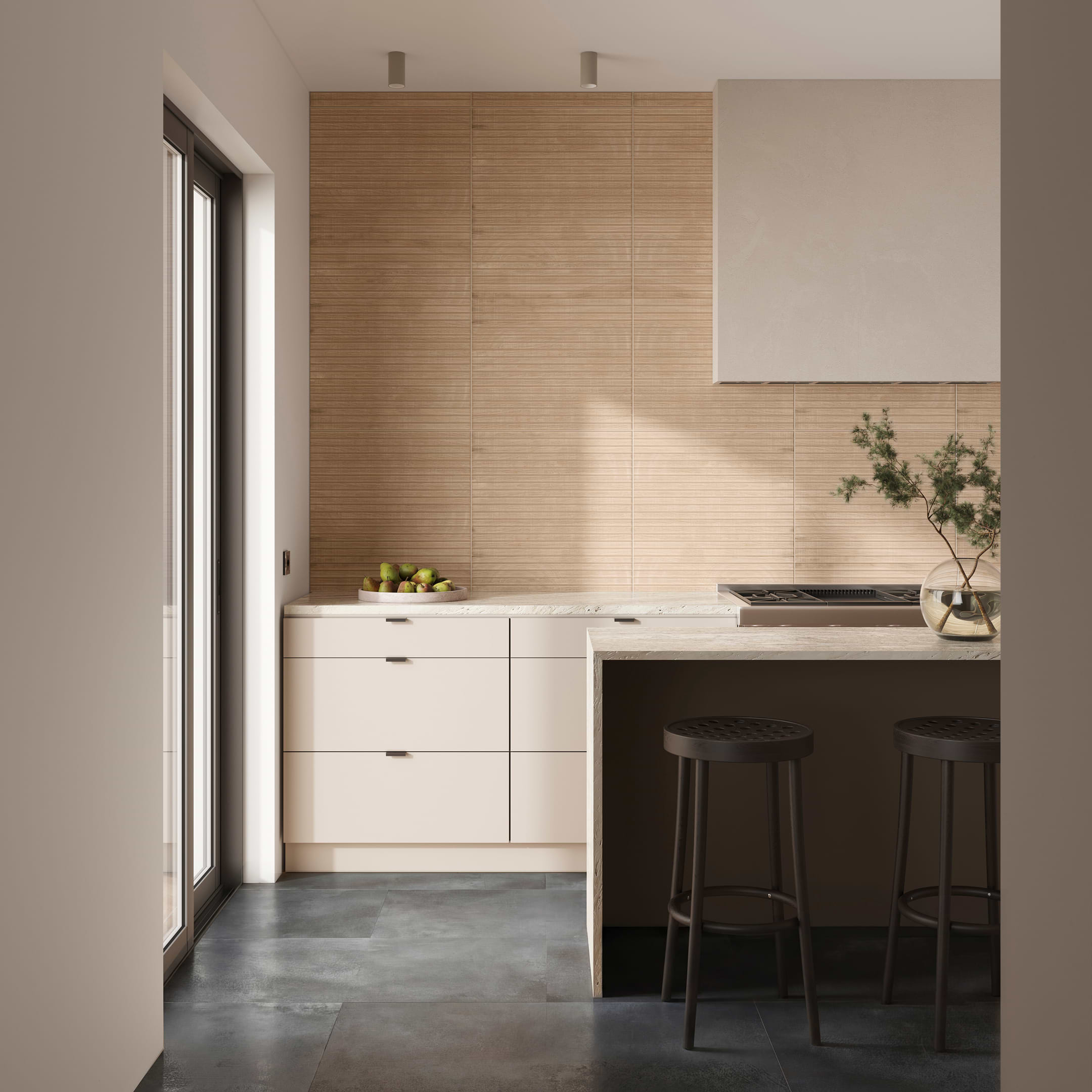
Light cement tones bring an open, airy quality to interiors, making them ideal for smaller rooms
or spaces seeking a more expansive feel. Soft variation prevents the surface from appearing flat while preserving a streamlined aesthetic.
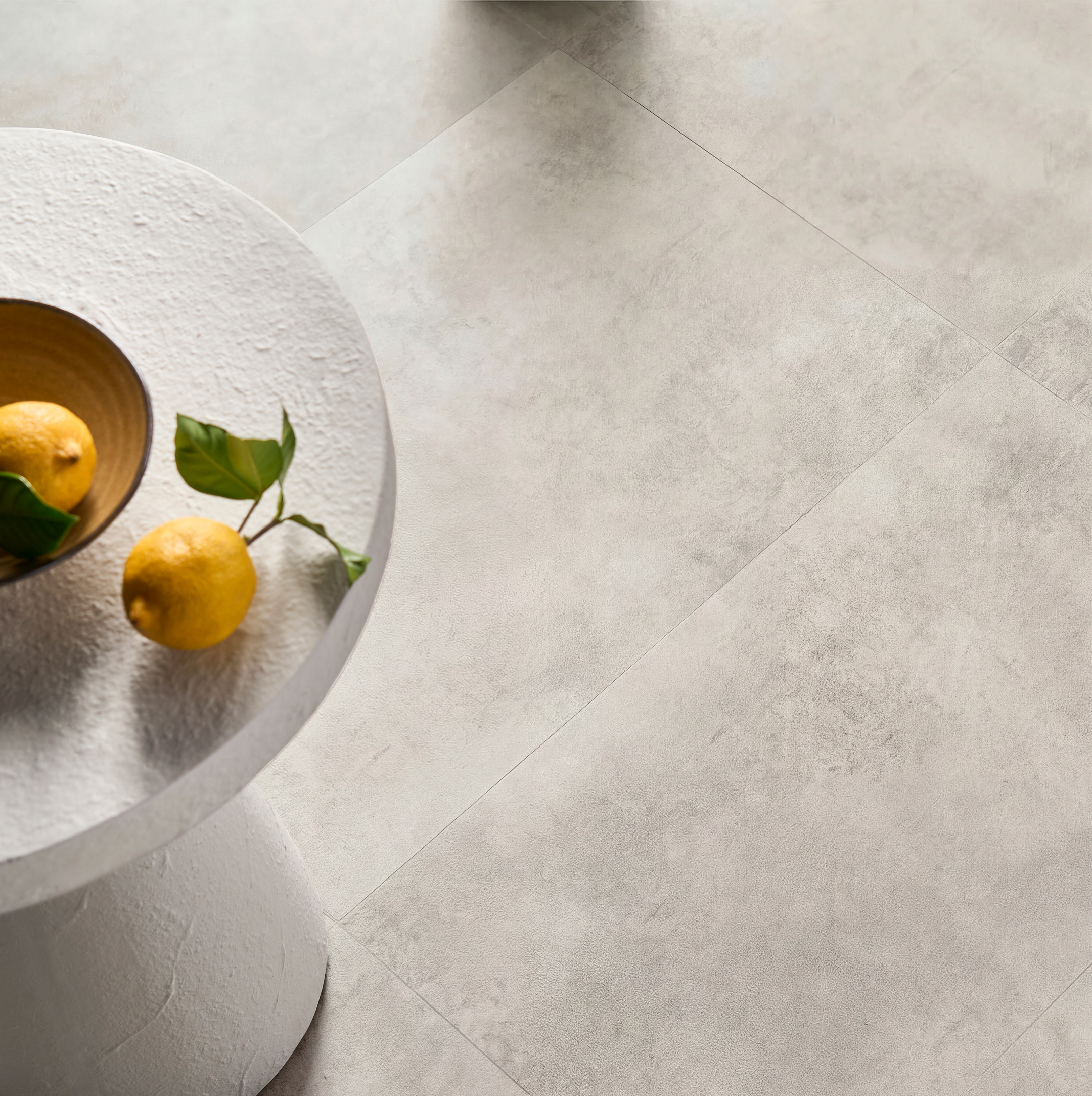

Plank concrete-look vinyl tile
Available in plank formats, concrete-look vinyl flooring supports different layout approaches—from clean, slab-inspired installations to linear compositions that introduce gentle movement.
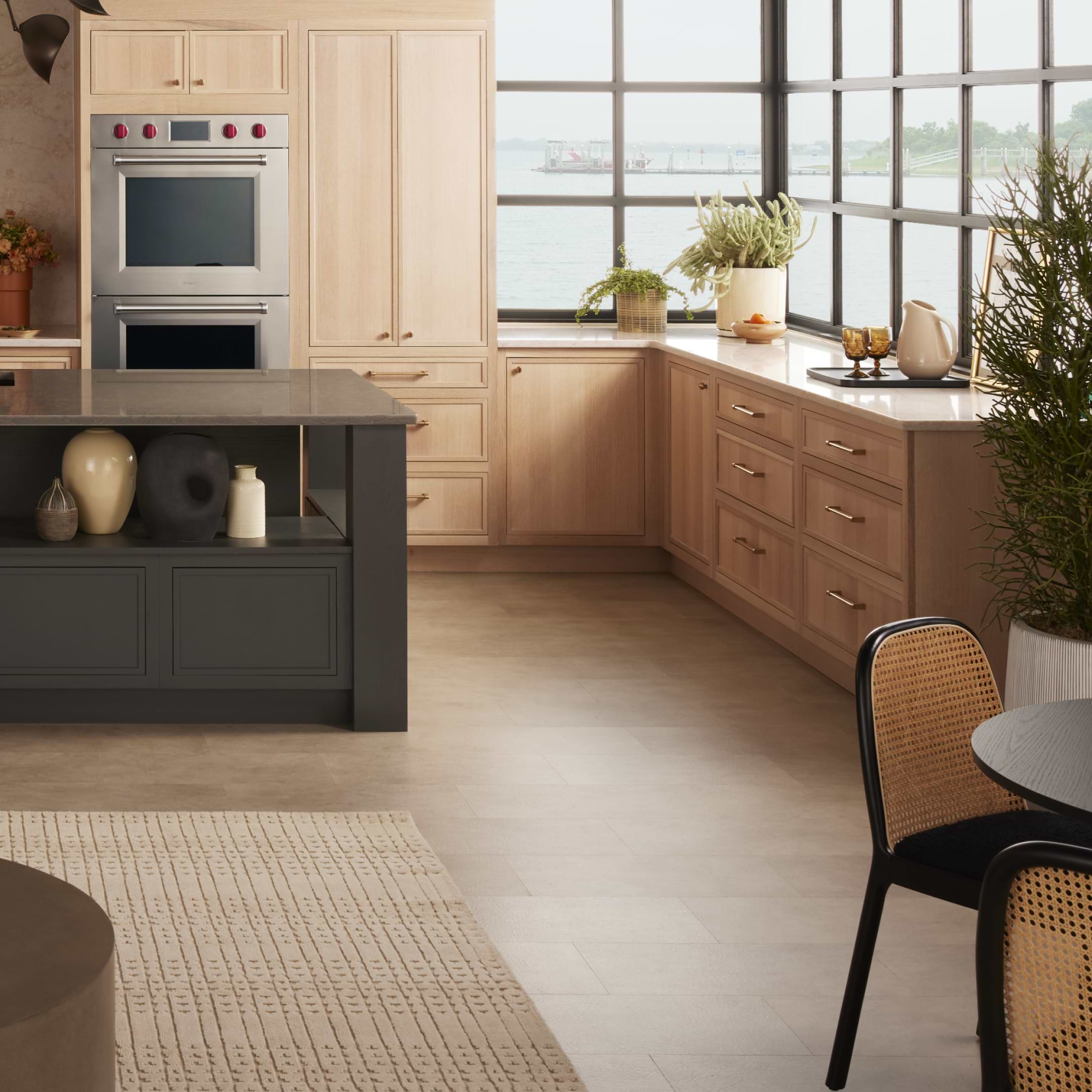
What Are The Installation Tips for Vinyl Flooring?
Concrete-look vinyl tile is designed to give you the look of concrete without a complicated installation process. A little preparation goes a long way in ensuring the floor looks seamless and performs well over time.
-
Start with a smooth surface
Before installation, make sure the surface is clean, level, and dry. Address any cracks, uneven areas, or moisture issues so the finished floor sits flat and looks its best.
-
Choose the right installation method
Concrete-look vinyl flooring may be installed using glue-down, click-lock, or loose-lay systems, depending on the product. The right choice depends on the space, traffic level, and how quickly the project needs to come together.
-
Consider underlayment if needed
Some products are designed to install directly over the subfloor, while others benefit from an underlayment or moisture barrier for added comfort, sound control, and long-term durability.
Maintenance and Care for Longevity
Concrete-look vinyl tile is designed for effortless upkeep.
- Regular sweeping or vacuuming removes surface debris
- Damp mopping with a manufacturer-recommended cleaner maintains appearance
- Abrasive tools and harsh chemicals should be avoided
With routine care, vinyl flooring retains its finish and performance over time.
FAQs: Common Questions About Concrete Look Vinyl Flooring
What is the best way to install concrete-look vinyl tile?
The most reliable installation begins with a clean, level, and dry concrete surface. Depending on the product, vinyl can be installed using glue-down, click-lock, or loose-lay methods.
Some floors may also benefit from a moisture barrier or underlayment to enhance longevity and comfort.
Can I install it myself, or should I hire a professional?
Many rigid-core and click-lock products are DIY-friendly, while glue-down or large-format tiles may benefit from professional installation to ensure a seamless finish.
Does concrete-look vinyl flooring feel cold like real concrete?
No. Concrete-look vinyl flooring is noticeably warmer and more comfortable underfoot than actual concrete. Its layered construction provides insulation and flexibility, helping to reduce the cold, hard feel typically associated with poured concrete.
Can concrete-look vinyl flooring be installed in bathrooms or kitchens?
Many concrete-look vinyl floors are water-resistant or waterproof, making them suitable for moisture-prone areas like kitchens, bathrooms, and laundry rooms.
How long does concrete-look vinyl flooring last?
With proper installation and routine care, concrete-look vinyl flooring can last 15–25 years or longer, depending on the product quality, traffic level, and environment. Its multi-layer construction is designed to resist everyday wear while maintaining its appearance over time.
Will it fade or change color over time?
High-quality concrete-look vinyl flooring features UV-resistant topcoats to minimize fading. Direct, prolonged sunlight exposure may cause slight changes, so consider rugs or shading in sun-heavy areas.
What are the disadvantages of concrete-look vinyl flooring?
While concrete-look vinyl flooring offers durability and ease of maintenance, it does not develop the natural patina of real concrete over time. In addition, extreme temperature fluctuations or improper subfloor preparation can impact performance, making correct installation essential.