
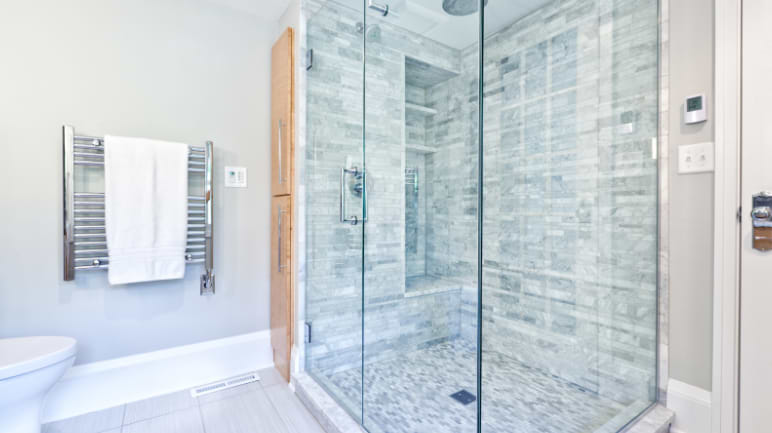
There’s more than style to consider when picking tile for your shower floor—safety and performance should be top priorities too. This guide covers the key points of picking out tile that’s suited to shower floors, as well as the best non-slip options. In essence, you can’t go wrong with textured porcelain or small-scale mosaics.

What Do I Need to Consider When Picking Shower Floor Tile?
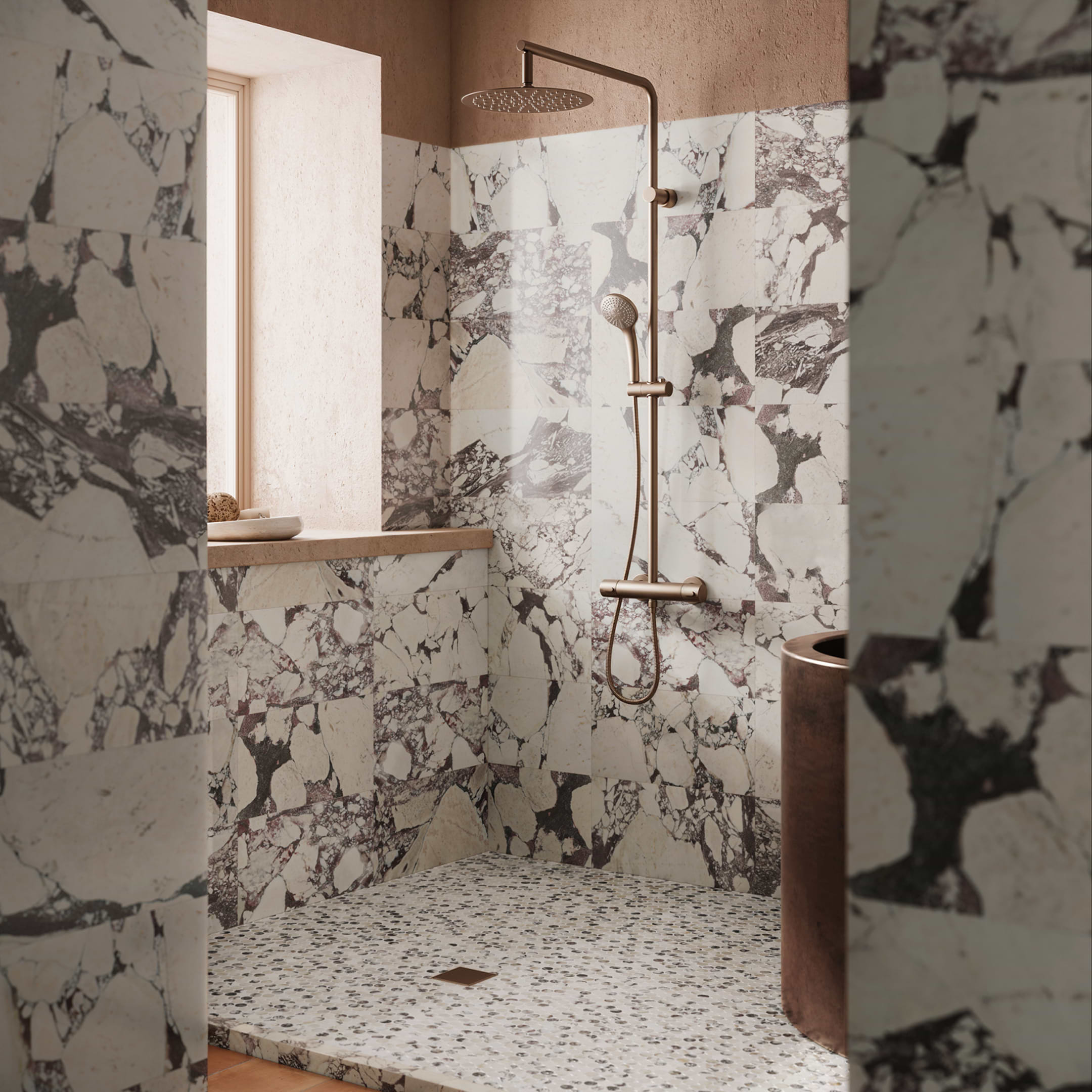
- Water absorption. First and foremost, shower floor tile should be dense and low in porosity. Because shower floors are continually exposed to water—and may even experience pooling—tile that absorbs moisture can lead to cracking, staining, and leaks over time. For example, porcelain tile, textured glass tile, and properly sealed natural stone are better suited for shower floors than more porous options like unsealed marble or limestone.
- Slip resistance. Your shower floor tile must provide traction; Otherwise it will be slippery when wet. Lightly textured tile or small-scale mosaics are ideal for slip resistance, as they create grip either through the surface texture or via closely spaced grout lines. Examples include hex mosaics, penny rounds, or tumbled stone finishes.
- Tile size. Tile size directly impacts slip resistance and installation. Smaller tiles create more grout lines, which increases traction, and they’re also better suited for shower floors because they offer greater flexibility when installing around drains, slopes, and corners. Small-scale, mesh-backed mosaics are popular on shower floors for this very reason.
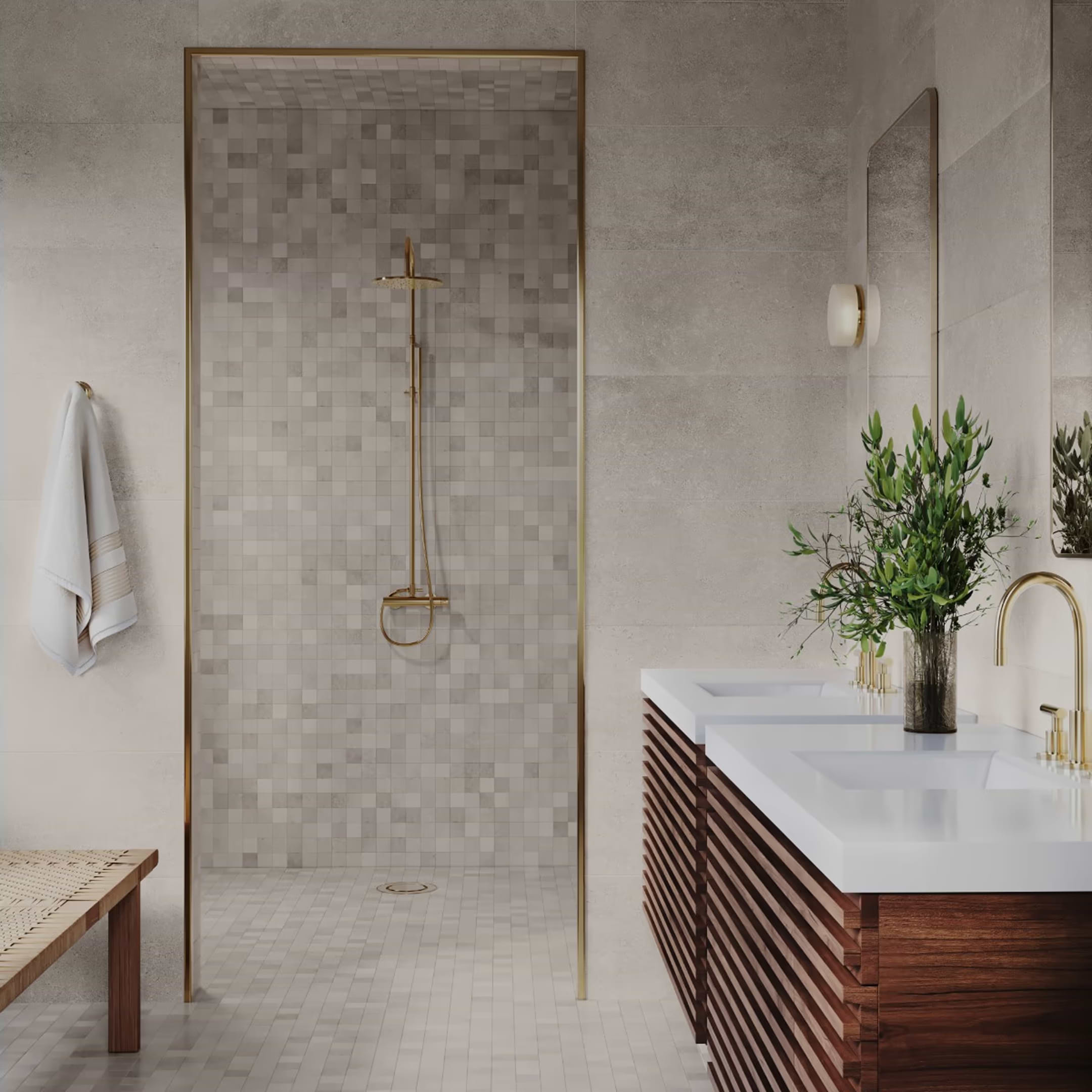
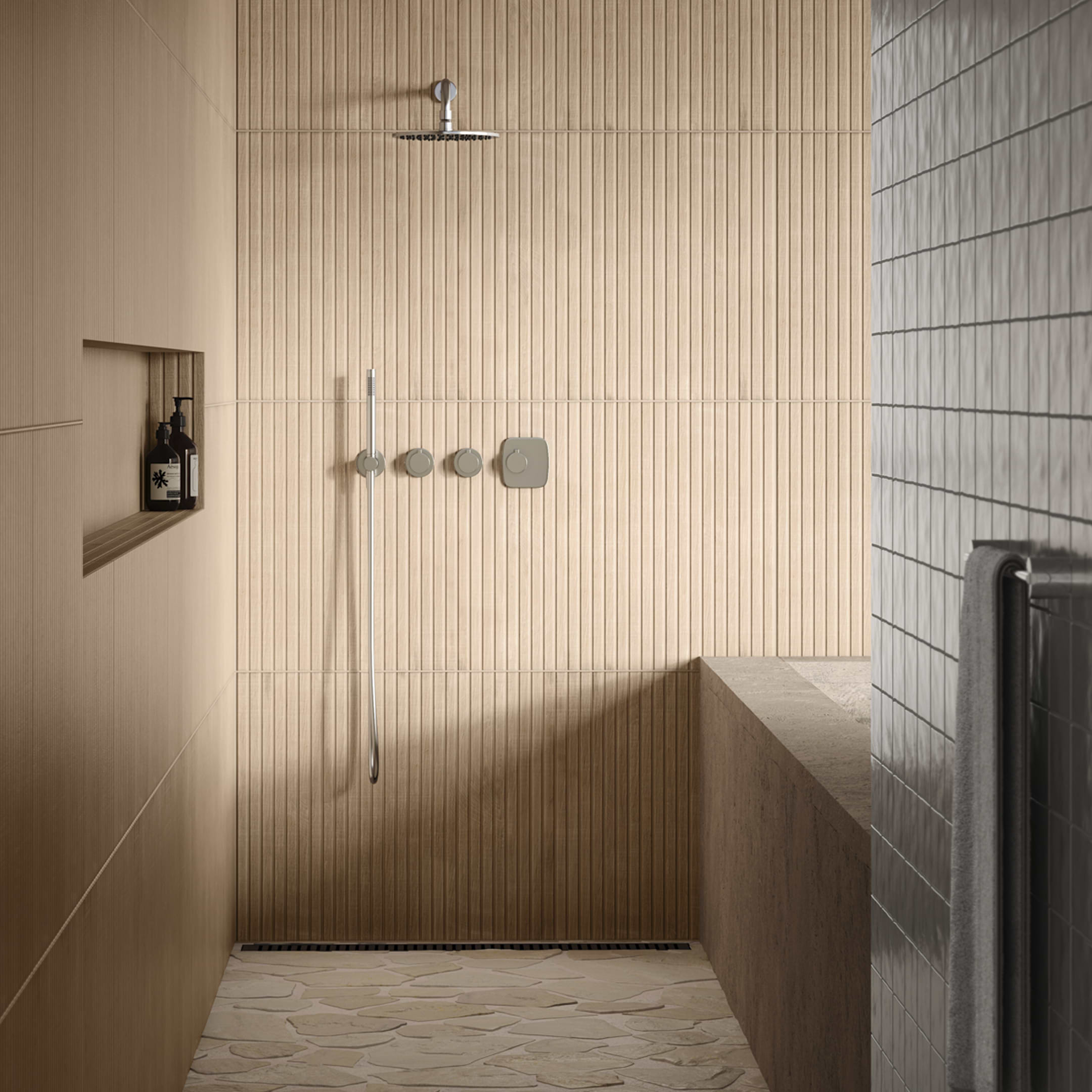
- Surface finish. Matte, textured, and cleft surfaces provide more traction than smooth or polished finishes. For instance, matte porcelain, textured concrete-look tile, or naturally cleft slate (if properly sealed) are safer choices than glossy ceramic or polished stone.
- Maintenance. You’ll also need to consider how soap scum, mold, and mildew will interact with different tile types. Porcelain mosaics are generally low in maintenance, while natural stone often requires regular sealing and more careful upkeep.
- Visual harmony. Consider how the shower’s floor tile will coordinate with the wall tiles, grout colors, and overall bathroom decor. It needn’t be matchy-matchy—in fact, shower floors are a good spot to add contrast—but it should feel intentional and look complementary. A darker mosaic floor can ground light wall tile, or a patterned floor can add interest to an otherwise clean-lined shower.
Do the Same Considerations Apply to Bathroom Floors?
Yes and no. Many of the same considerations apply to bathroom floors, but they’re less strict than what you’d need inside a shower.
Water absorption and slip resistance still matter on bathroom floors, especially near the shower or tub, where splashes are common, and you’ll want to use low-porosity and anti-slip surfaces. Bathroom floors may also be more accommodating of larger tile sizes.
Because bathroom floors aren’t dealing with constant pooling water, you’ll also have more flexibility in materials and finishes—including natural stone, if it’s properly sealed.
Frequently Asked Questions: Shower Floor Tile
- Do I have to pick non-slip tile for a shower floor?
No, not explicitly. Mosaic tile or tile under 4” with proper grout lines will provide adequate traction for safe showering.
- What is the best tile for a non-slip shower floor?
Porcelain or natural stone mosaics with a matte or textured finish are ideal for non-slip shower floors. Small tiles with more grout lines also provide extra traction.
- What slip-resistance rating is needed for a shower floor?
A coefficient of friction (COF) of 0.6 or higher is generally considered safe for shower floors, though textured or small-format tiles naturally provide good traction. Check a tile’s specifications to ensure that they’re suitable for use in wet areas.
- Can large-format tile be used on a shower floor safely?
Large-format tiles are generally not recommended for shower floors because they have fewer grout lines, which can reduce slip resistance and make it harder to slope the floor toward the drain.
- How often should shower floor tiles be cleaned?
Non-slip tiles should be cleaned weekly to prevent soap scum and mildew buildup, and natural stone should be sealed as recommended by the manufacturer (typically once or twice a year).
- Do pebble shower floors get moldy?
Pebble floors can be prone to mold and mildew if not properly sealed and regularly cleaned, since the textured surface and grout lines can trap moisture.
- What grout type is best for shower floors?
Sanded grout is typically best for shower floors because it’s more durable and resists cracking, while epoxy grout offers superior stain and mold resistance.
- How long does shower floor tile last?
With proper installation and maintenance, shower floor tile can last 15–25 years or more, depending on the material and usage.