

Shower tile shapes the entire feel of a bathroom—defining its style while standing up to moisture, steam, and daily use. Whether you’re designing a walk-in shower for a primary suite or refreshing a compact guest bath, the right tile choice brings visual character and lasting performance.
From classic subway layouts to bold black and white designs, these ideas explore materials, formats, and layouts that elevate both form and function.
What Are the Most Popular Shower Tile Styles?
The most popular shower tile ideas pair beautiful design with the durability you need for everyday life. Certain styles endure for their versatility and timeless appeal.

Subway Tile
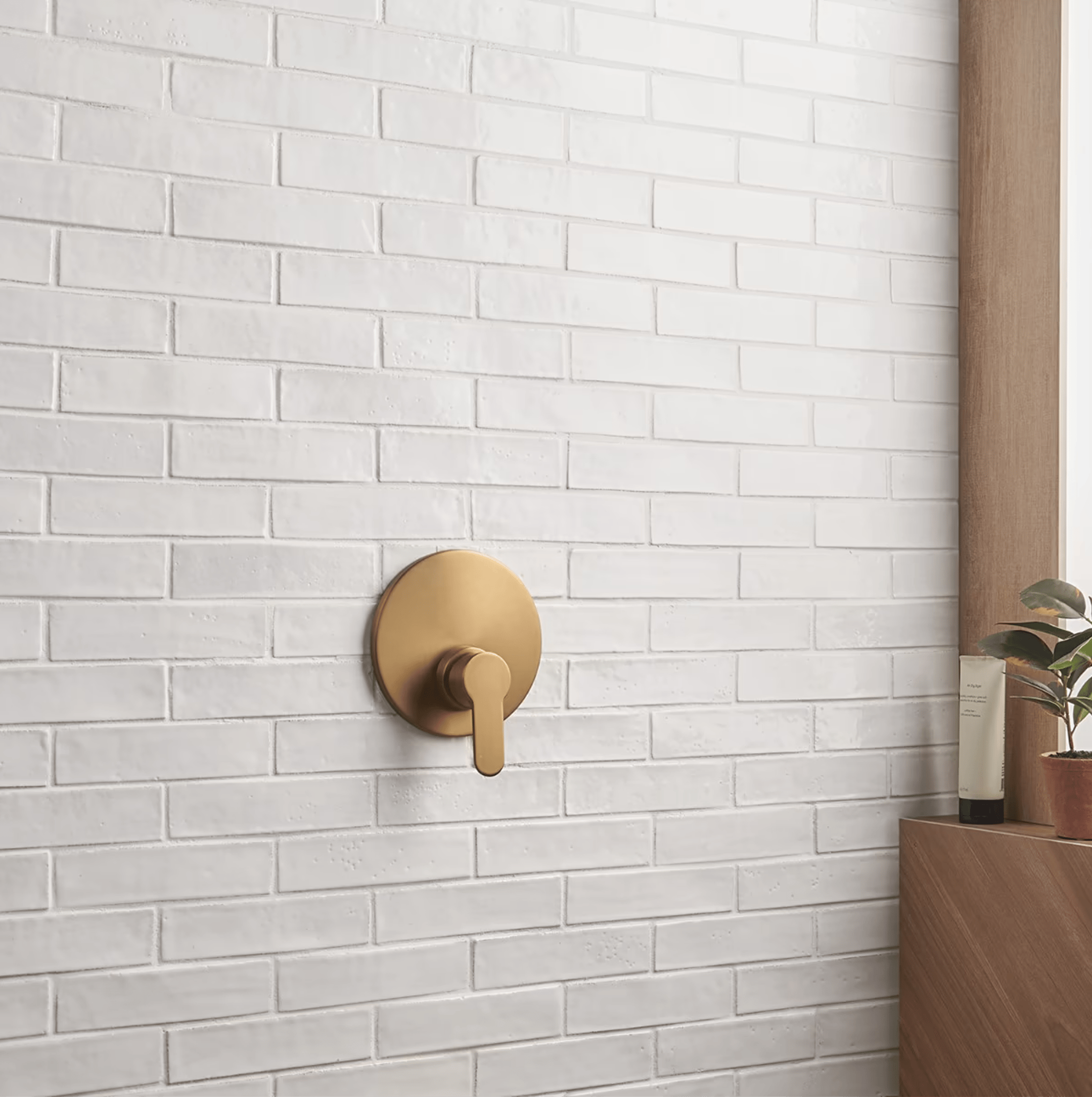
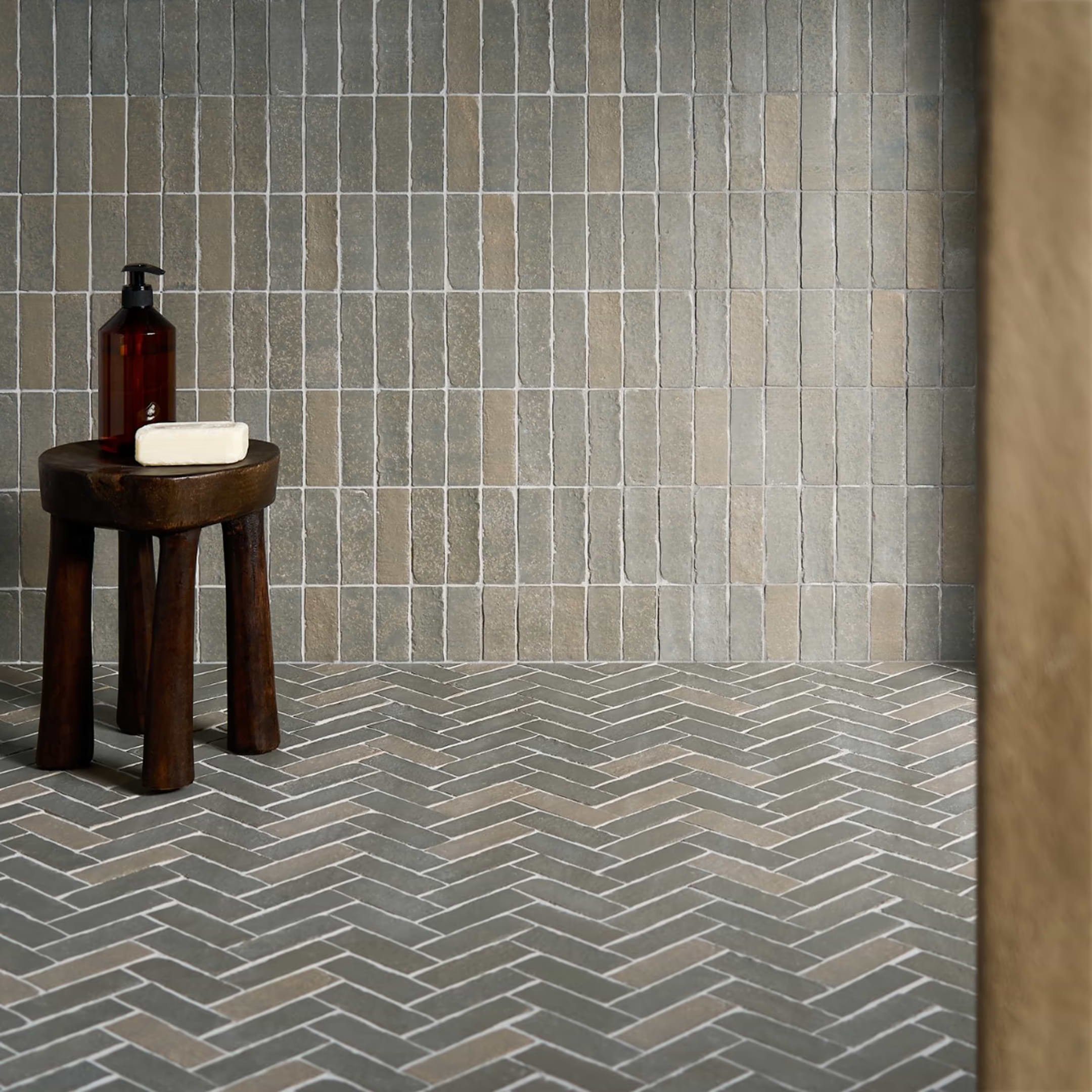
Subway tile remains a timeless choice for shower walls. Its clean proportions and modular format allow for creative layouts—stacked vertical, herringbone, or offset—each subtly shifting the overall mood. Gloss finishes reflect light, while matte surfaces offer a softer feel.
Large-Format Porcelain
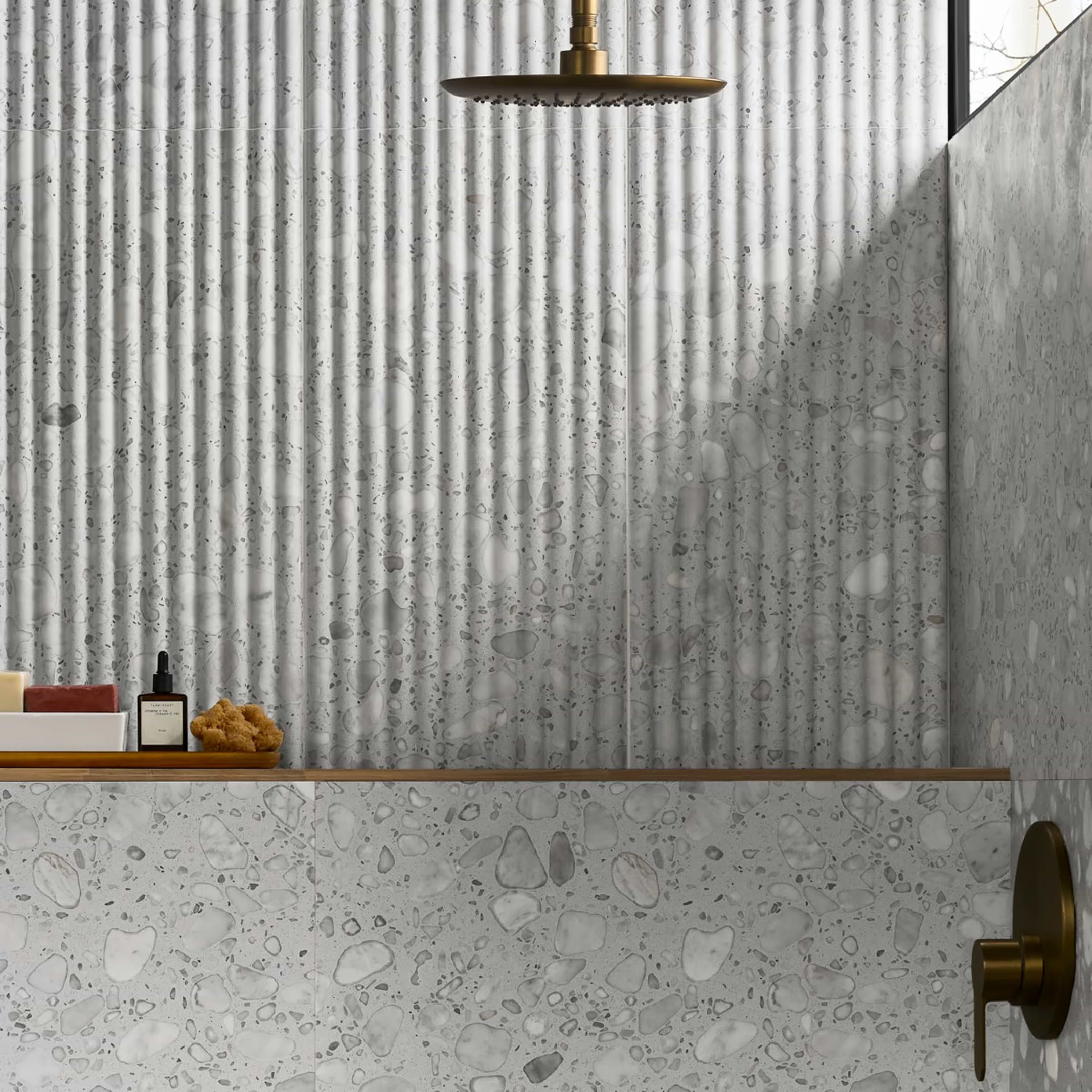
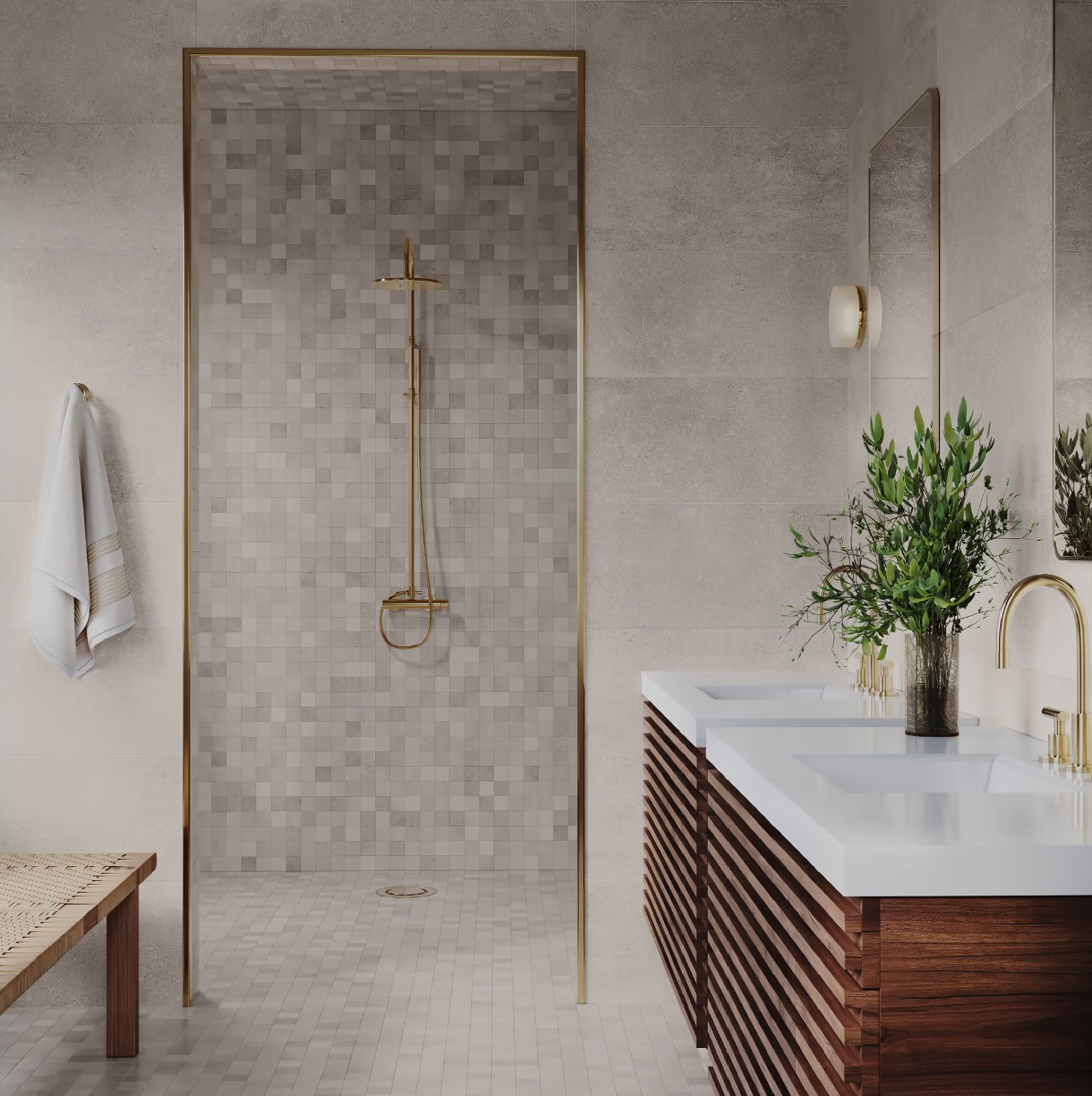
Large tiles reduce grout lines, creating a streamlined, expansive look that works especially well in walk-in showers. Porcelain’s naturally water-resistant composition makes it ideal for wet environments.
Marble and Stone Looks
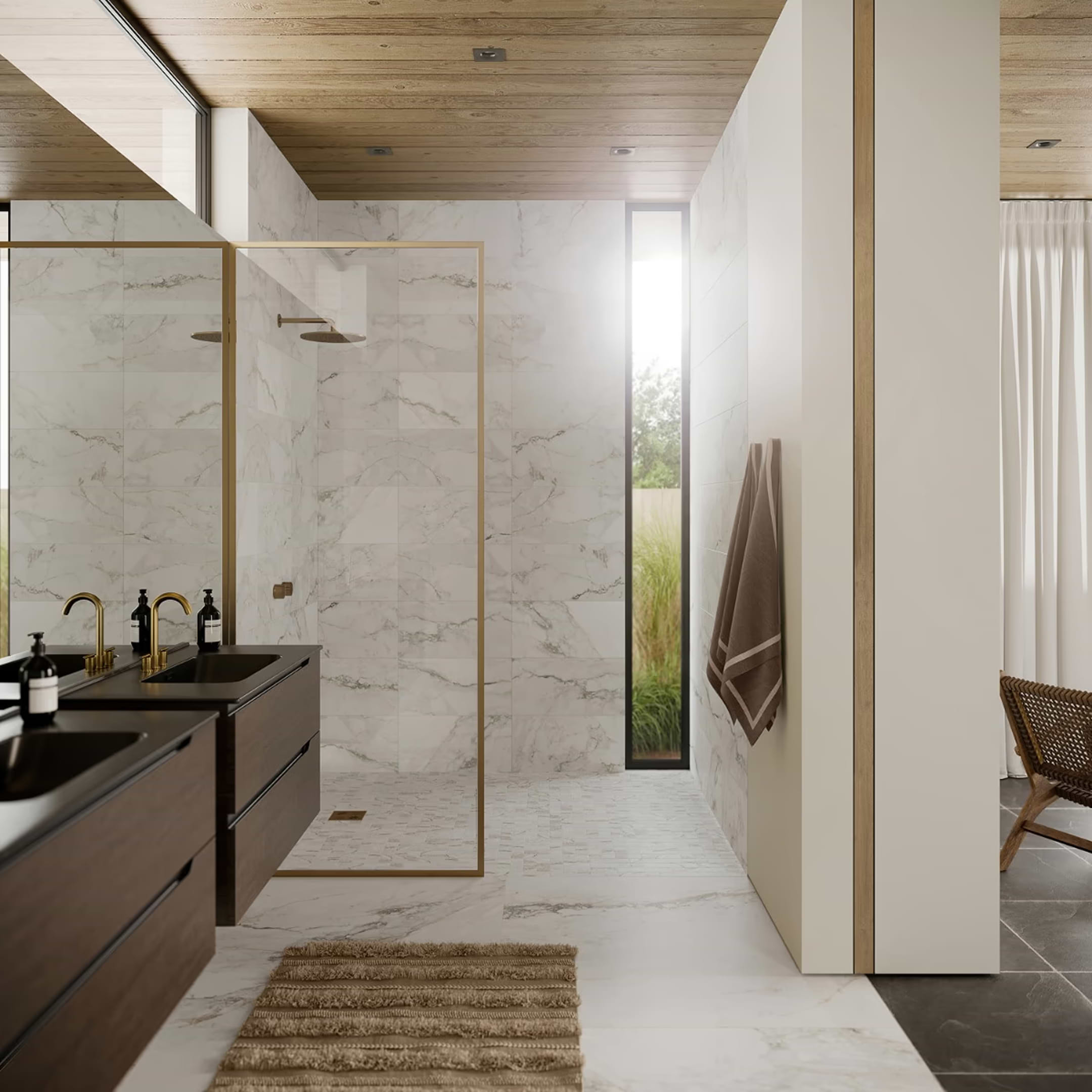
Natural stone or stone-look porcelain introduces organic movement and tonal depth. Used floor-to-ceiling, it creates cohesion; paired with a contrasting mosaic floor, it adds layered interest.
Mosaic and Small-Scale Tile
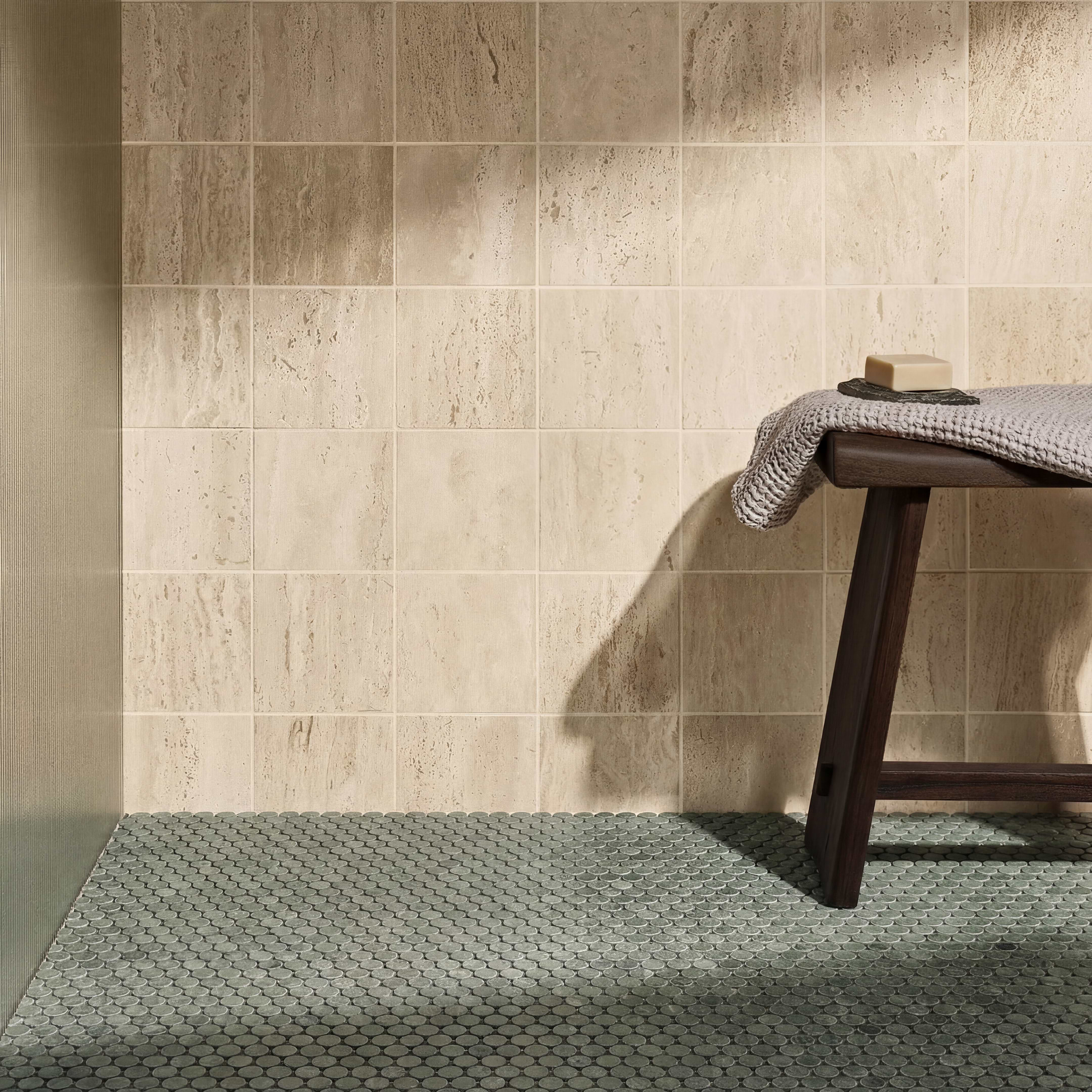
Mosaics, including penny and hexagon formats, are often used on shower floors for added slip resistance. They also function beautifully as niche accents or vertical feature strips.
What are Some Creative Shower Tile Combinations?
Some of the most compelling shower tile ideas come from pairing formats and finishes strategically.
Contrast Large and Small Scale
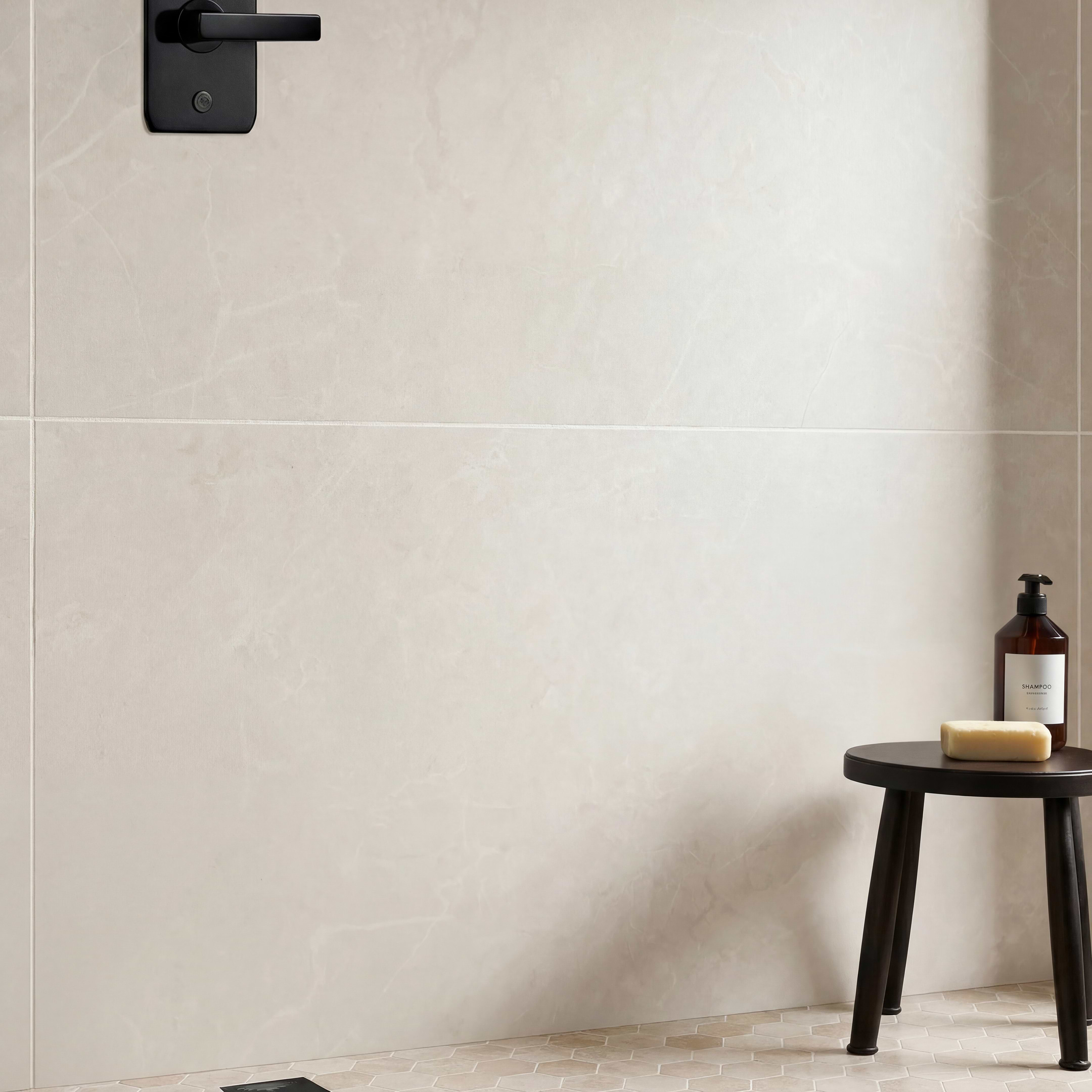
Pair large-format wall tile with a smaller mosaic floor. This keeps the space visually calm while adding texture underfoot for improved traction.
Mix Finishes, Not Colors
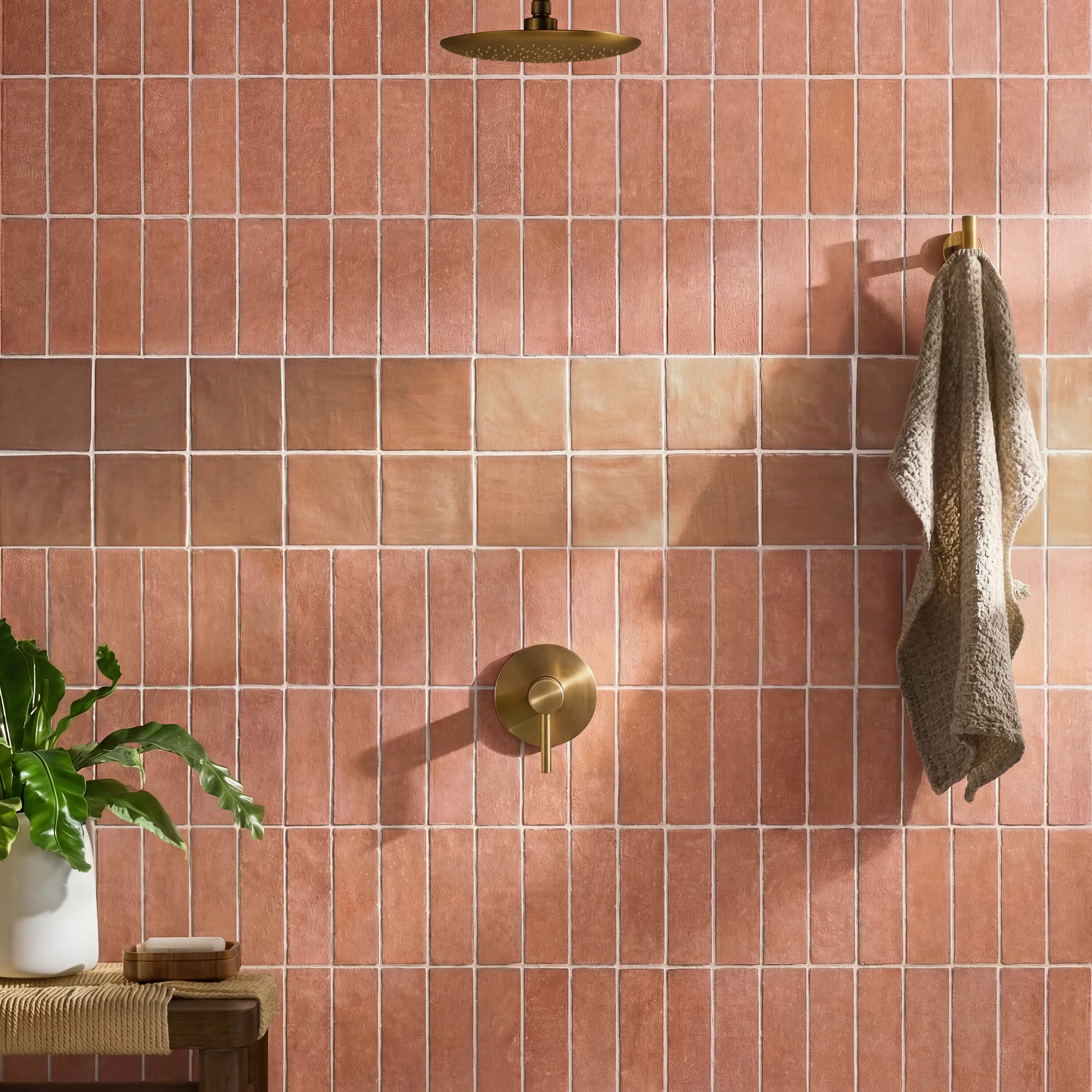
A monochromatic palette can still feel dimensional when you combine matte wall tile with a polished or subtly textured accent.
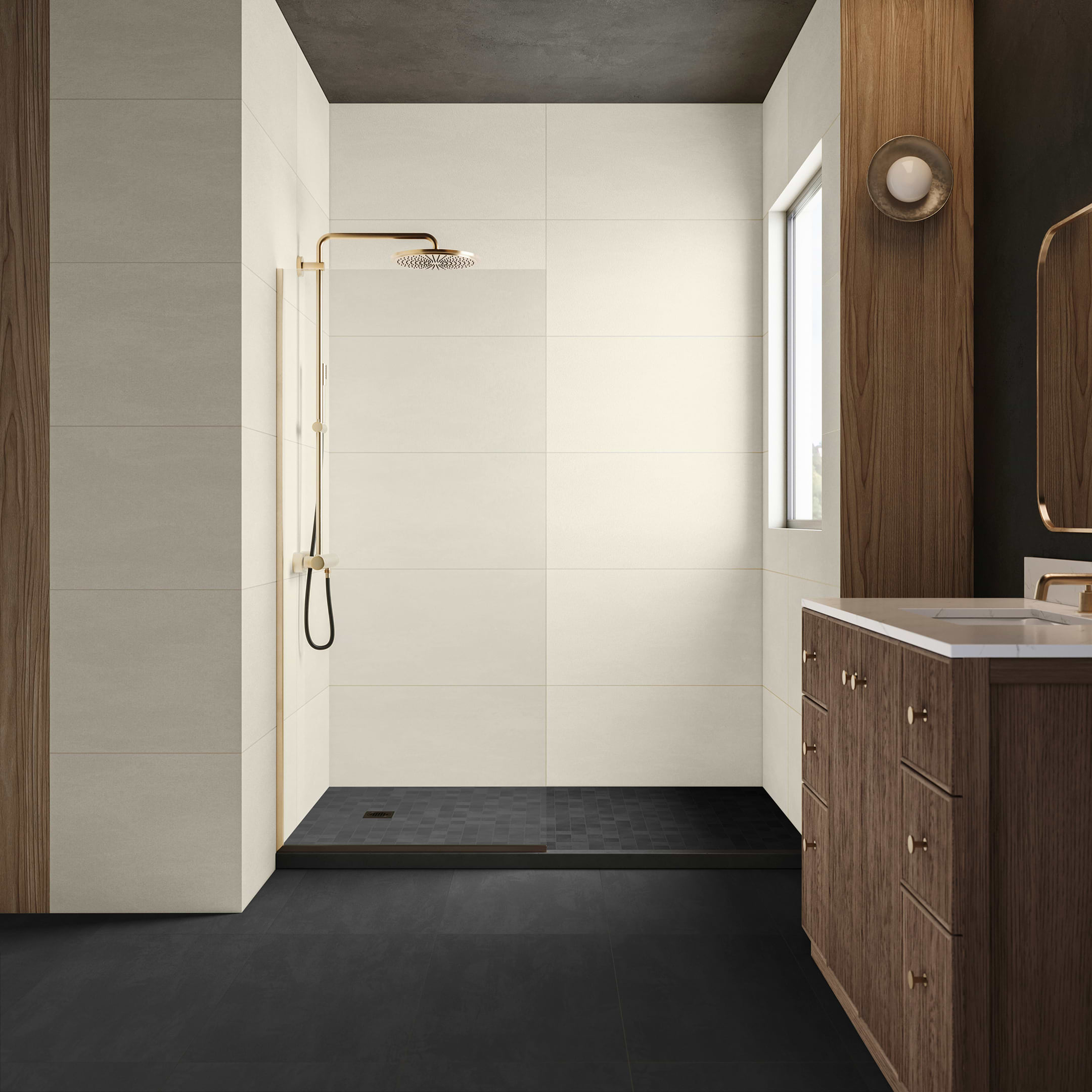
Blend Warm and Cool Tones
Pairing warm and cool tones—such as creamy neutrals with deeper hues—adds dimension while maintaining a cohesive look.
Why Are Black and White Tiles for the Bathroom Always in Style?
Black and white tiles for the bathroom remain one of the most enduring design approaches because they balance contrast and neutrality.
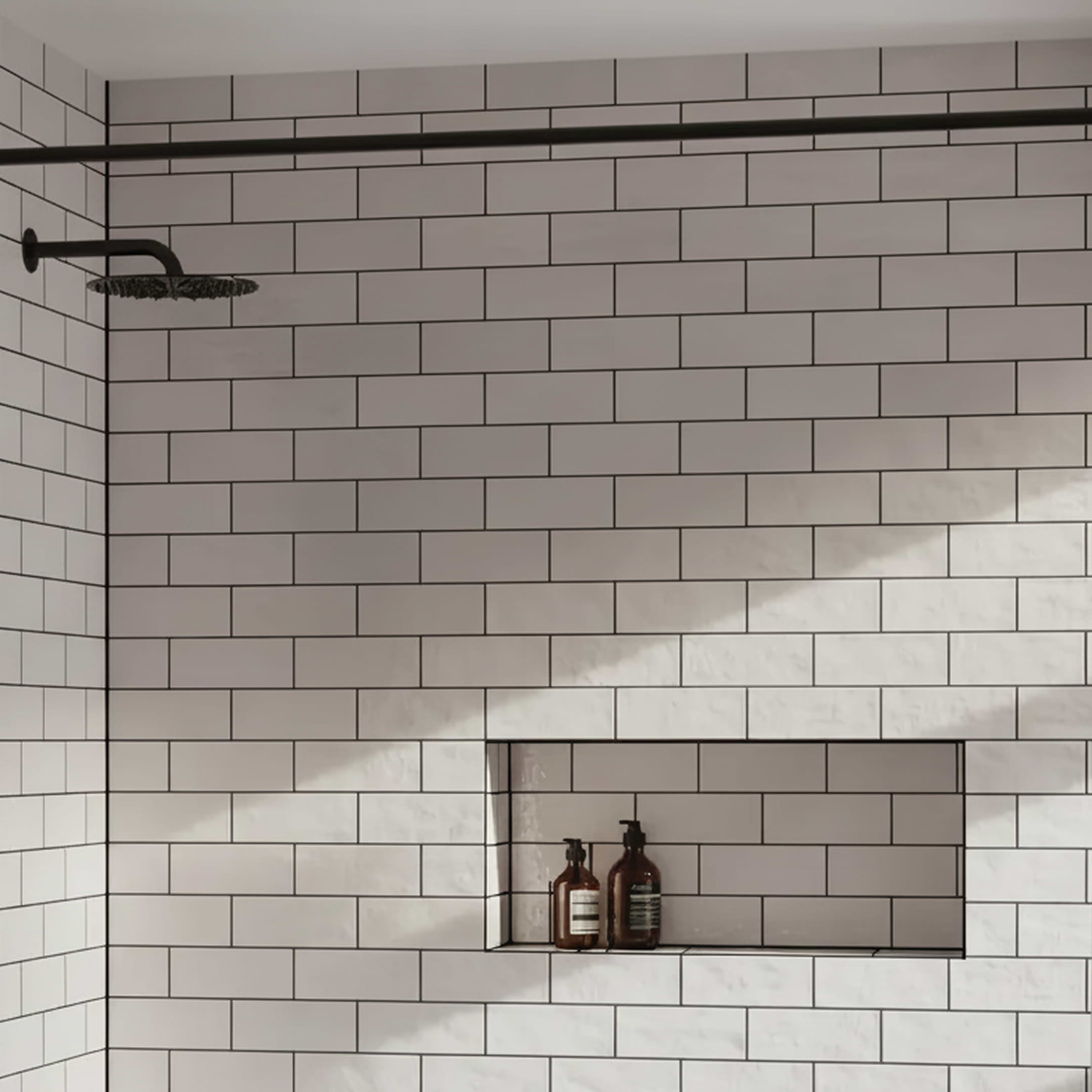
Crisp White Walls
White ceramic or porcelain tile reflects light and visually expands smaller showers. It also provides a clean backdrop for brass, chrome, or matte black fixtures.
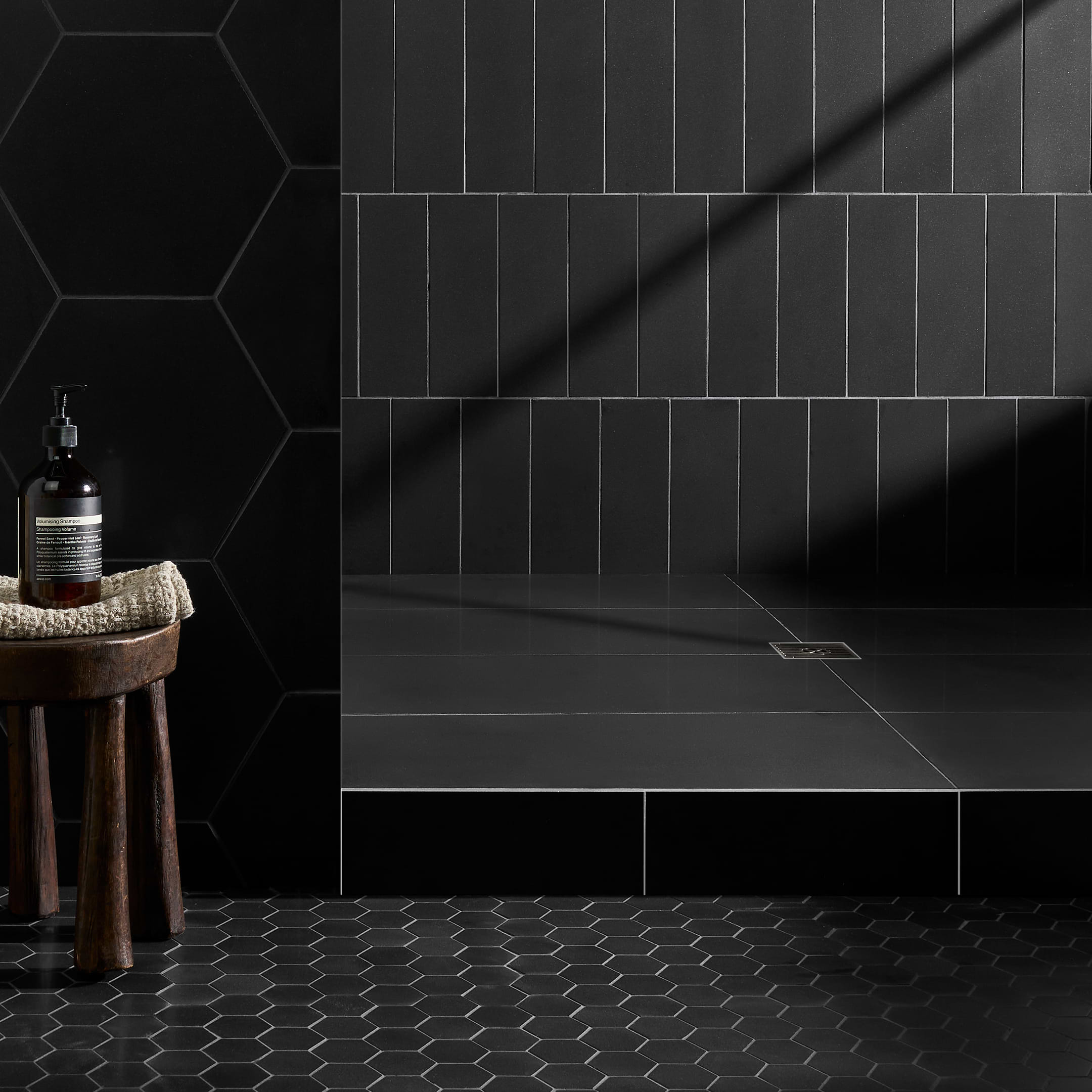
Bold Black Shower Tile Ideas
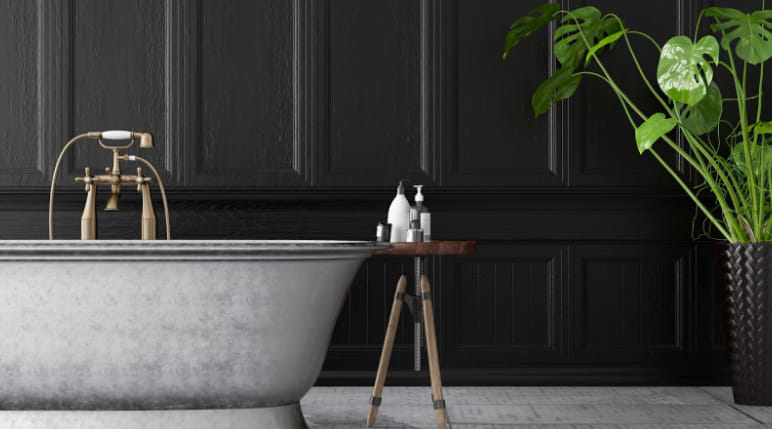
Black shower tiles create depth and drama, particularly in larger bathrooms or walk-in showers. Matte finishes feel architectural; textured or subtly variegated surfaces prevent the space from feeling flat.
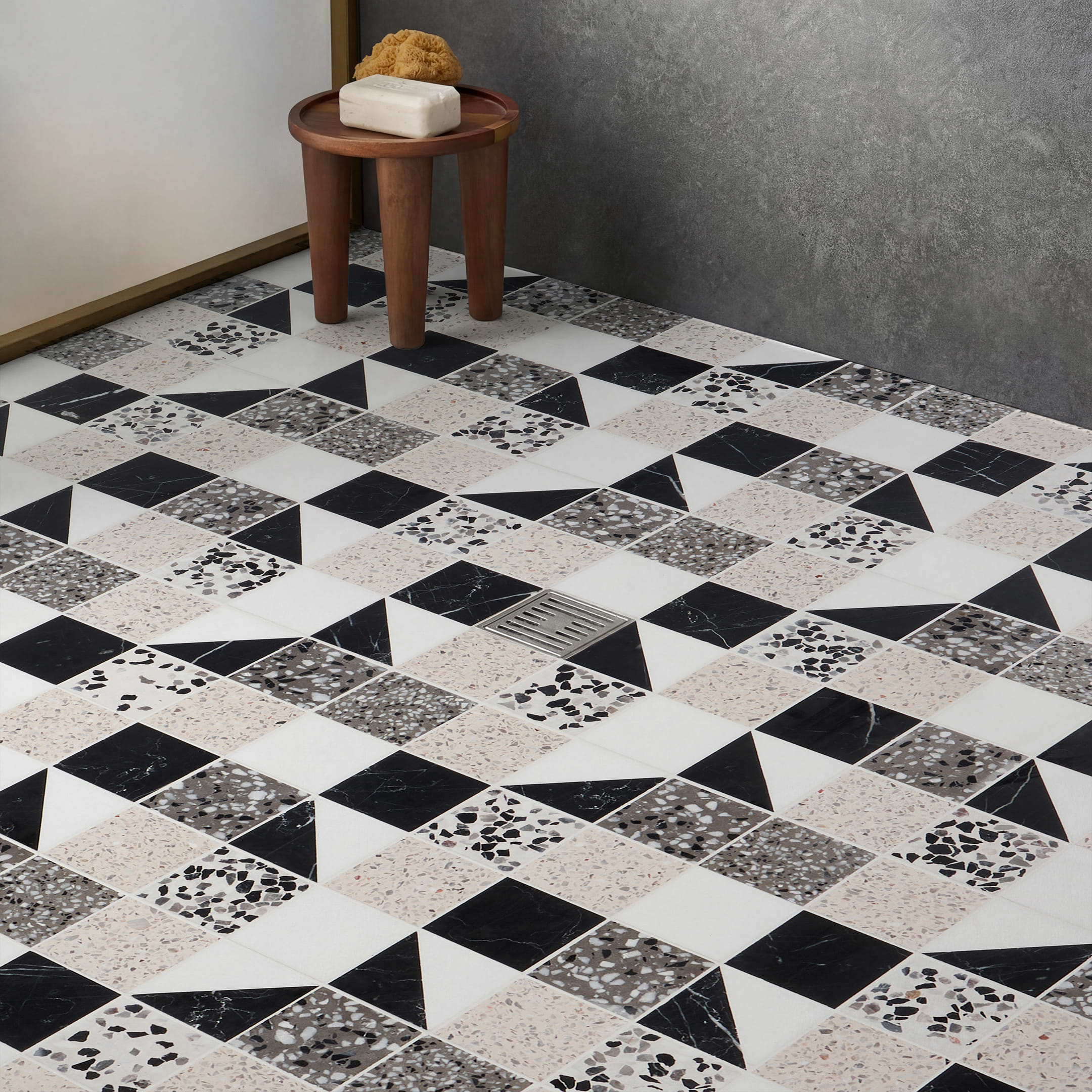
Graphic Patterns
Black and white tile—from classic checkerboard floors to geometric mosaics—introduces pattern while maintaining a cohesive palette. When executed thoughtfully, black and white tile feels modern rather than traditional.
Choosing Shower Tile for Performance and Style
Beyond aesthetics, the best shower tile ideas prioritize durability and moisture resistance.
- Water Resistance – Porcelain is ideal for shower walls and floors due to its low absorption rate. Ceramic also performs well when properly installed and sealed.
- Slip Resistance – For floors, consider smaller tiles or textured finishes that provide grip when wet.
- Maintenance Requirements – Glazed ceramic and porcelain are easier to maintain than natural stone, which may require periodic sealing.
- Grout Selection – Grout color impacts the final look significantly. Matching grout creates a seamless surface; contrasting grout emphasizes pattern. Balancing performance with design ensures long-term satisfaction.

Are Small or Large Tiles Better for Making a Shower Look Bigger?
Large tiles can make a shower look bigger by minimizing grout lines and creating uninterrupted surfaces. However, small tiles can add depth and dimension, particularly when used strategically on floors or feature walls.
For compact showers:
- Use large, light-colored wall tile
- Extend tile vertically
- Keep grout lines subtle
For larger showers:
- Introduce contrast through mosaic floors or accent walls
- Consider darker hues for intimacy and richness
- Scale should respond to room size and desired atmosphere
What Is Trending in Shower Tile Ideas for 2026?
Emerging shower tile ideas reflect a move toward warmth, texture, and subtle pattern.
- Vertical stacked layouts
- Soft neutrals like warm ivory and muted gray
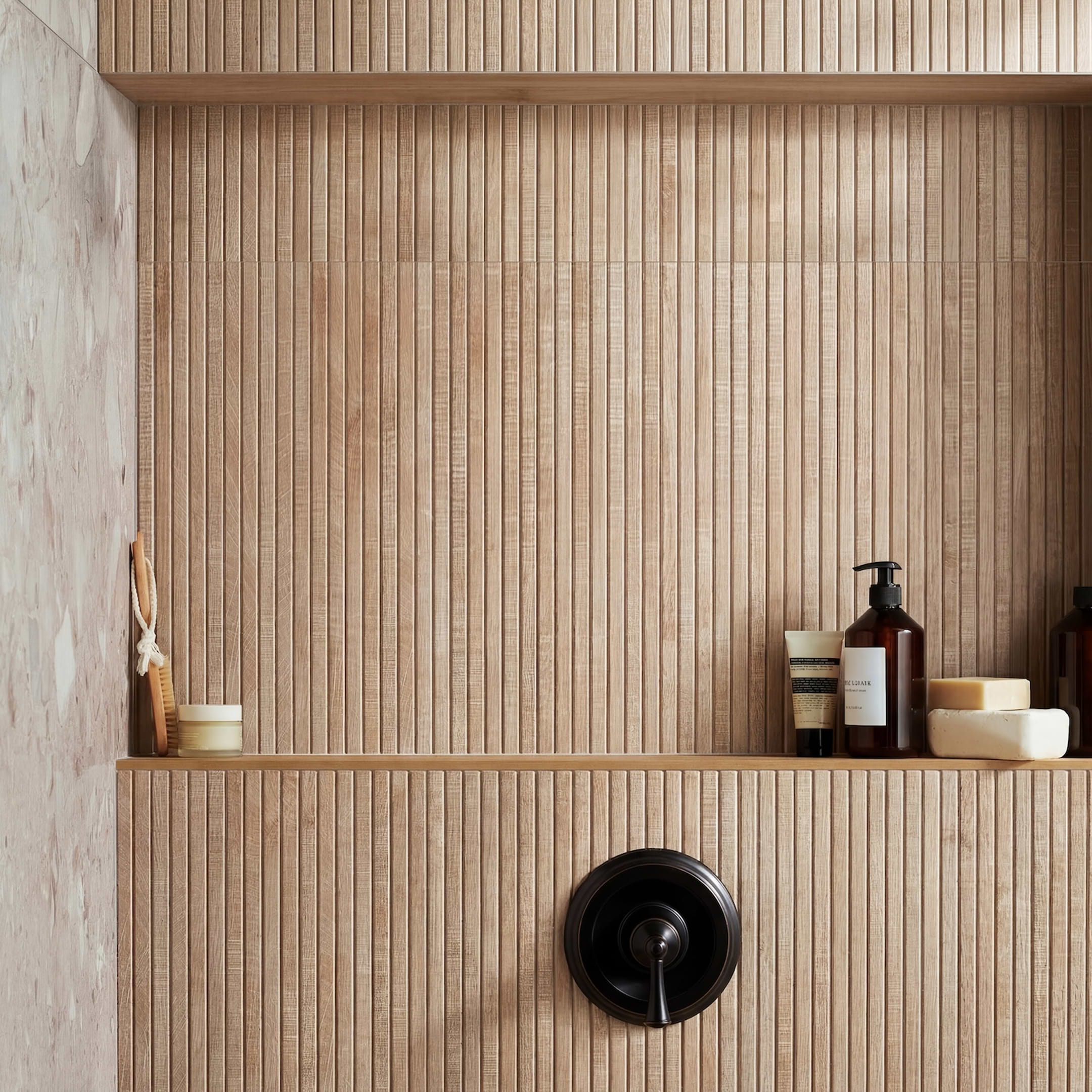
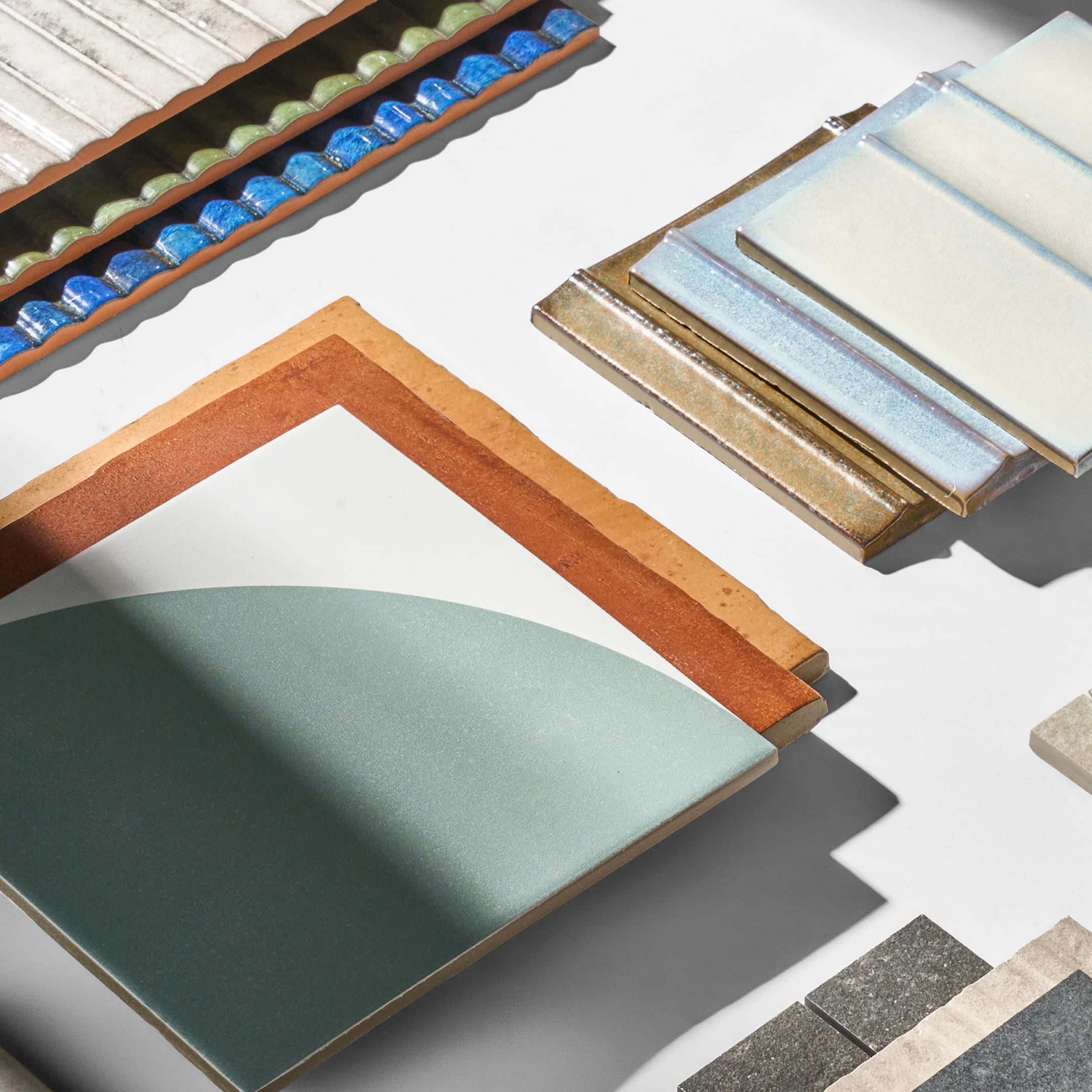
- Fluted or ribbed ceramic textures
- Mixed-format installations
- Earth-inspired hues balanced with modern fixtures
Trends favor dimension over high contrast and material authenticity over ornamentation.
FAQ: Common Questions About Shower Tiles
What tile is best for shower walls?
Porcelain is a leading choice for shower walls thanks to its durability and low water absorption. It offers the look of natural stone, marble, or textured finishes while standing up to daily moisture and wear.
What shower tile styles are most popular right now?
Design is moving toward tonal neutrals, marble and stone looks, dimensional surfaces, and intentional layouts. Rather than heavy contrast, many spaces favor layered texture and subtle variation for depth.
Should shower tile go all the way to the ceiling?
Extending tile to the ceiling creates a more finished, architectural look and enhances visual height. It also offers added wall protection in moisture-prone areas, making it both a design and performance choice.
How do you choose a shower tile that feels timeless?
Start with a grounded material or color palette, then introduce personality through layout, niche detailing, or texture. Thoughtful restraint—paired with quality materials—helps ensure the design feels enduring rather than trend-driven.
What Is the Best Type of Tile to Use in a Shower?
Porcelain is often considered the best overall option for showers due to its durability, moisture resistance, and wide range of design options. Ceramic performs well for walls, while mosaics and textured tiles are ideal for floors. Natural stone can be used, but requires additional care and sealing. The best choice ultimately depends on layout, maintenance preferences, and aesthetic goals.
What Is the 1/3 Rule for Tiles?
The 1/3 rule refers to offsetting rectangular tiles by one-third of their length rather than the traditional half-offset. This reduces lippage — uneven tile edges — particularly with longer plank-style tiles and creates a more modern layout.
How Do You Tile Around a Shower Faucet?
Accurate layout planning is essential. Measure carefully, mark the faucet position before cutting, and use a wet saw for precision. Dry-fit tiles before installation to confirm alignment. Proper grouting and sealing ensure a clean, professional finish.
How Can Shower Tile Transform the Entire Bathroom?
Well-executed shower tile ideas define the bathroom’s overall tone. Whether you choose large-format porcelain for a seamless look, black and white tiles for graphic contrast, or mosaic floors for texture, tile anchors the space visually and functionally. With thoughtful material selection and layout planning, shower tile becomes more than a surface — it shapes how the room feels every day.
Final Thoughts
Shower tile sets the foundation for the entire bathroom—visually and functionally. Whether you’re leaning into tonal stone looks, dimensional texture, or pattern and contrast, the strongest results come from choosing materials and layouts that feel intentional together. The goal isn’t to follow every trend—it’s to build a space that feels considered and holds up over time.