Visit
Visit 
Designing White Subway Tile Patterns
 Copy Link
 Email
Email
 Twitter
 Pinterest
 Instagram
 Facebook
Originally popular for its durability and clean lines, white subway tile has become one of the most versatile surfaces in interior design. The rectangular shape remains iconic, but variations in proportion, texture, and finish can add a modern touch. Whether made of ceramic, porcelain, or natural stone, white subway tile reflects light in a way that helps spaces feel brighter. Below, we’ll explore popular patterns and layouts—from classic offset to elegant herringbone—along with guidance on choosing the size, orientation, and finish to achieve your desired look.
What are the Benefits of Using White Subway Tile?
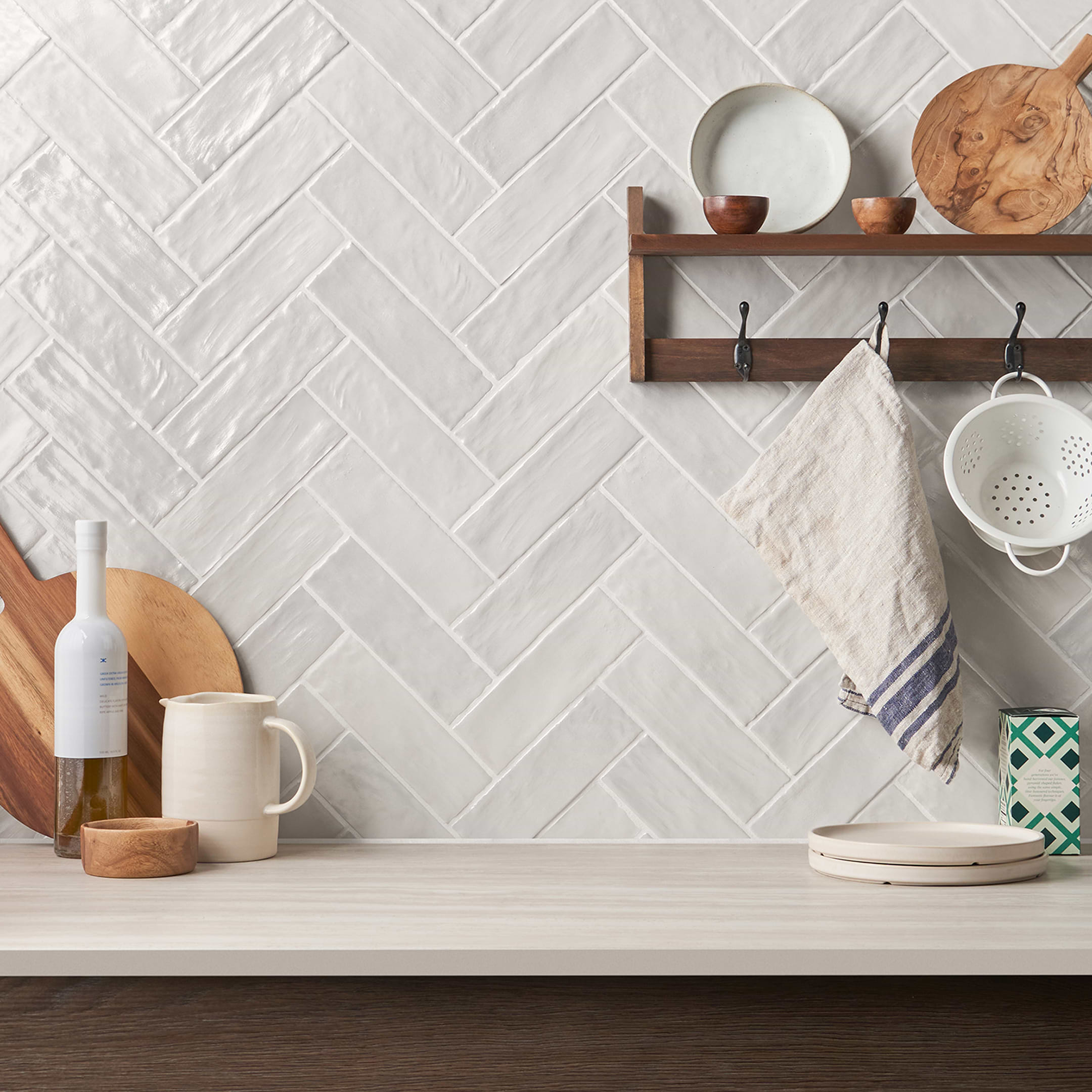
White subway tile is beloved for its ability to reflect light and visually open up a space. Its neutral palette allows it to pair effortlessly with natural stone, terracotta, glass, and other complementary materials. Beyond aesthetics, white subway tile is practical. It is durable, easy to maintain, and well-suited for high-use areas like kitchens and bathrooms.
What Are the Most Popular White Subway Tile Patterns?
Classic Subway Pattern
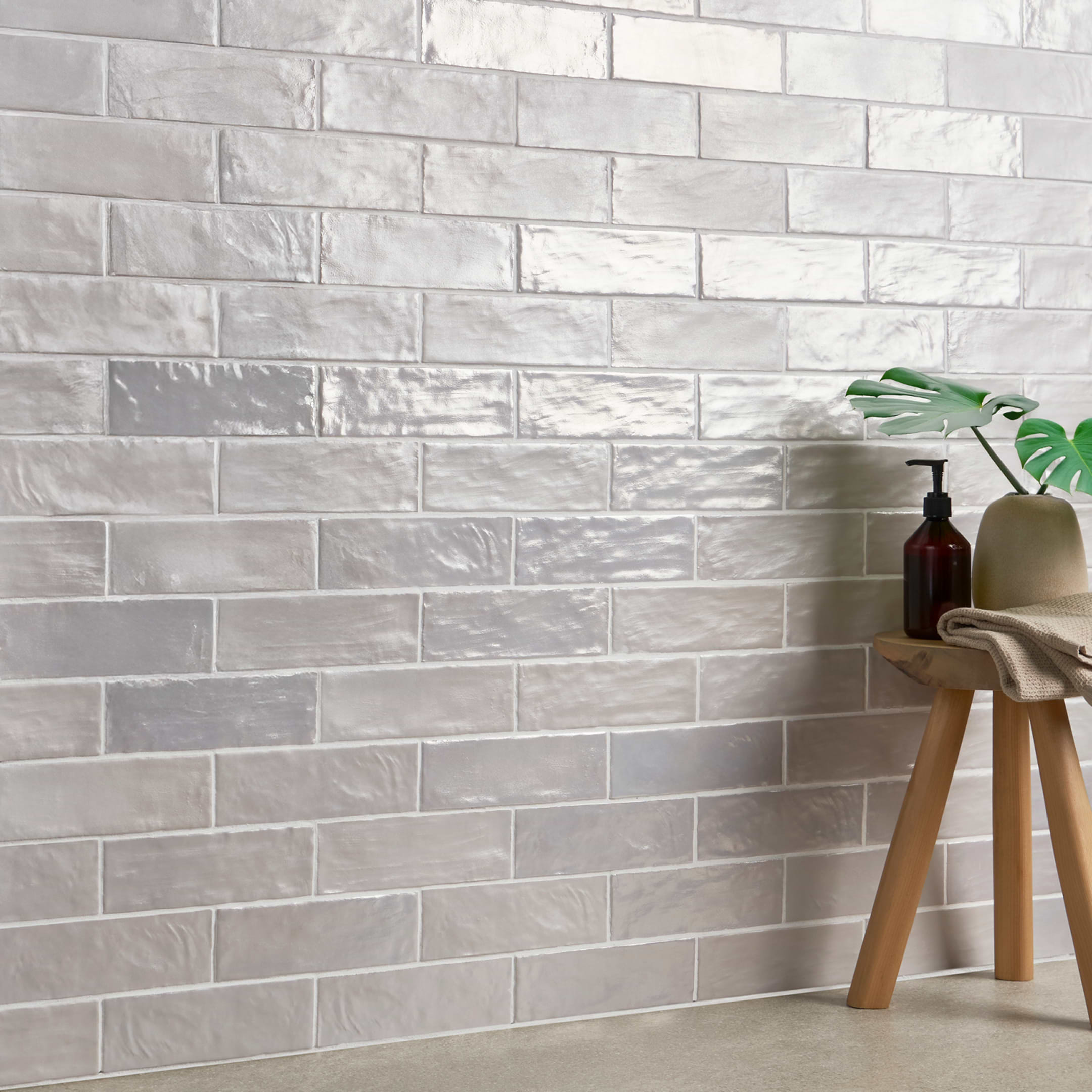
The most recognizable subway tile layout features a staggered, brick-style offset—typically set at a 50/50 or 1/3 offset. This classic arrangement is a reliable choice for kitchens, showers, bathroom walls, and wainscoting.
Part of the lasting appeal of this layout lies in its adaptability. The traditional subway pattern works just as well with crisp ceramic as it does with textured or handmade-look tiles, allowing the material itself to shine while the layout provides structure.
Tip: Even within a traditional layout, small adjustments can make a big impact. Consider a unique surface finish, a slightly elongated tile, or a contrasting grout color to add depth and personality without straying far from the classic look.
Herringbone Pattern
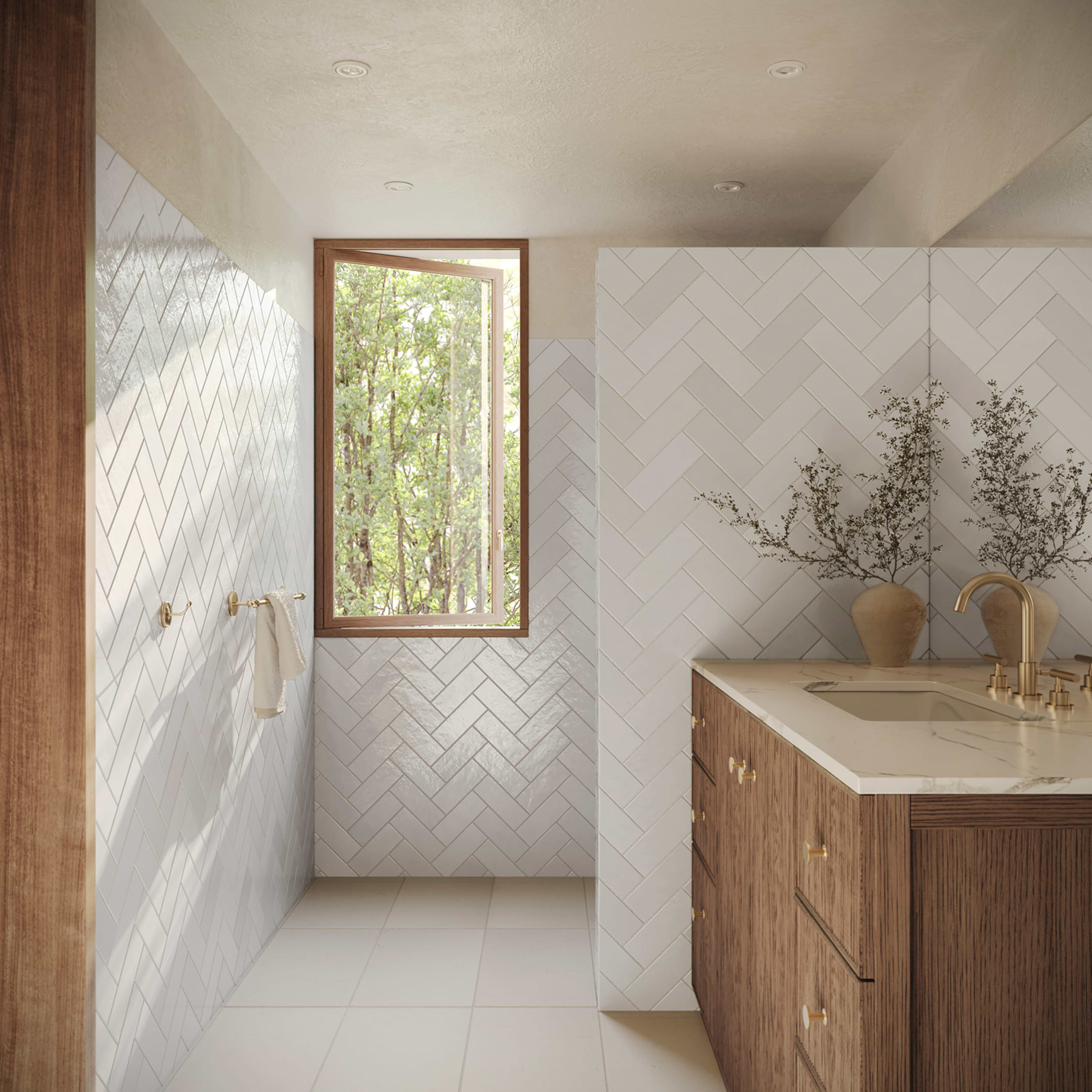
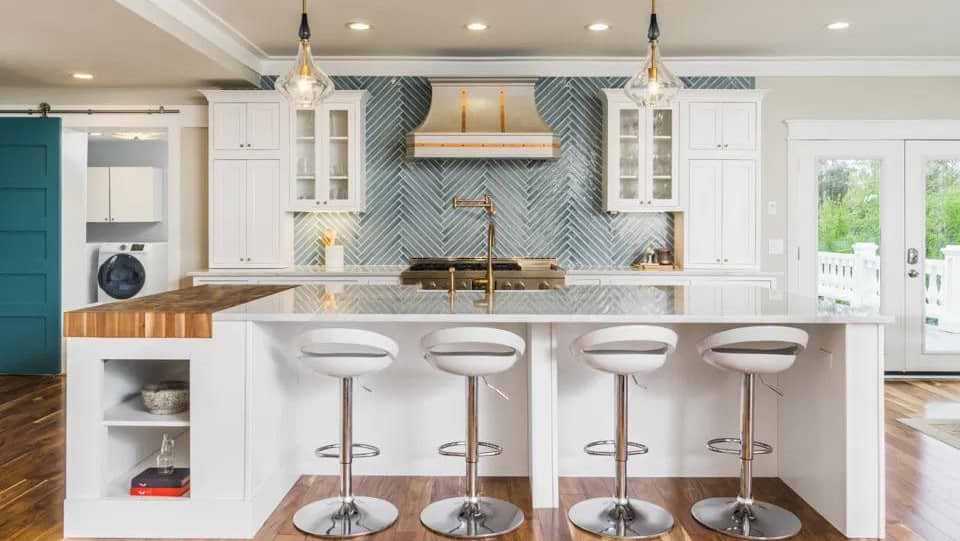
Elegant and eye-catching, the herringbone pattern brings dynamic movement to white subway tile. Rectangular tiles are laid at 90-degree angles, forming a repeating zigzag that instantly adds visual interest. The result feels refined yet energetic—perfect for spaces that benefit from a focal point.
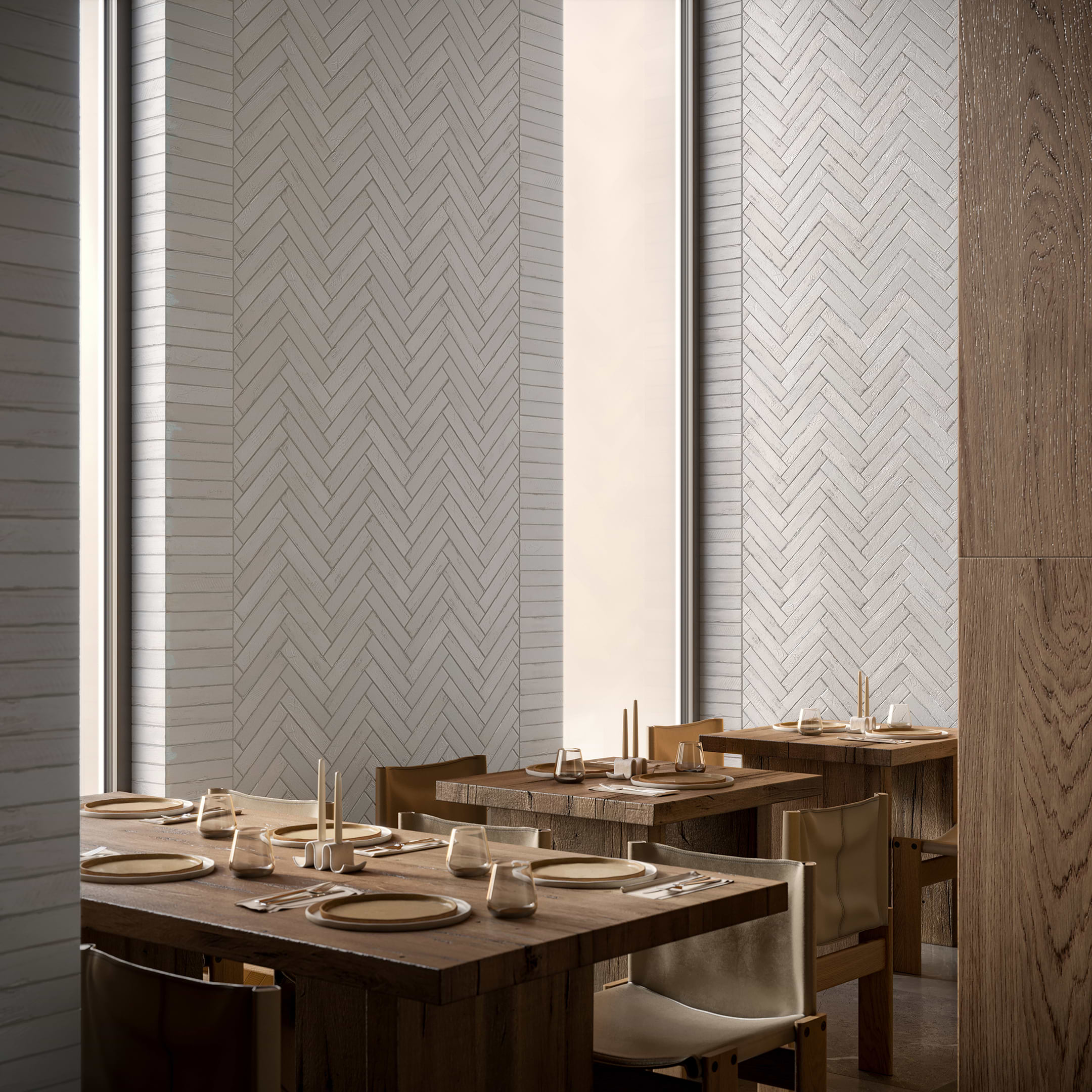
Herringbone layouts can be installed horizontally, vertically, or even at a 45-degree angle, each option creating a distinct effect. While traditional 3”x6” tiles work beautifully here, elongated formats can add a fresh look.
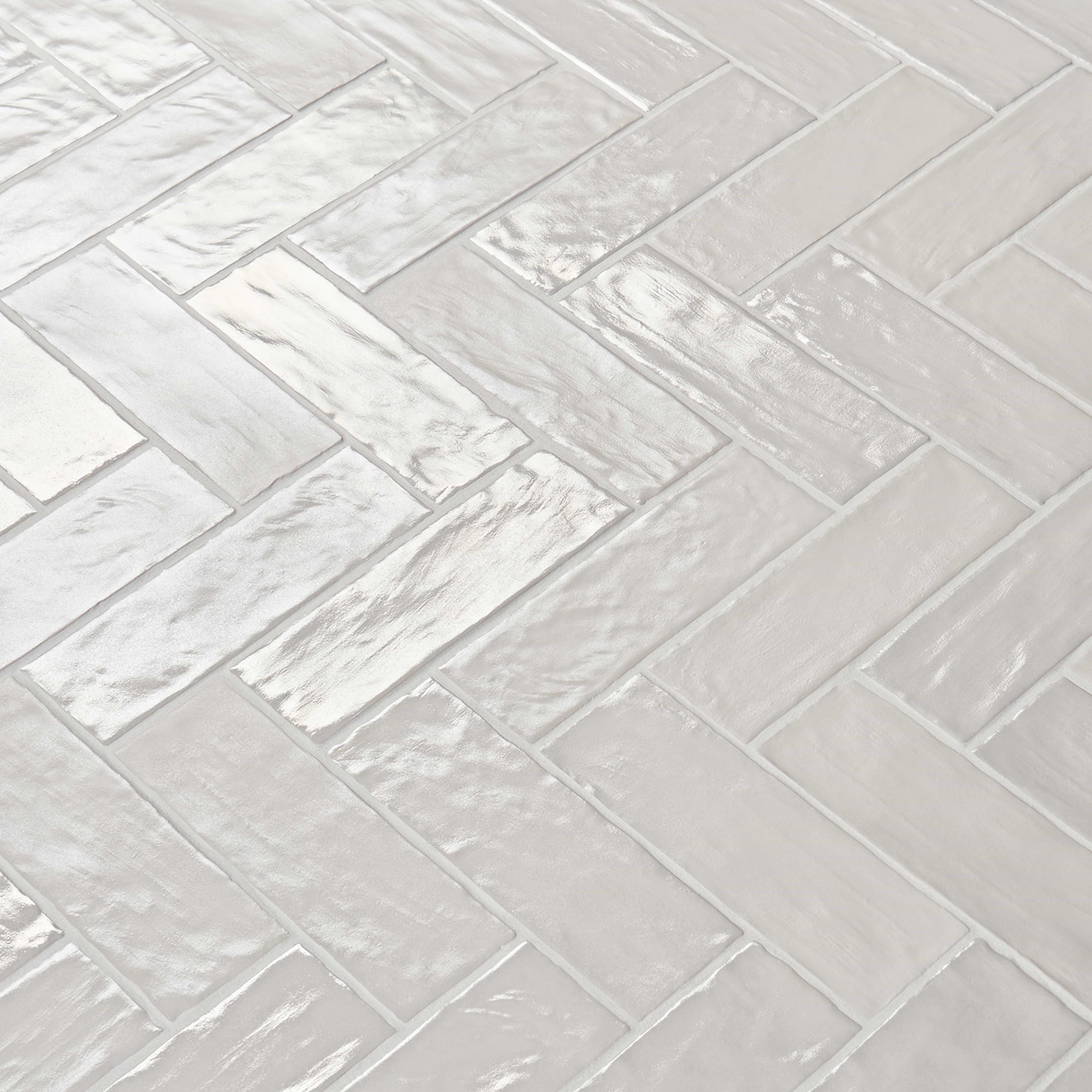
Tip: Herringbone patterns benefit from careful planning. Dry-lay a small section first to confirm scale and orientation, and consider a neutral grout to keep the pattern from feeling too busy—especially in smaller spaces.
Stacked Horizontal Pattern
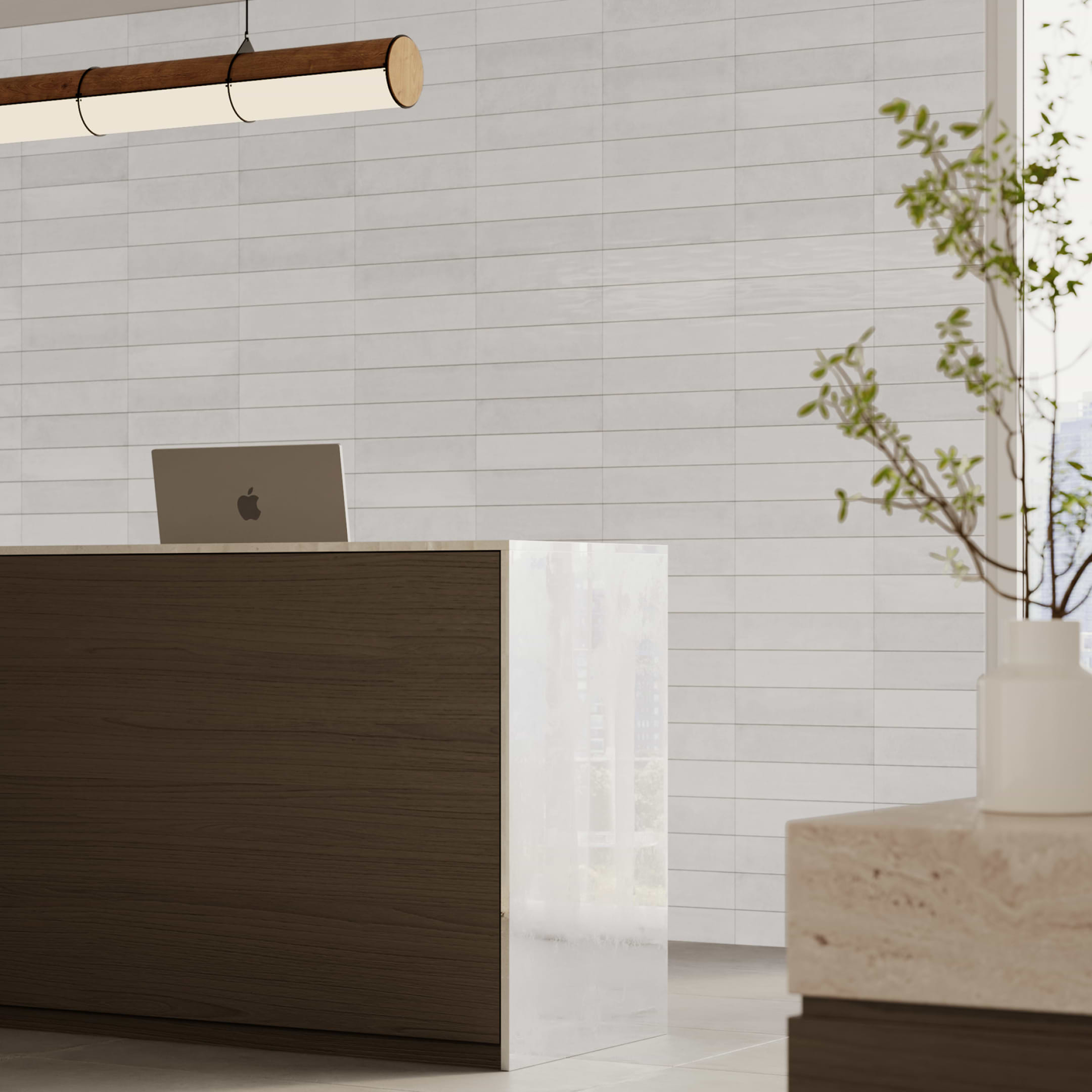
For a clean, modern look, a stacked horizontal layout offers crisp symmetry. Tiles are aligned in straight rows and columns, creating continuous horizontal lines that feel sleek and stylish.
Thanks to the elongated shape of subway tile, this layout can visually widen spaces—making it a smart choice for smaller bathrooms, backsplashes, and showers. When paired with a polished or softly textured finish, stacked horizontal layouts strike a balance between minimalism and warmth.
Tip: Stacked layouts highlight alignment, so consistency matters. Choose tiles with a more uniform edge and finish, and use precise spacing to keep lines clean and intentional. A matching or softly contrasting grout helps maintain a streamlined look.
Vertical Layout
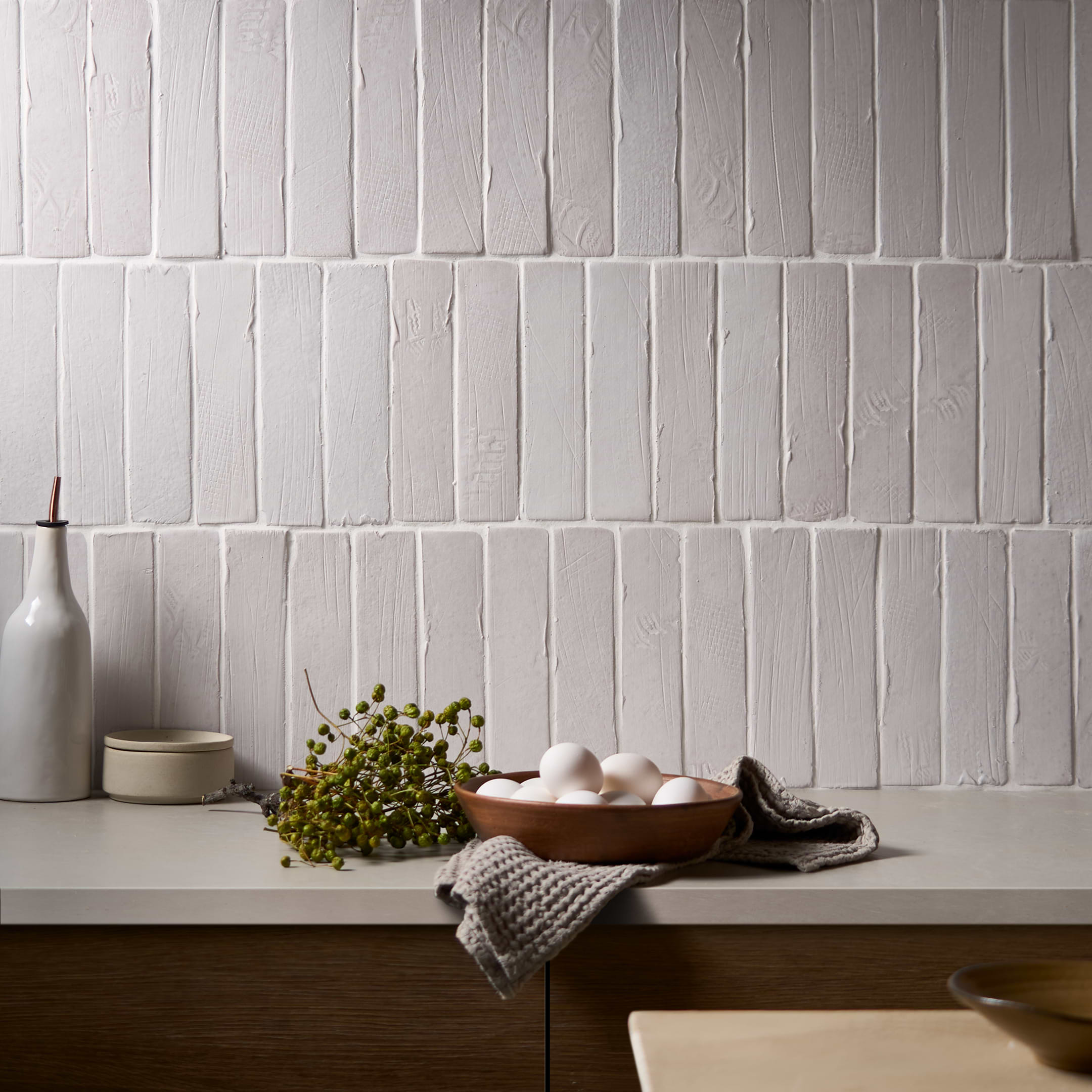
Turning subway tile on its side opens up an entirely different design direction. Vertical layouts—stacked or staggered—draw the eye upward, emphasizing height and creating a sense of openness.
This pattern is especially effective in spaces with lower ceilings or narrow walls, where vertical lines can make the room feel taller and more spacious.
Tip: Vertical layouts tend to emphasize grout lines, so grout width and color have an impact on the overall look. Narrow joints and a grout tone close to the tile color help keep the look cohesive and clean.
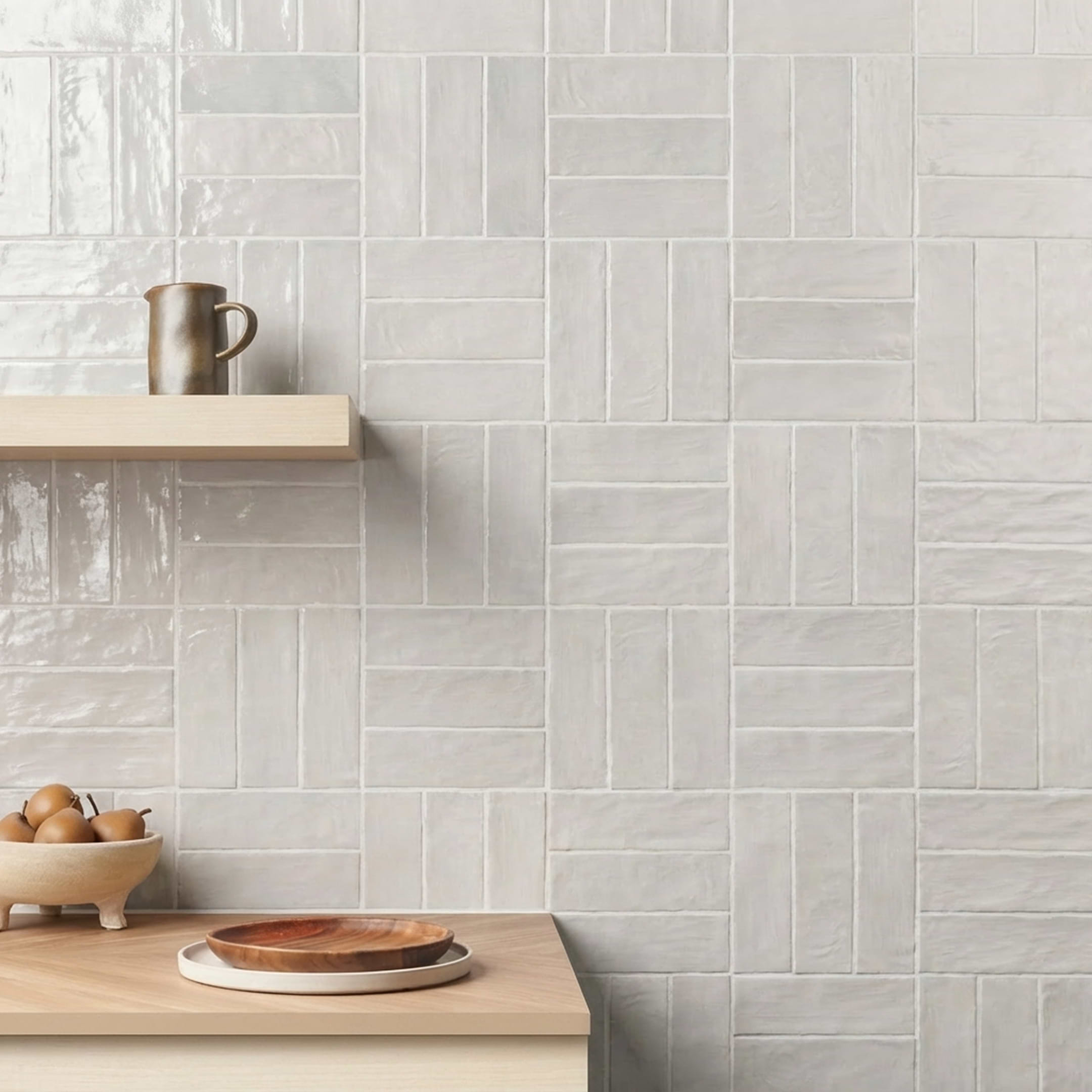
Basketweave Pattern
More intricate than other subway tile patterns, basketweave layouts introduce texture and pattern. Interlocking rectangular tiles create a woven effect, blending horizontal and vertical lines for a layered, dimensional look.
Tip: Basketweave layouts work best when paired with simple surrounding materials, allowing the pattern to act as a subtle focal point.
Choosing the Right Pattern for Your Space
When designing with white subway tile, pattern selection should consider both the material and the space itself. Larger tiles and stacked layouts often feel more contemporary, while traditional offsets and basketweave patterns add movement and can help shape how a room feels proportionately.
No matter the direction, white subway tile remains a flexible foundation—capable of adapting to a wide range of styles while maintaining a cohesive, polished look.
FAQ: Common Questions About White Subway Tile
What grout color works best with white subway tile?
Grout color plays a major role in how white subway tile looks overall. White grout creates a seamless, classic appearance, while light gray or beige adds gentle definition to the pattern. Darker grout colors—such as charcoal or black—highlight the layout and create a more graphic effect.
How do I make white subway tile feel more modern?
Choosing an elongated tile size (longer than the classic 6″), using a stacked or vertical layout, or pairing white subway tile with warm metals or natural materials can give it a more current, updated feel.
What is the 1/3 rule for tile?
The 1/3 rule refers to offsetting tiles by one-third of their length instead of a 50/50 stagger. This layout helps prevent lippage (when one tile edge sits slightly higher than the next) and gives the pattern a more natural, easy flow.
Is white subway tile still in style?
Absolutely. White subway tile is still popular because it keeps adapting—new sizes, finishes, and layouts keep it feeling fresh.
What other tiles go well with white subway tile in a kitchen?
White subway tile pairs well with natural stone, glass, terrazzo, and bold accent tiles for contrast.
Should I use 3”x6” or 4”x12” white subway tile?
Standard 3”x6” white subway tile offers a classic look, while more elongated styles lend a more contemporary feel. The choice depends on the scale and size of the space.
Is flat or beveled white subway tile better?
Neither is better universally—it depends on the desired look. Flat tiles feel modern; beveled tiles add depth and character.
Is beveled subway tile hard to clean?
Not really. While the beveled edges add detail, regular cleaning is usually all it takes.
Final thoughts
White subway tile strikes a rare balance between everyday function and style. It works in just about any space, pairs well with almost everything, and doesn’t lock you into one specific look. How it’s installed matters just as much as the tile itself, and choices—like scale, pattern, and proportion—can really shape the final look. The right size, layout, and finish can make white subway tile feel totally unique in your space.
Related Articles

Explore Our
Tilefinder