Visit
Visit 
Outdoor Tile: From Pathways to Pools

 Copy Link
 Email
Email
 Twitter
 Pinterest
 Instagram
 Facebook
Not every tile is suitable for outdoor use, where moisture exposure and temperature fluctuations can be intense. Outdoor tile should be able to withstand freezing, thawing, and consistent UV exposure. Here’s a quick guide to outdoor tile recommendations for the four P’s: pathways, patios, porchways, and pools.
What’s the best tile for pathways?
Because they’re high-traffic areas and outdoors, pathways need extra-durable tiles, making pavers, natural stone, and flagstone styles popular.
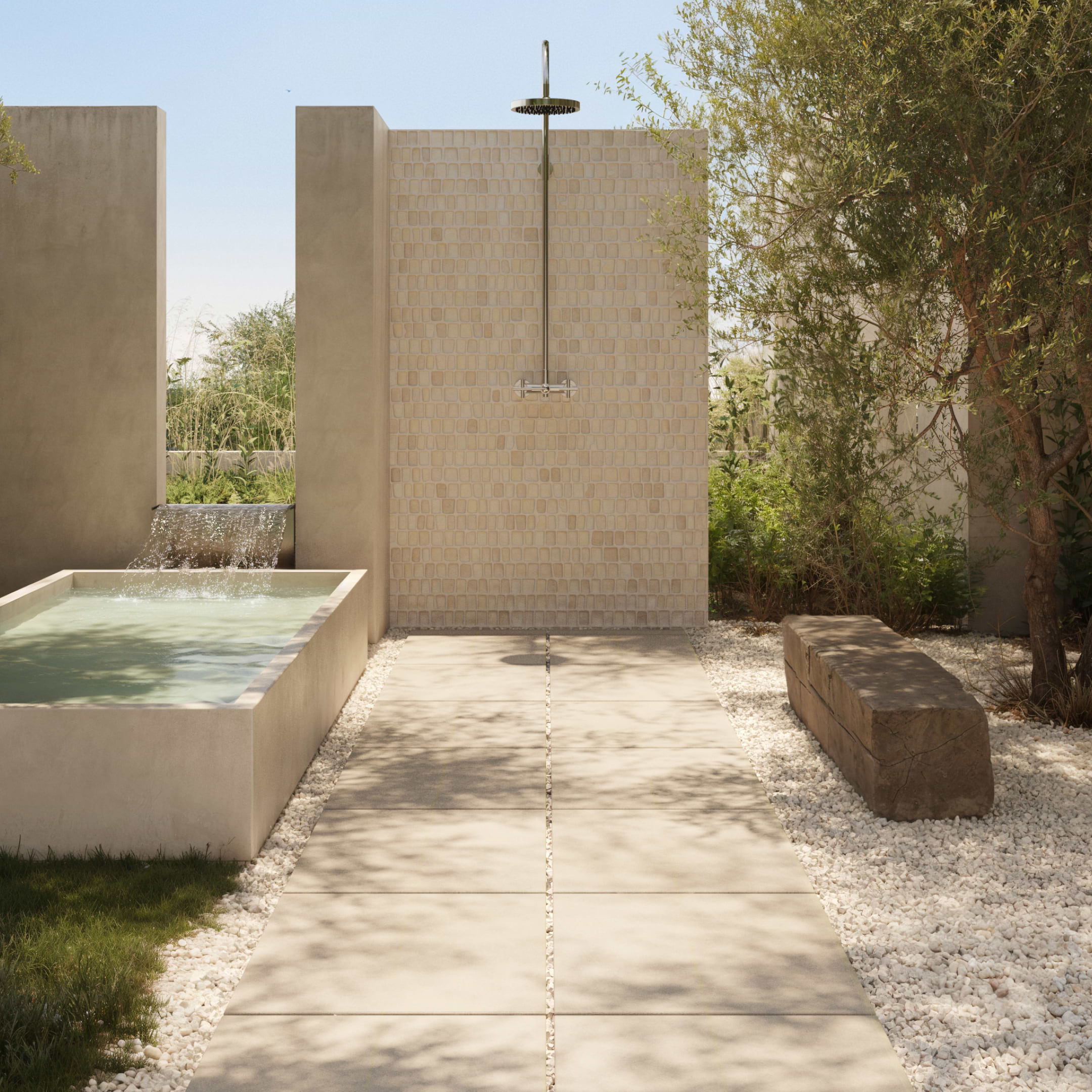
- Pavers are typically made from porcelain or natural stone and come in large-format squares or rectangles. Thicker than indoor tile (they’re 2cm thick or more), they also have slip-resistant surfaces. Best of all: they can be laid directly over concrete, decking, sand, gravel, or grass.
- Natural stone tiles like limestone, granite, and slate are also popular for pathways, lending them an earthy, elegant look. This look comes at a cost premium, however, and natural stone tiles require periodic resealing to prevent staining, water absorption, and weather damage.
- Flagstone is either made of real stone or porcelain made to look like it. Given the fluid sizing of flagstone tile pieces, it’s a good pathway option for non-linear areas or where a more natural look is desired.
What’s the best tile for patios?
Many of the same tiles that work well for pathways also work well for patios. However, because patios are often used as an outdoor living space, you may want tile with more design flair.
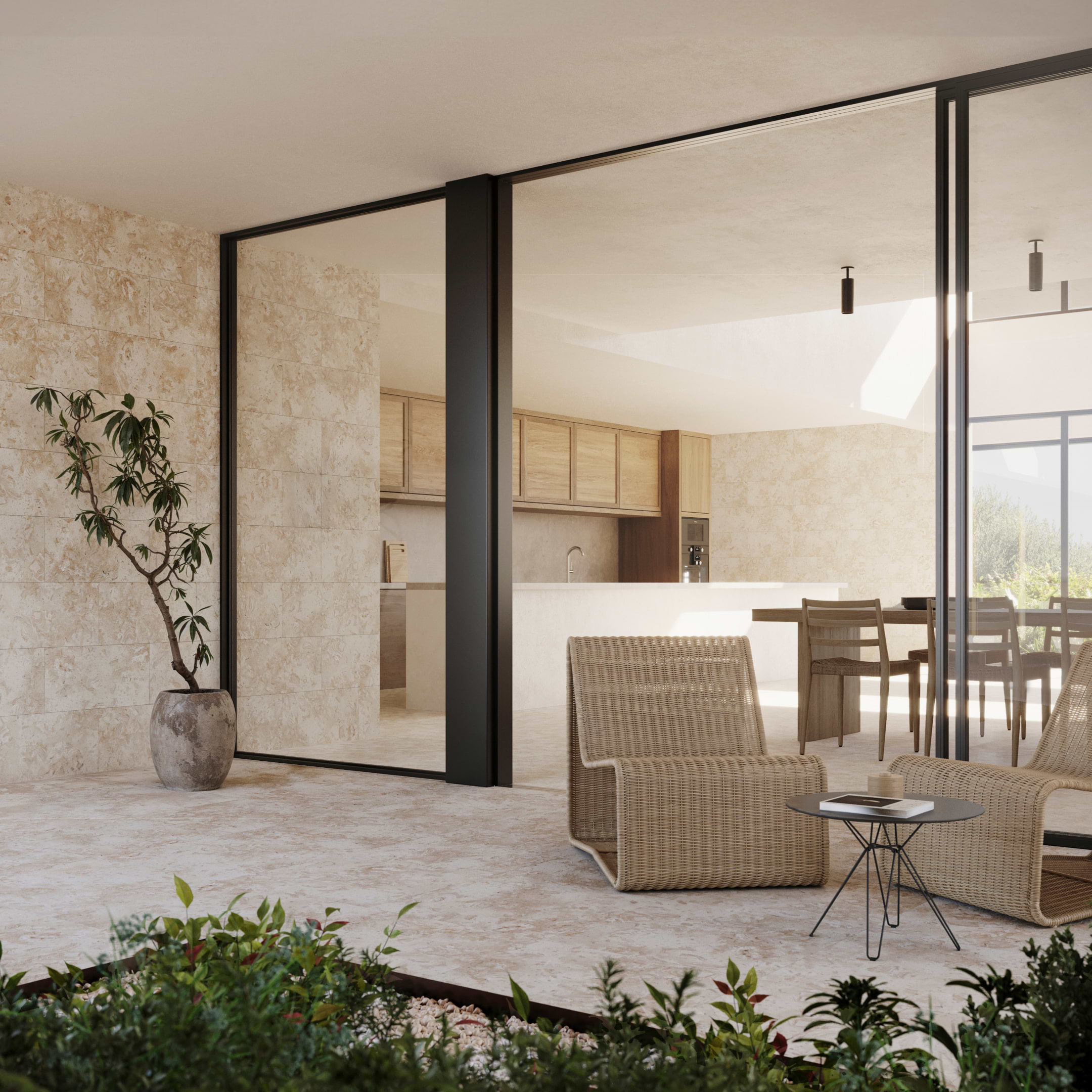
- Porcelain tile comes in a range of styles, from stone-look and wood-look to all-out pattern, with many collections being approved for outdoor use. It’s durable, low-maintenance, and resistant to moisture, temperature changes, and fading.
- Natural stone tile, like slate, travertine, or limestone, brings a high-end look to patios. Its natural texture provides slip resistance, though it may require sealing and occasional maintenance, and it may be susceptible to staining.
- Ceramic tile can be suitable for outdoor use in some instances, like with quarry tile. Quarry tile is known for its strength and slip resistance, and stands up to changing weather conditions. While traditionally associated with more utilitarian spaces (like kitchens), cost-effective quarry tile is available in a range of warm, earthy tones that look right at home on patios.
What’s the best tile for porches?
Because porches tend to be covered spaces, tiles used there needn’t be as element-resistant as those used for pathways or fully exposed patios. That said, porch tile should still be durable, slip-resistant, and able to handle temperature changes and foot traffic.
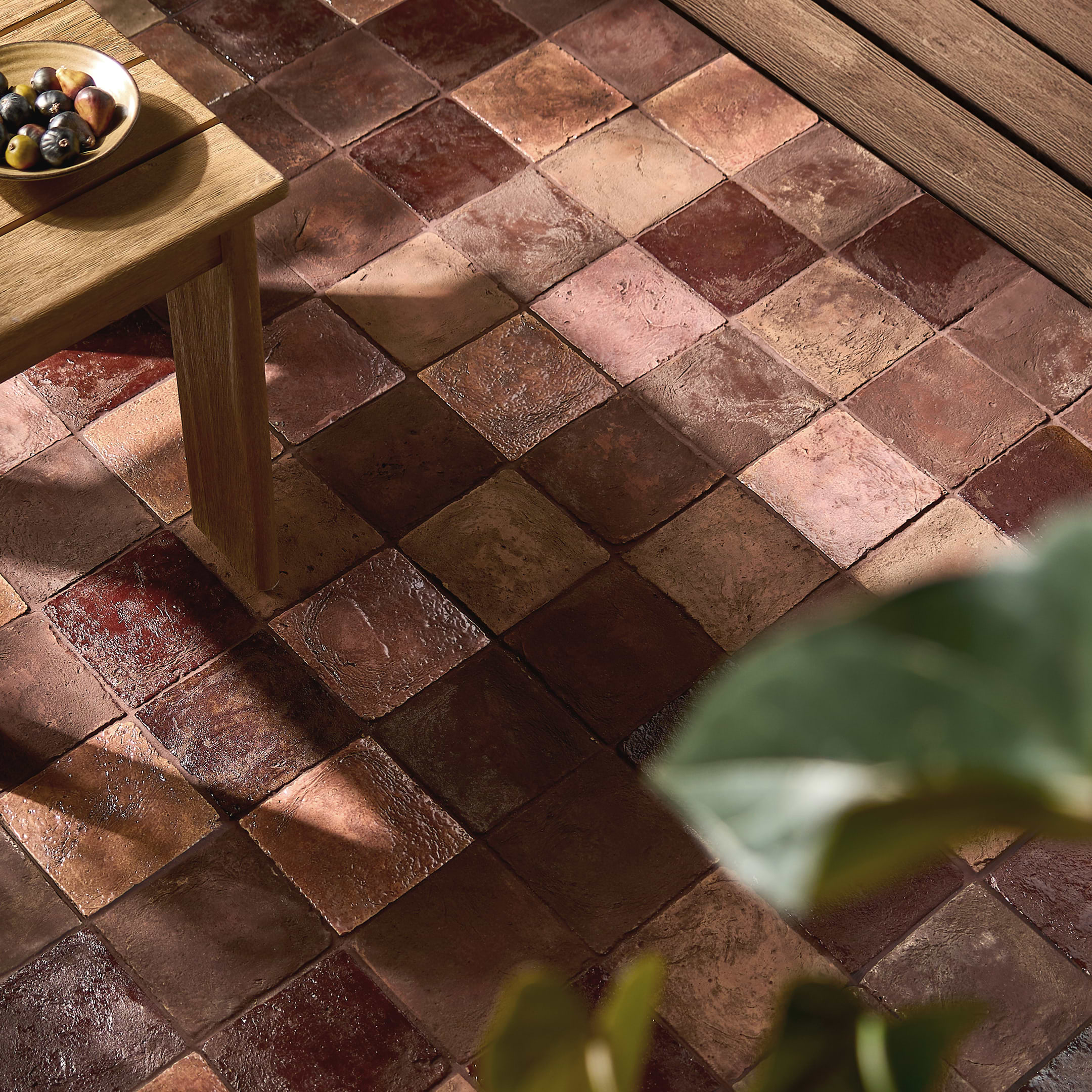
- Terracotta tile adds old-world charm to porches. Its natural texture offers good slip resistance, though sealing is recommended to protect against moisture and staining.
- Patterned tile can make for a nice design moment on porches and is typically made of either porcelain or ceramic. Encaustic-style tiles in particular are popular, adding visual interest while remaining practical enough for covered outdoor use.
- Porcelain tile is, as with the other categories, a great solution for porches. It’s durable, low-maintenance, and resistant to moisture, temperature changes, and fading.
What’s the best tile for pools?
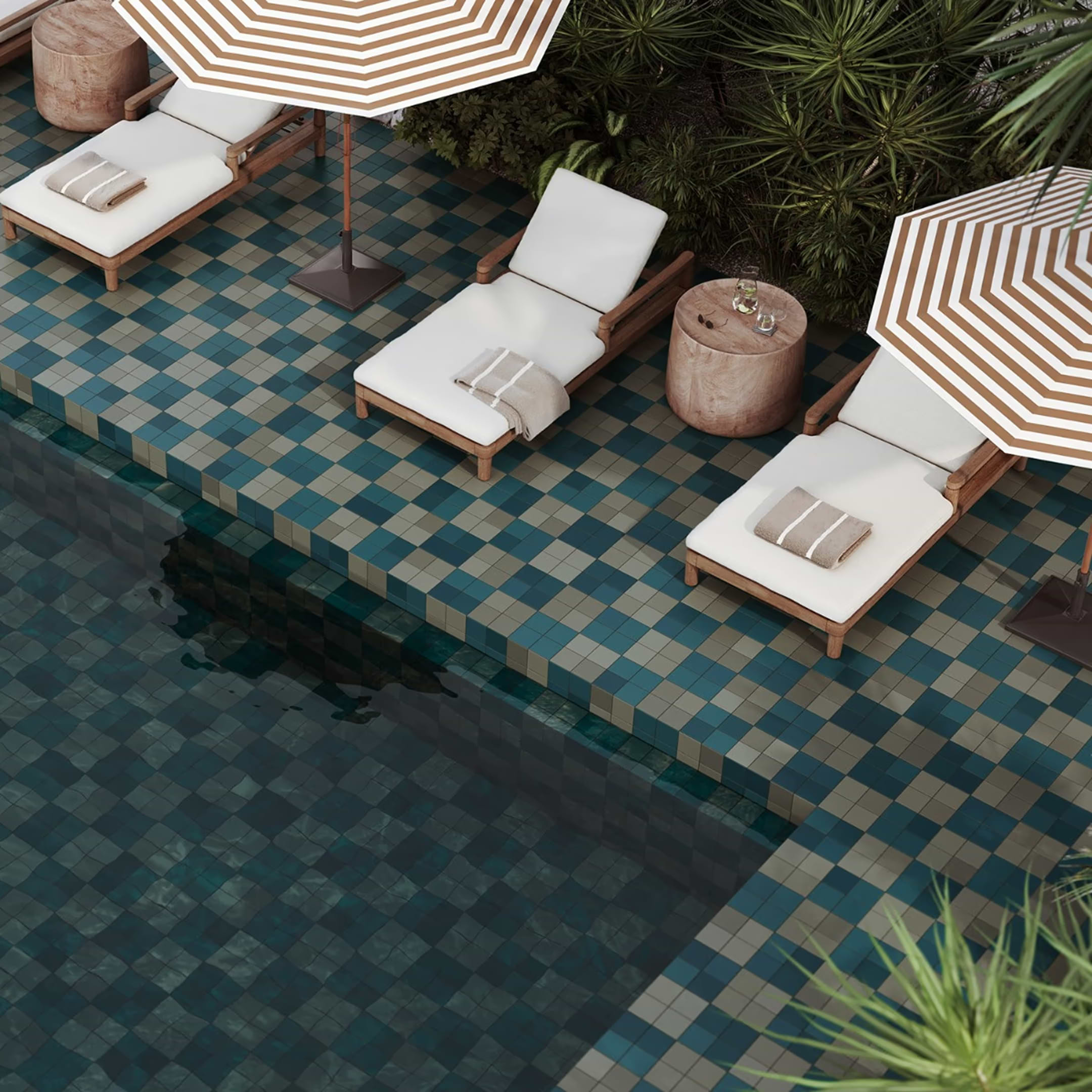
The most common pool tiles are porcelain, natural stone, and glass mosaics. Because pools expose tile to constant moisture and potential chemicals, certain tiles are better than others.
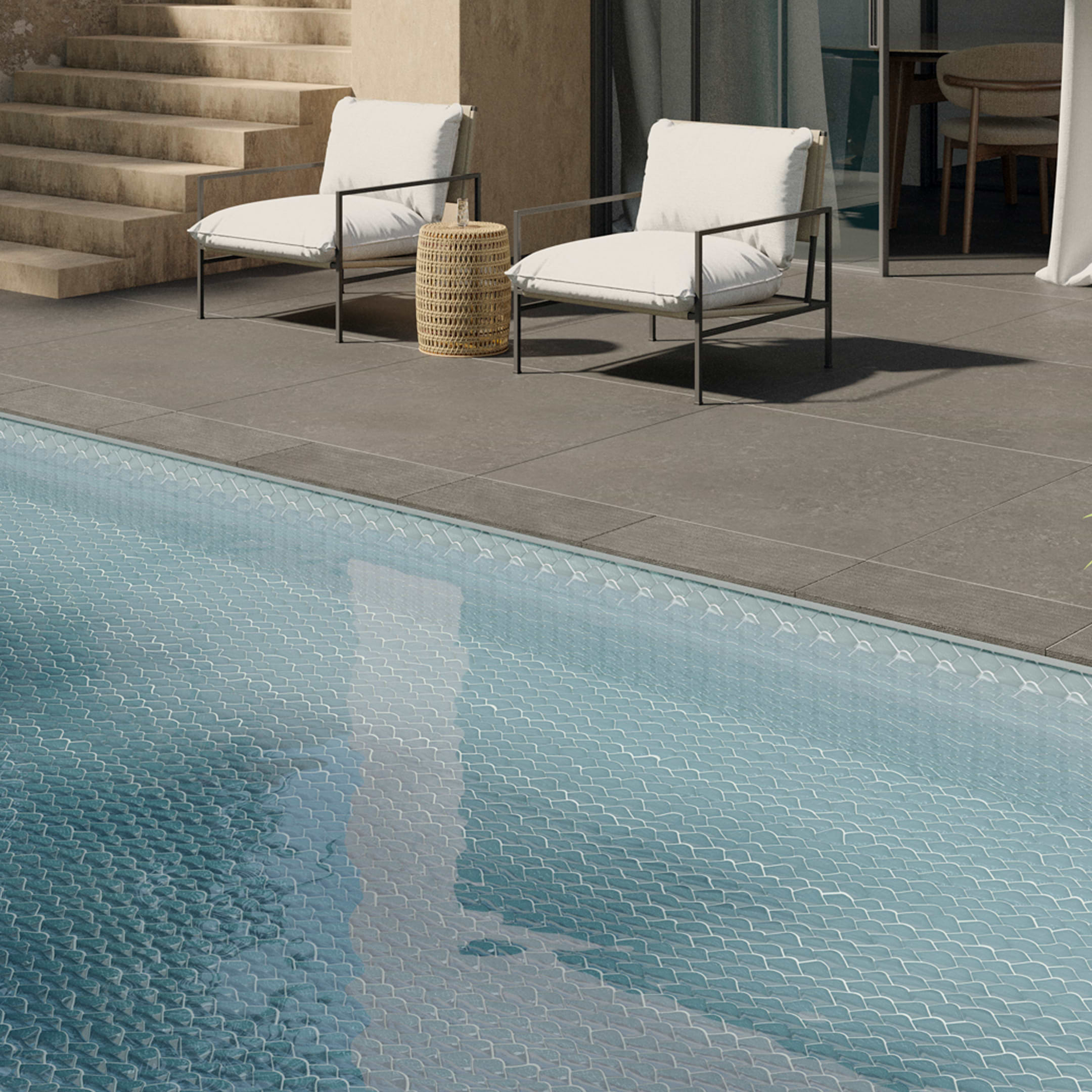
- Glass mosaics reflect light beautifully and come in many colors and textures, making them a popular pick for waterlines or full pool installations. Glass tile is stain-, mold-, and mildew-resistant.
- Porcelain tile is also stain-, mold-, and mildew-resistant, as well as incredibly durable. Available in a slew of styles and formats, porcelain is a practical, low-maintenance option for pools, making it popular as liner tile as well as pool coping.
- Natural stone tile has an earthy, organic appeal that many desire for pools, though it is at the more expensive end of the spectrum and requires periodic resealing. The most common stone types for pools are granite and limestone, and are generally used for pool coping and decking.
FAQ: Common Questions for Outdoor Tile
What is the best option for outdoor tiles overall?
Porcelain is generally considered the best all-around outdoor tile option because it’s incredibly durable, low maintenance, and comes in many styles and formats. It performs well across patios, porches, walkways, and steps.
What is the best tile for an outdoor patio?
Porcelain tile is one of the best choices for outdoor patios thanks to its durability, low water absorption, and resistance to fading, moisture, and temperature changes. Natural stone and quarry tile are also popular options for patios.
What is the best tile for a front porch?
Porcelain tile is a top choice for front porches due to its versatility and performance. Patterned tile is also popular for porches, where it can add character and curb appeal without being exposed to constant weather.
Can you put tile on a front porch?
Yes, tile is often used for front porches, especially covered ones. Porcelain, patterned ceramic, terracotta, and certain natural stones work well, as long as the tile is rated for outdoor use and has a slip-resistant surface.
What is the cheapest way to build garden steps?
The most affordable garden steps are typically concrete pavers or stacked concrete blocks. These options minimize labor and material costs while still being functional.
How much do outdoor steps typically cost?
Outdoor steps can range widely in cost. Basic concrete or paver steps may start around a few hundred dollars, while custom tiled or stone steps can run into the thousands, depending on materials, size, and labor.
Related Articles
Explore Our
Tilefinder