Visit
Visit 
Creative Subway Tile Patterns for Your Next Project
 Copy Link
 Email
Email
 Twitter
 Pinterest
 Instagram
 Facebook
Subway tile is a design classic—but the pattern you choose can completely transform how it looks and feels in a space. Discover unique subway tile patterns to define your design with intention. Explore layouts like herringbone, stacked, basketweave, and more for inspiring design ideas that feel both timeless and fresh.
Whether you’re planning a kitchen backsplash, bathroom wall, shower wall, or floor, selecting the right layout is just as important as choosing the tile itself. Below, we’ll explore popular patterns, how they’re installed, and where they work best.
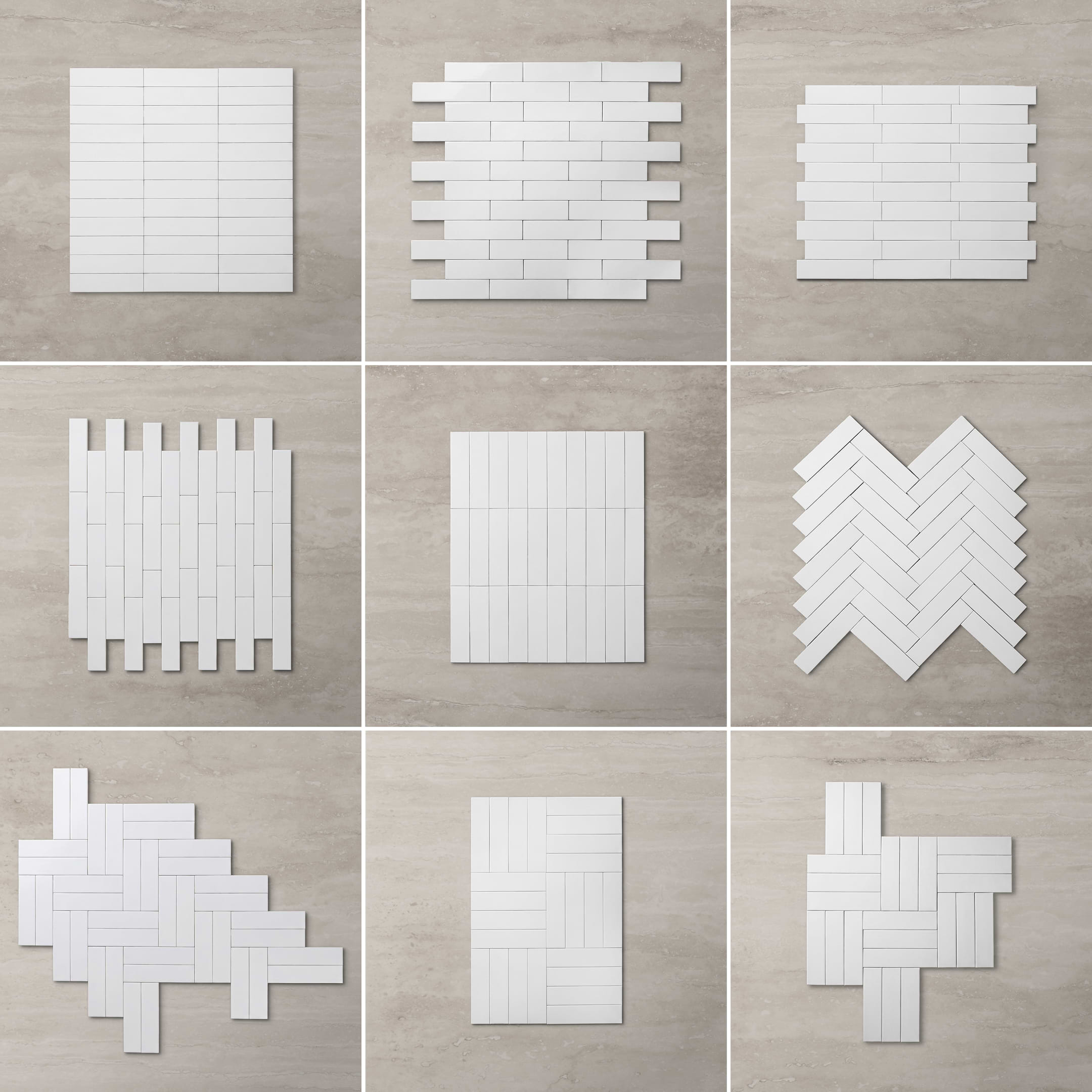
What are popular subway tile patterns?
Subway tiles may share the same rectangular shape, but their layouts can create dramatically different results. These are some of the most popular subway tile patterns designers return to again and again.
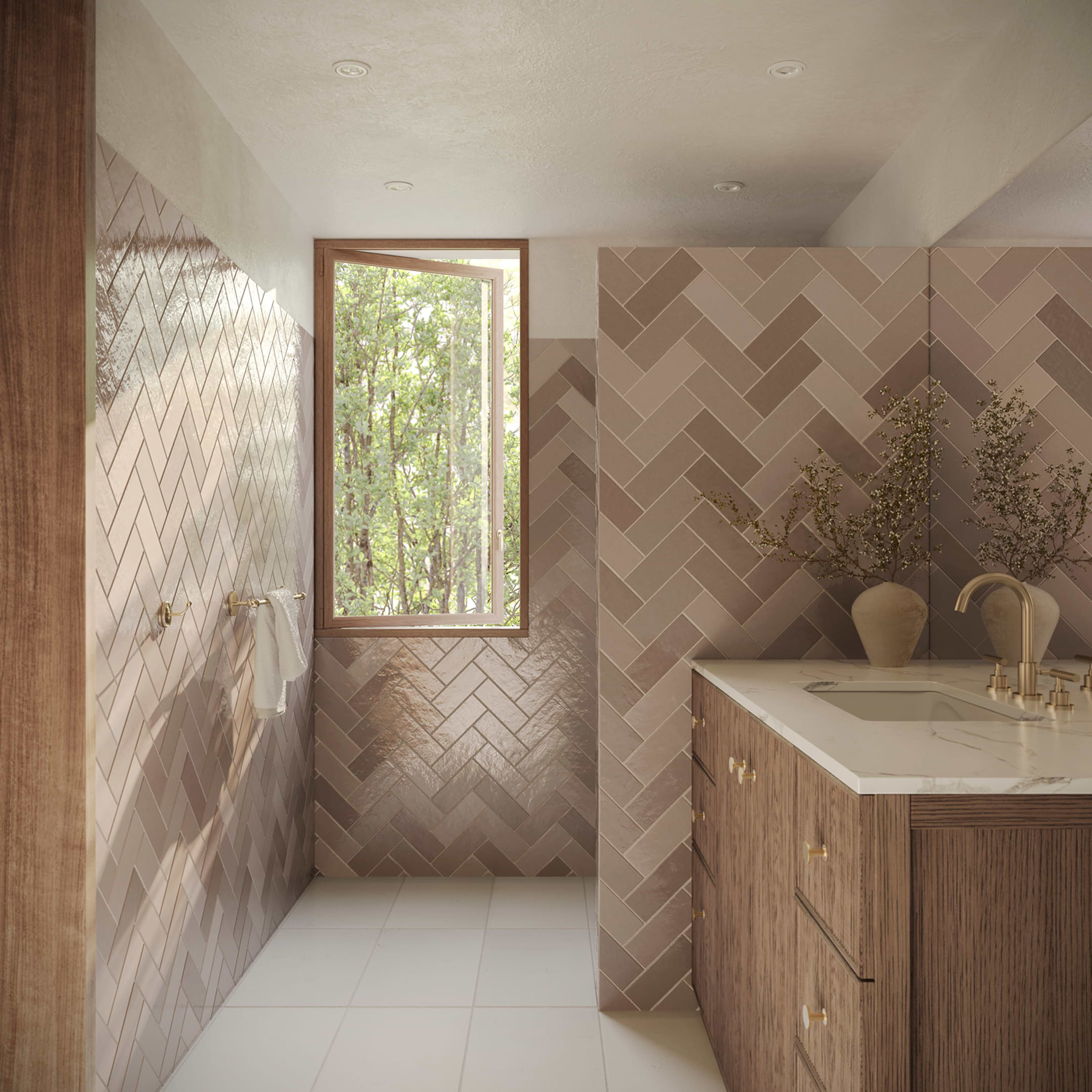
Herringbone Subway Tile Design
One of the most eye-catching subway tile patterns, herringbone adds instant movement and architectural interest.
Tiles are arranged in alternating 45-degree angles, creating a zigzag effect that feels both classic and modern. It’s a great way to introduce texture and visual depth without relying on bold color.
Why it works: Highlights the geometry of the layout and adds visual depth, even in subtle or neutral color palettes.
Best for: Backsplashes, accent walls, showers, and statement floors
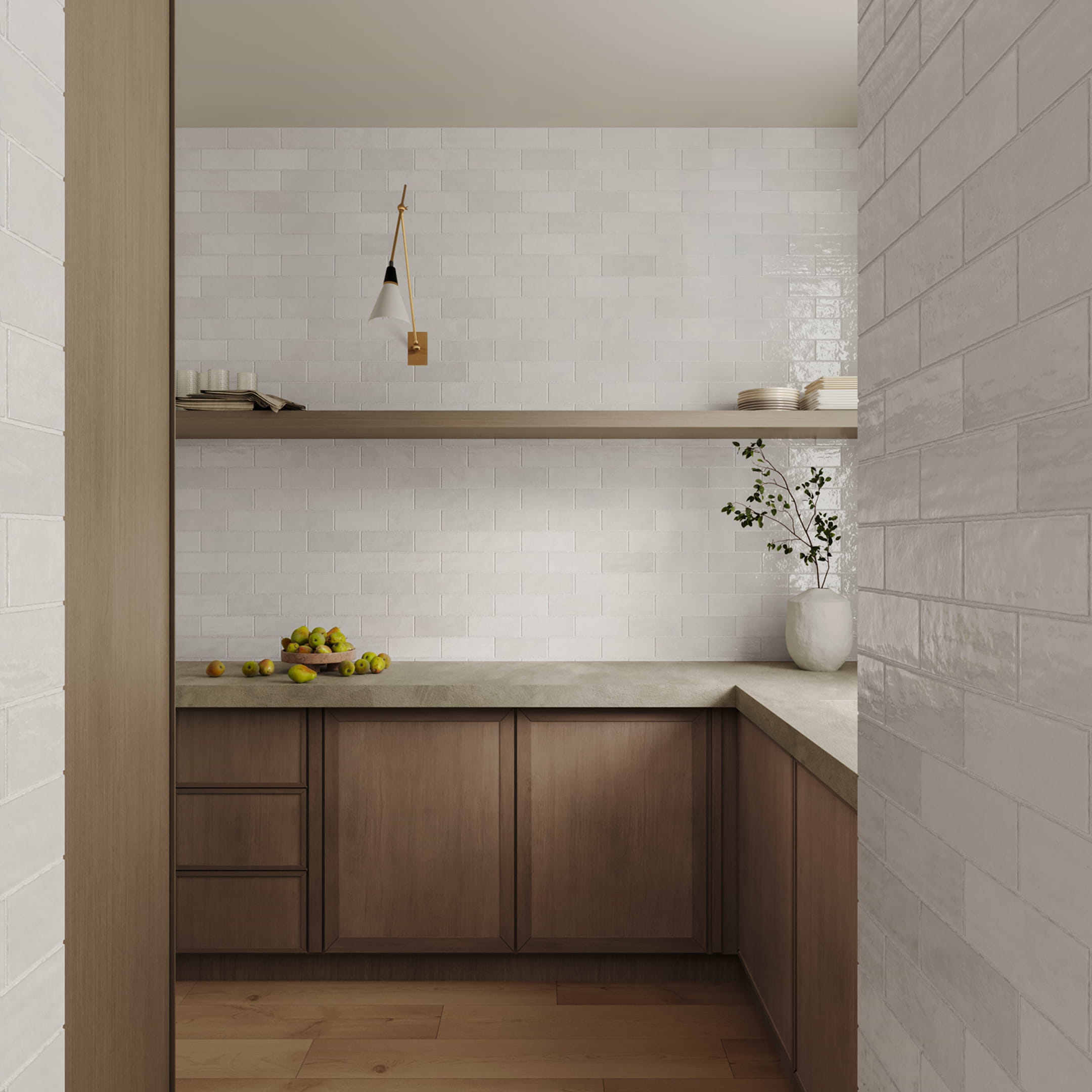
Off-Set
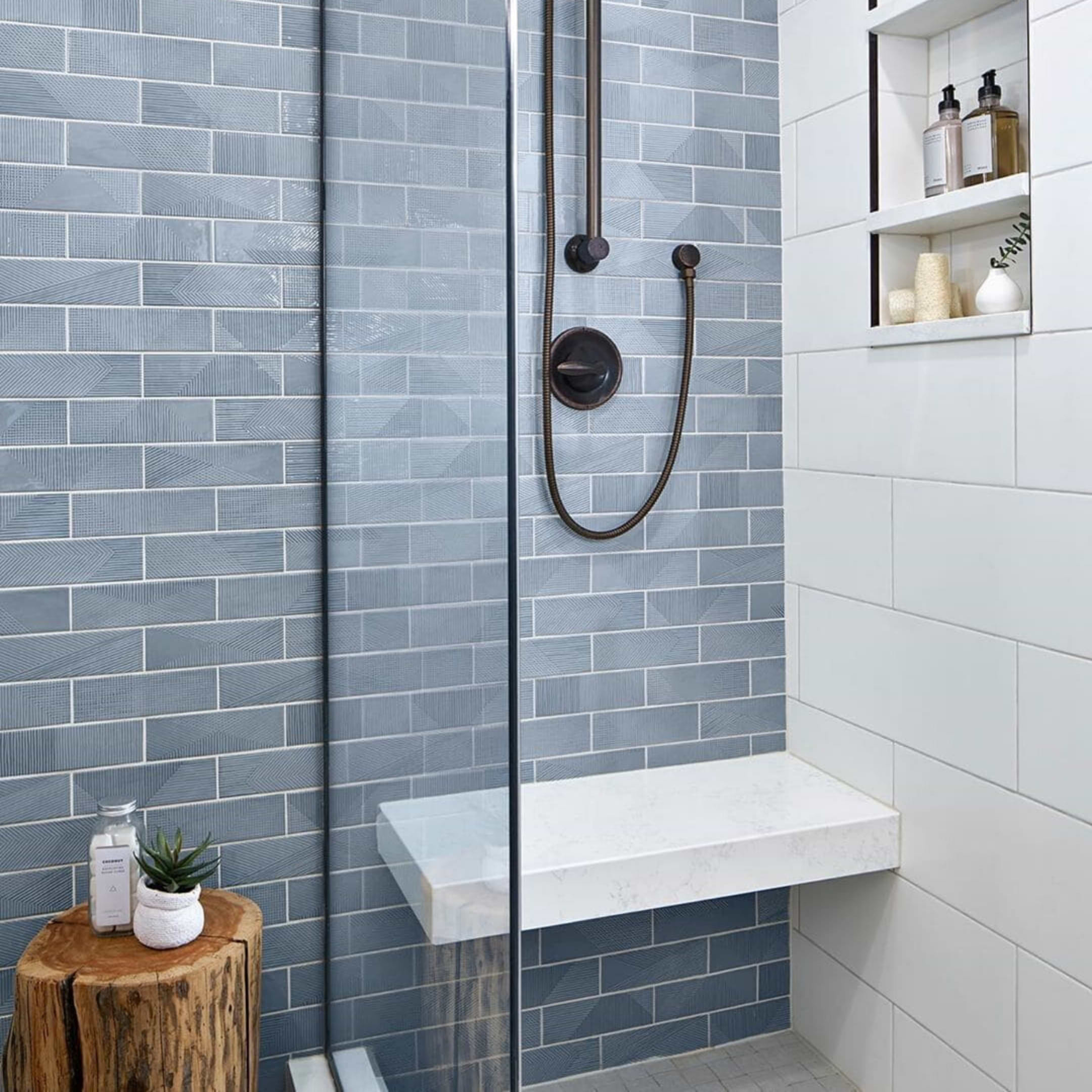
The most traditional subway tile pattern, where each row is staggered—typically by one-half or one-third of the tile length.
Why it works: Timeless, forgiving, and versatile
Best for: Kitchens, showers, fireplace surrounds
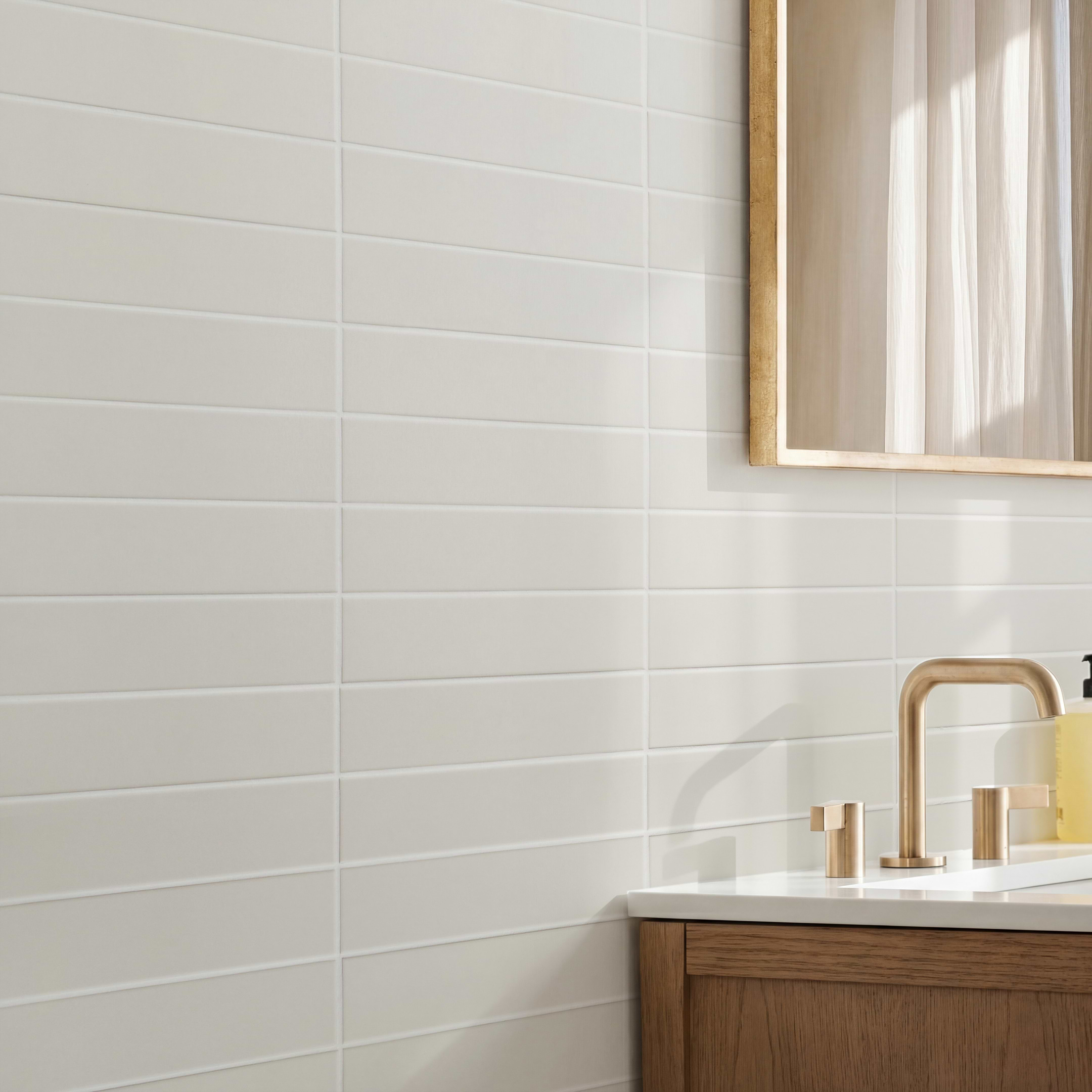
Traditional Stacked (Horizontal Stack)
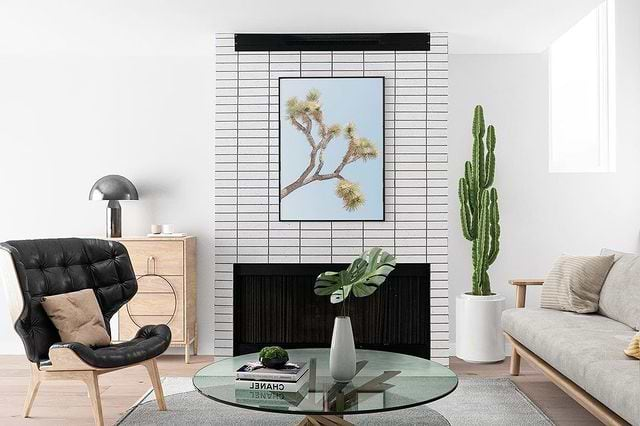
Tiles are aligned directly on top of each other in neat rows, forming a grid-like appearance.
Why it works: Clean, modern, and structured
Best for: Contemporary kitchens and minimalist bathrooms
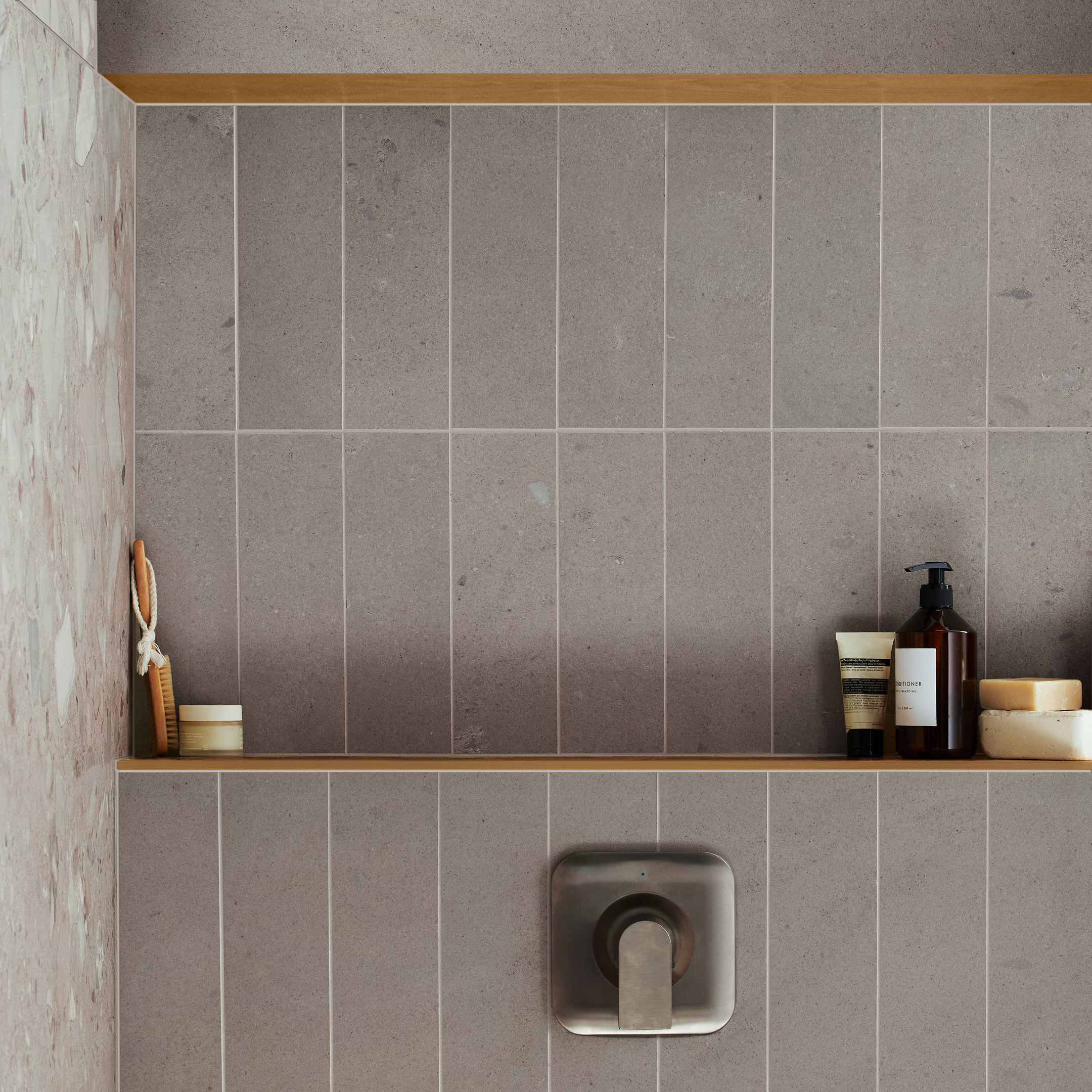
Vertical Stacked
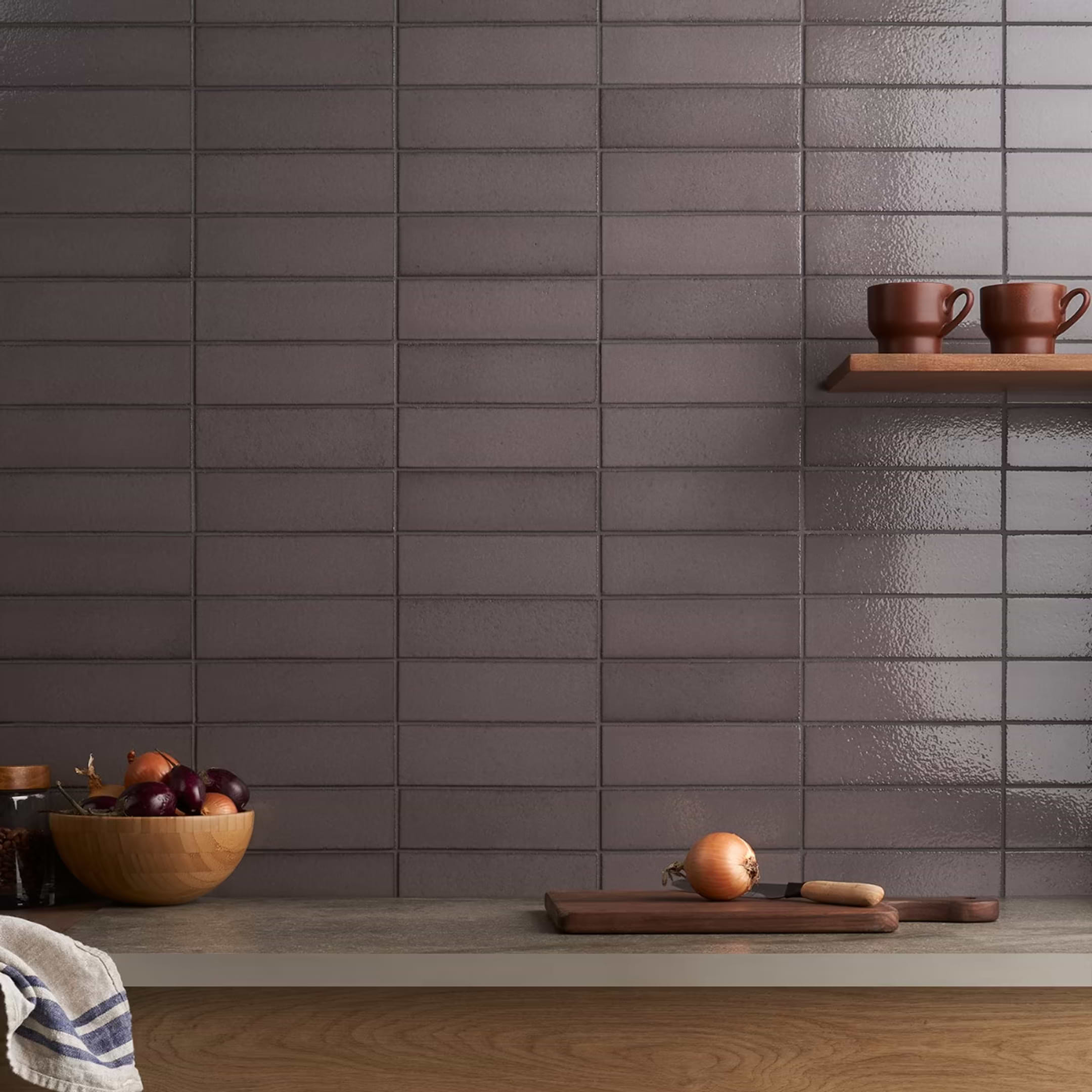
A variation of stacked tile, installed vertically to emphasize height.
Why it works: Makes ceilings feel taller, and spaces feel more architectural
Best for: Small bathrooms, shower walls, vanity backsplashes
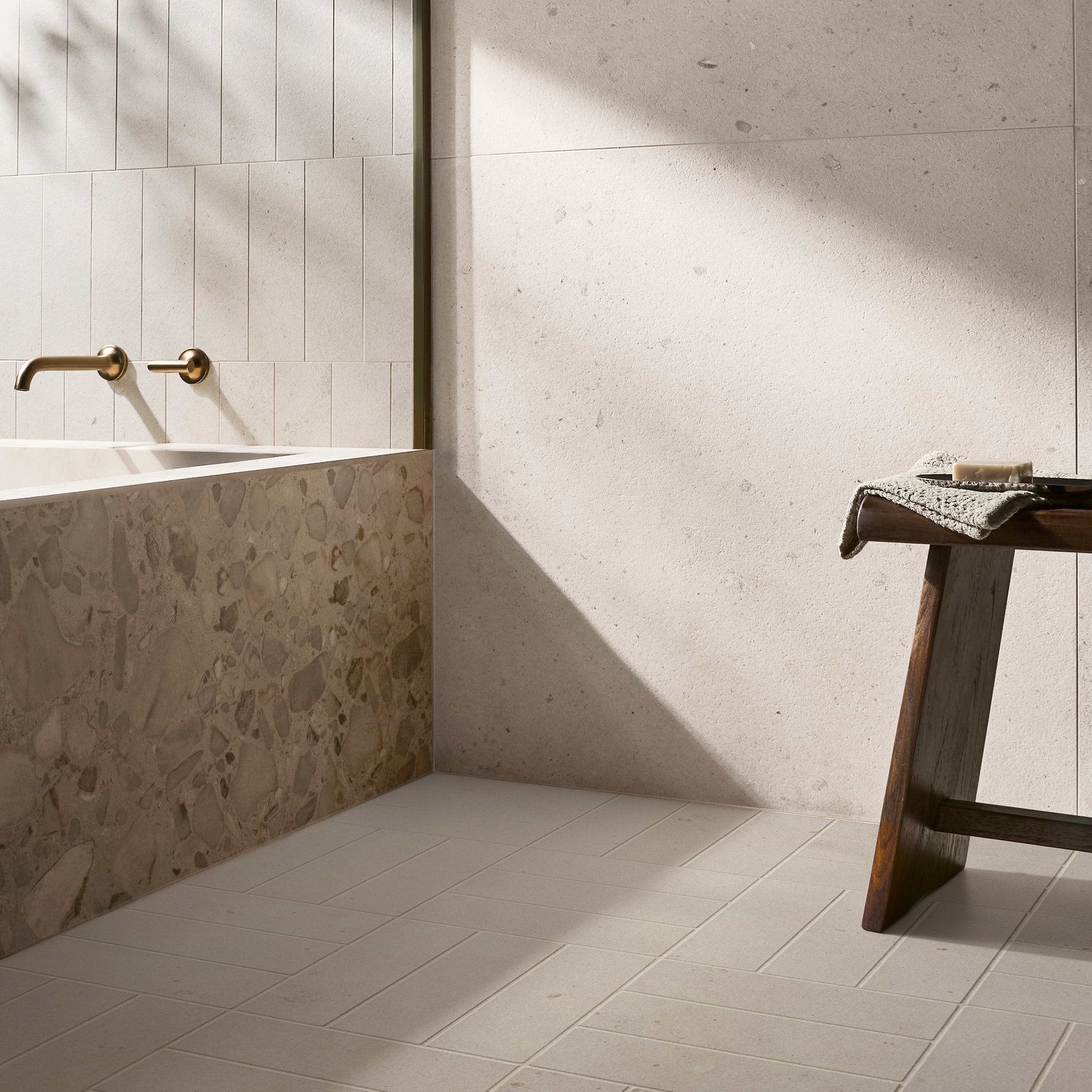
Basketweave
Tiles are arranged in alternating horizontal and vertical groups, creating a woven effect.
Why it works: Adds texture and visual richness without feeling busy
Best for: Bathroom floors, shower floors, powder rooms
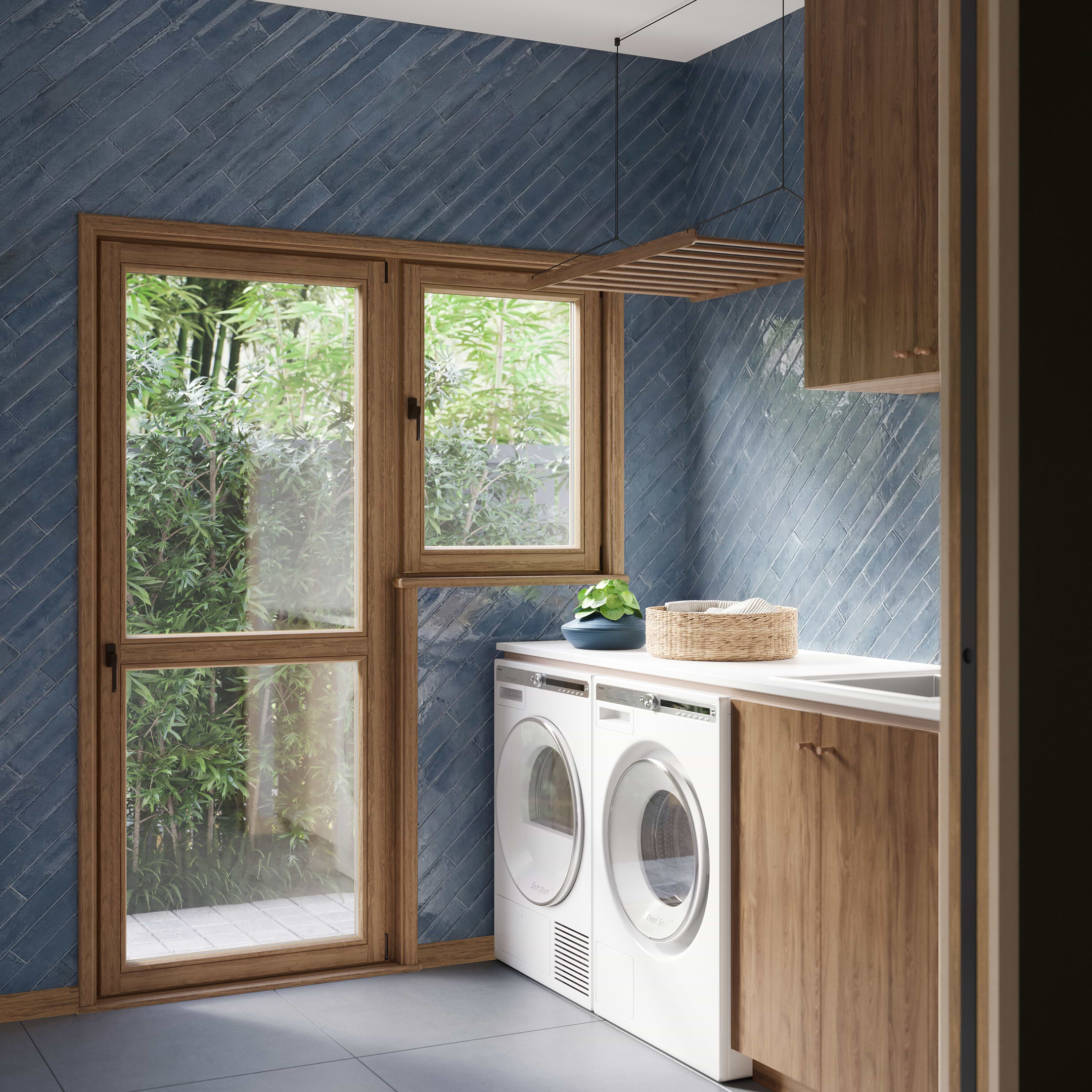
Diagonal Lay
Tiles are installed at a 45-degree angle instead of straight across.
Why it works: Adds subtle movement and makes compact rooms feel more dynamic
Best for: Floors, accent walls, small kitchens
Which Subway Tile Pattern is Right for Your Space?
The same tile can feel completely different depending on how it’s installed.
When selecting from different subway tile patterns, consider:
Room size: Vertical layouts can add height; diagonal layouts can widen a space
Tile size: Longer tiles emphasize modern, stacked designs
Grout color: High contrast highlights patterns, tonal grout softens them
Conclusion
Subway tile remains one of the most versatile materials in interior design, and with so many layout options, it never has to feel predictable. Whether you prefer the structure of stacked designs or the movement of herringbone, today’s subway tile patterns offer endless ways to personalize your space.
Ready to start designing? Explore our full collection of subway tile styles, finishes, and sizes to find the perfect fit for your next project.
FAQ: Common Subway Tile Pattern Questions
What is the 1/3 rule for tiles?
The 1/3 rule means staggering each row by one-third of the tile length instead of halfway. This reduces uneven edges (called lippage), especially with longer tiles.
What is the easiest subway tile pattern to install?
Traditional stacked or off-set layouts are the easiest because they require simple alignment and minimal measuring.
Should subway tile be staggered or stacked?
Both work—it depends on your style. Staggered feels classic and forgiving; stacked feels modern and clean.
How should subway tiles be laid?
They can be laid horizontally, vertically, stacked, staggered, herringbone, or diagonally depending on your design goals.
Why is a 50% tile pattern not recommended?
With longer tiles, a 50% offset can exaggerate warping and cause uneven surfaces.
Related Articles
 Pinterest
Explore Our
Tilefinder