Visit
Visit 
Stunning Bathroom Designs with Hexagon Floor Tile
 Copy Link
 Email
Email
 Twitter
 Pinterest
 Instagram
 Facebook
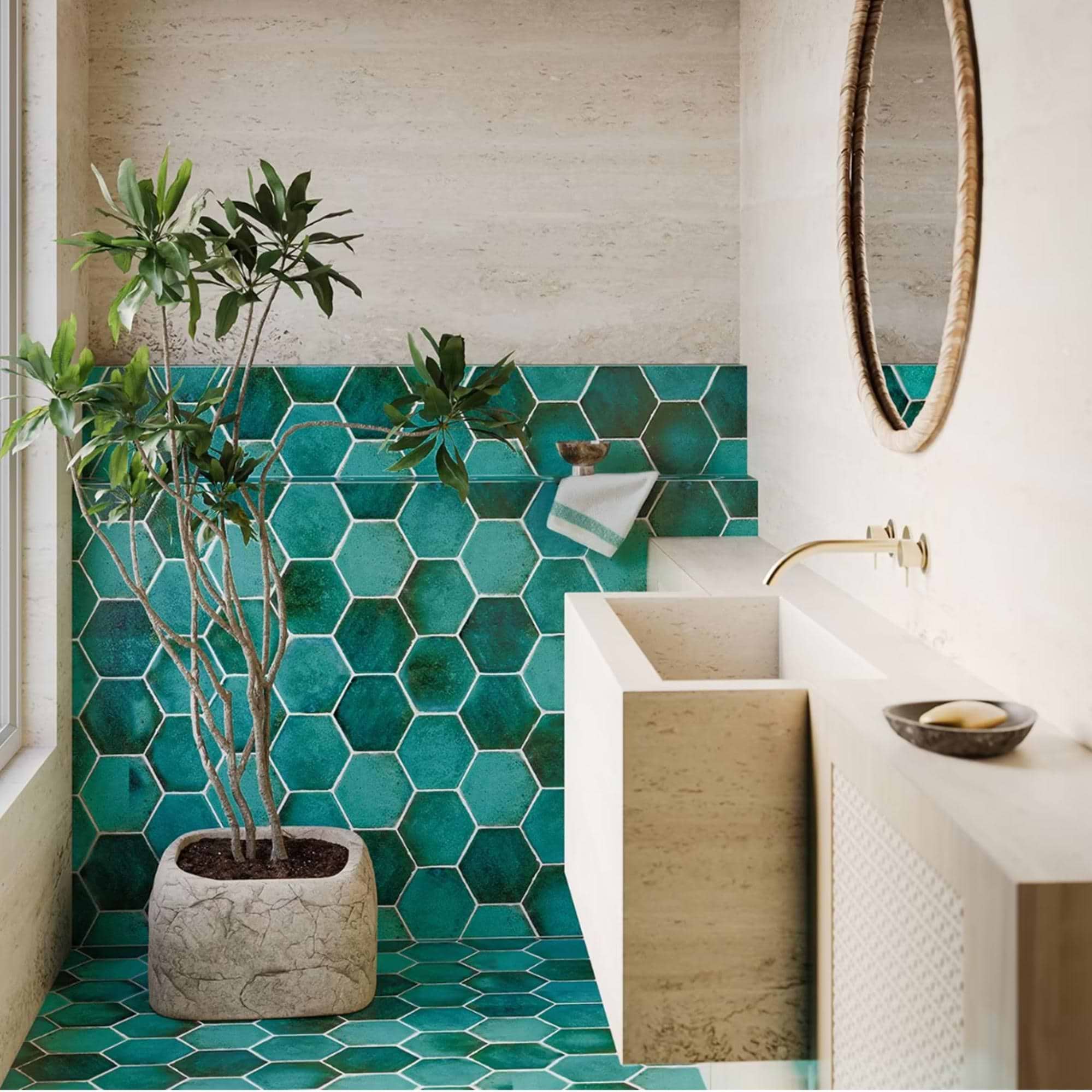
Hexagon floor tile has become a modern classic in bathroom design—geometric yet organic, timeless yet expressive. From subtle mosaics to bold porcelain statements, hexagon tile offers a versatile foundation that works across aesthetics, scales, and budgets, whether you’re designing a serene primary bath or a high-impact powder room. Below, we explore why designers continue to choose hexagon floor tile, share standout bathroom design ideas, and offer practical guidance on selecting, installing, and maintaining this enduring shape.
Why Choose Hexagon Floor Tile?
Hexagon tiles strike a rare balance between structure and softness. Their six-sided geometry creates natural flow, avoiding the rigidity of square grids while still feeling intentional and ordered.
Key Benefits Include:
- Design versatility: Available in marble, porcelain, ceramic, and stone-looks, hexagon floor tile adapts easily to modern, traditional, and transitional bathrooms.
- Scale flexibility: From small mosaics to oversized formats, hexagon tile can feel intricate or expansive depending on size and layout.
- Enhanced traction: The additional grout lines found in hexagon mosaics can improve slip resistance—an important consideration for bathroom floors.
- Visual movement: The repeating shape adds dimension and interest without relying on bold color or pattern.
What Are the Top Design Ideas for Hexagon Tiles in the Bathroom?
Hexagon floor tile is a powerful design tool. Used thoughtfully, it can define zones, highlight architectural details, or subtly elevate a minimalist palette.
Art-Deco Moment
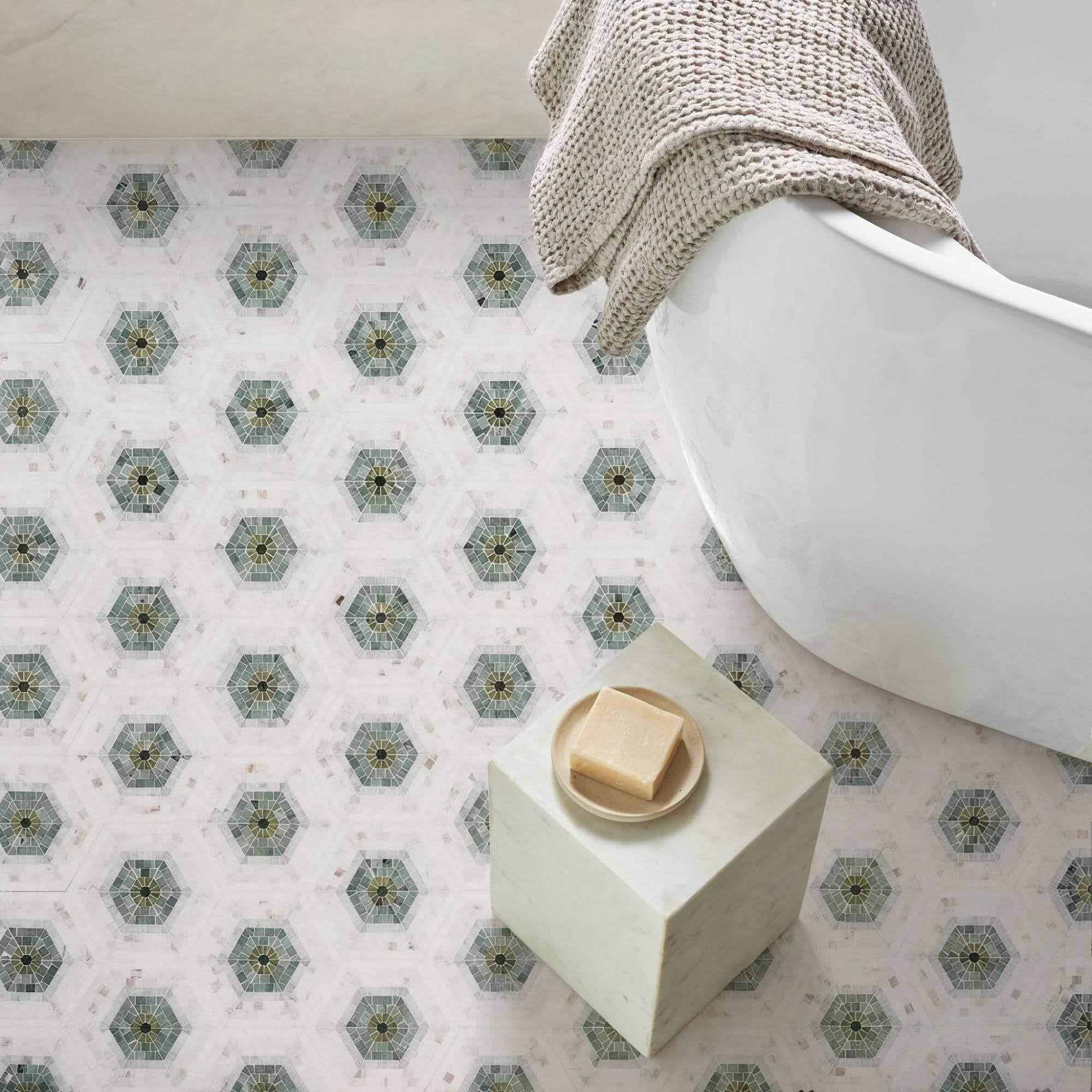
Hexagon floor tile brings Art Deco character through intricate micro mosaics and curated marble blends. Graphic patterns and layered tones introduce depth and rhythm, turning the floor into a refined focal point. This approach works especially well in bathrooms, where geometry and contrast add visual impact without overpowering the design.
Monochrome Palettes
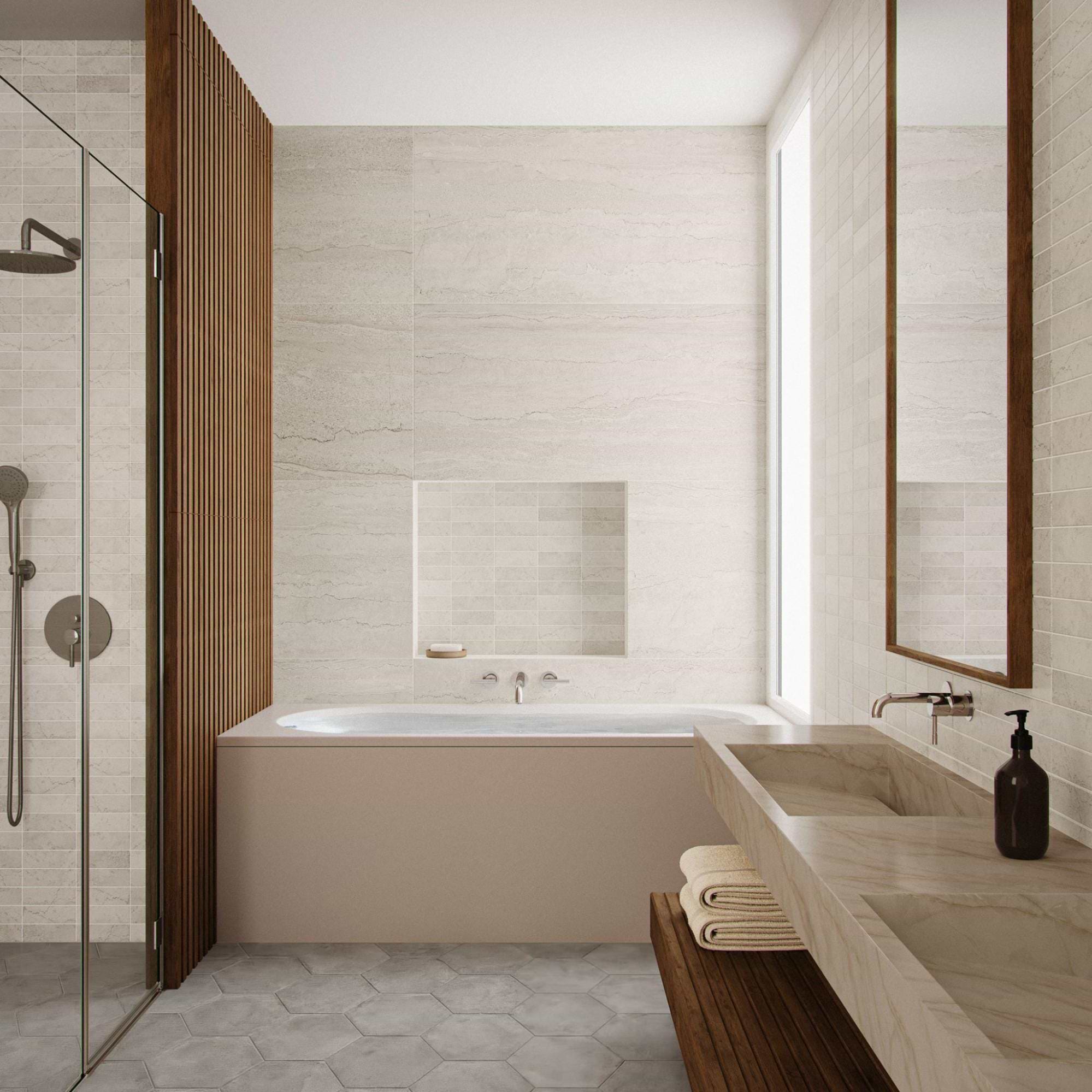
For a refined, architectural look, choose hexagon tiles in tonal shades—think warm grays, soft beige, or matte blacks. Large-format hexagon floor tile in a single color delivers subtle geometry without visual clutter, making it ideal for contemporary or spa-inspired bathrooms.
Classic Marble
Hexagon mosaics offer a fresh take on traditional marble. Carrara, Thassos, or mixed-stone blends gain new energy when cut into hexagons, highlighting natural veining and tonal variation. This is an effective way to introduce classic material in a more modern, design-forward format.
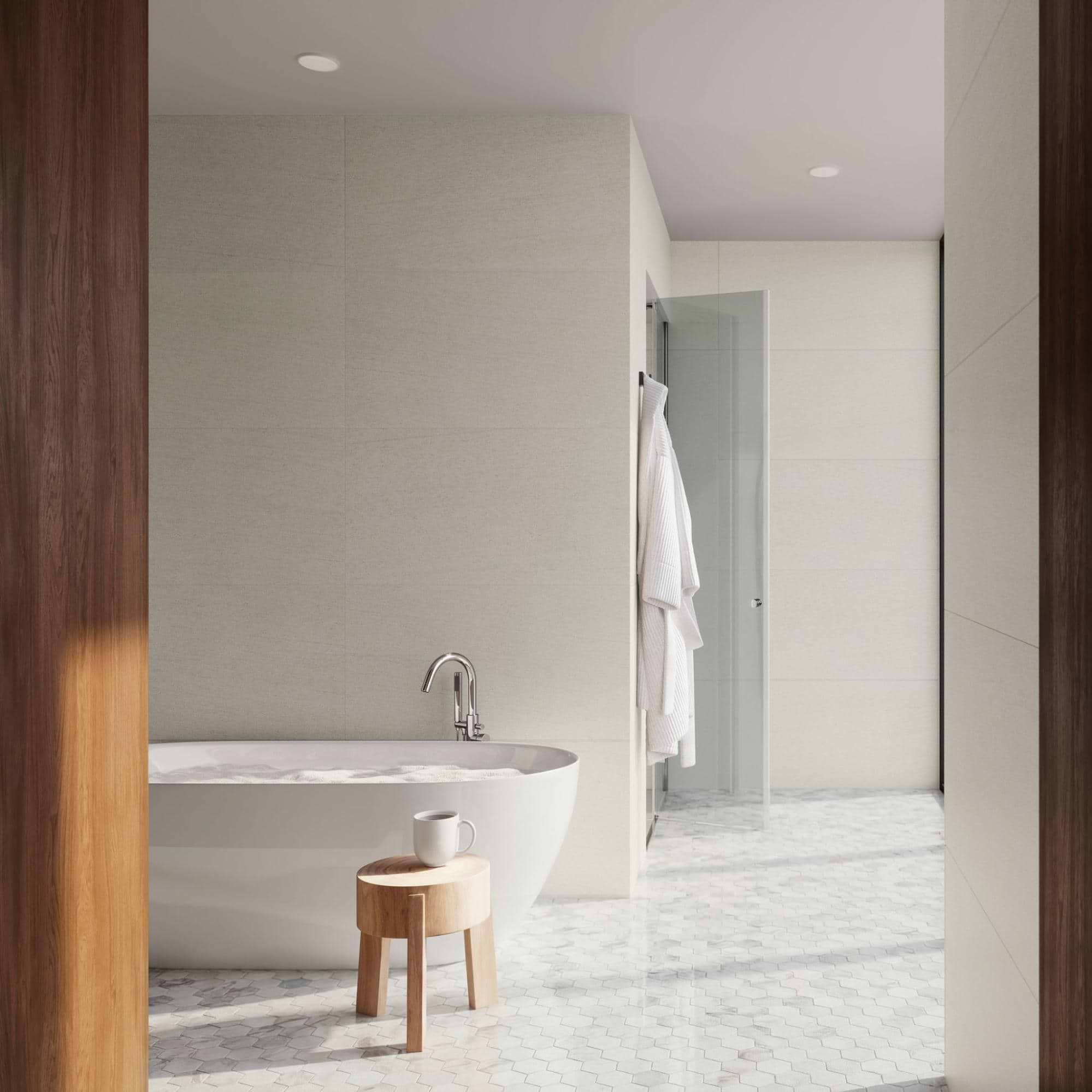
Grounded in Black
Black hexagon tiles introduce contrast without visual heaviness. Their geometric shape softens the depth of the color, creating movement and dimension across the floor. Grout choice subtly shifts the effect—crisp white grout highlights the pattern for a graphic, high-contrast look, while charcoal or tonal grout creates a more seamless, grounded finish. Whether paired with bright white surfaces or layered neutrals, black hex tiles deliver a bathroom that feels confident, balanced, and enduring.
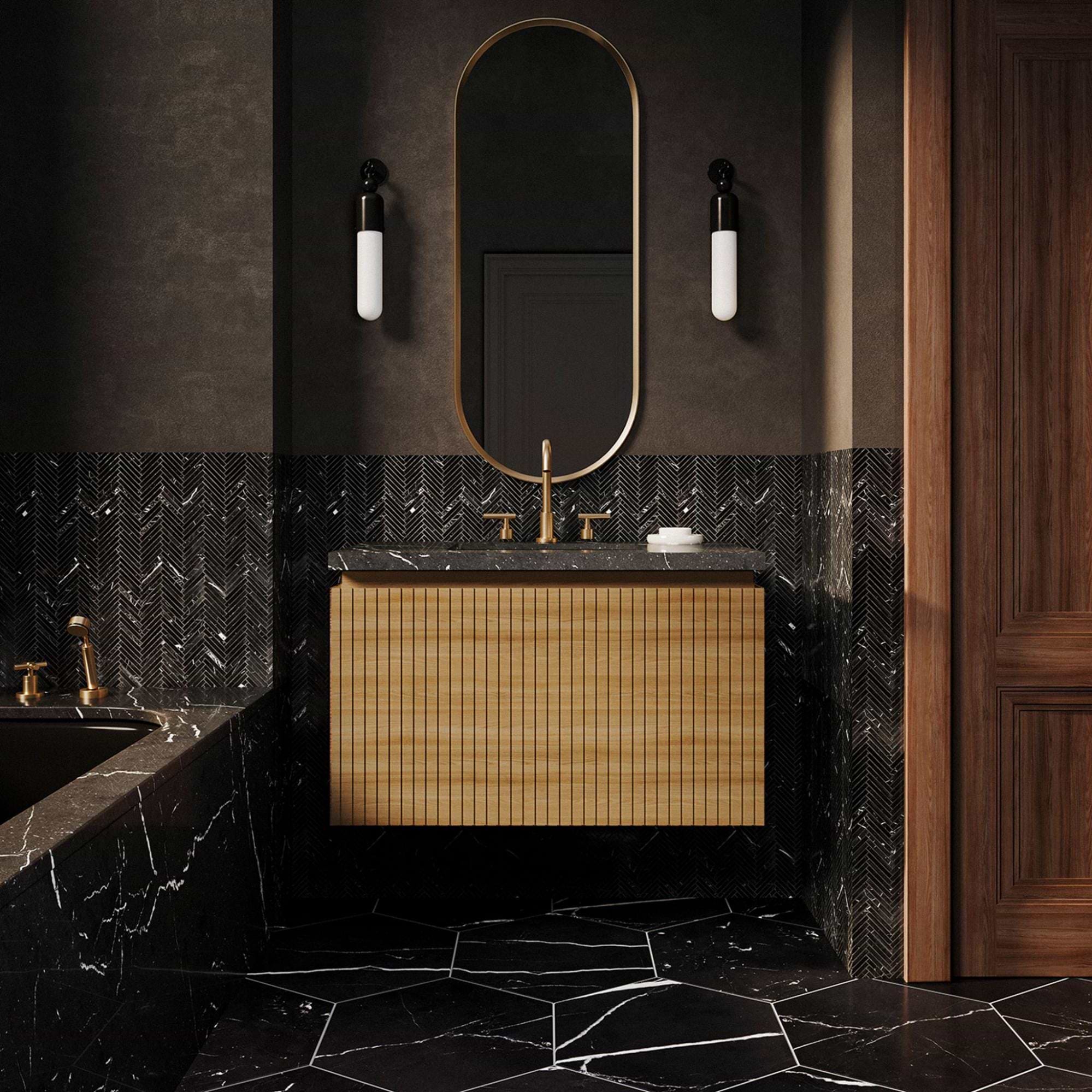
Shiny Glamour
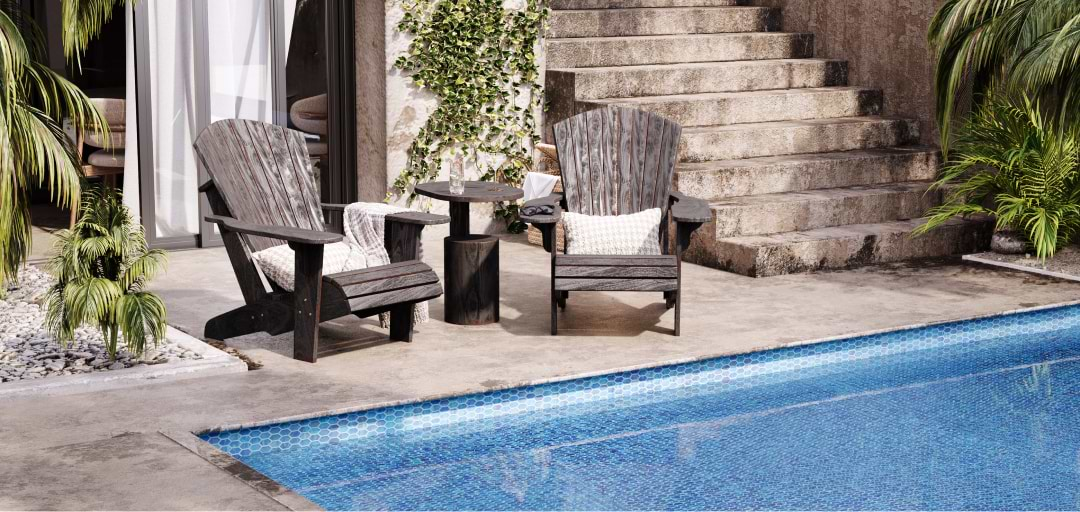
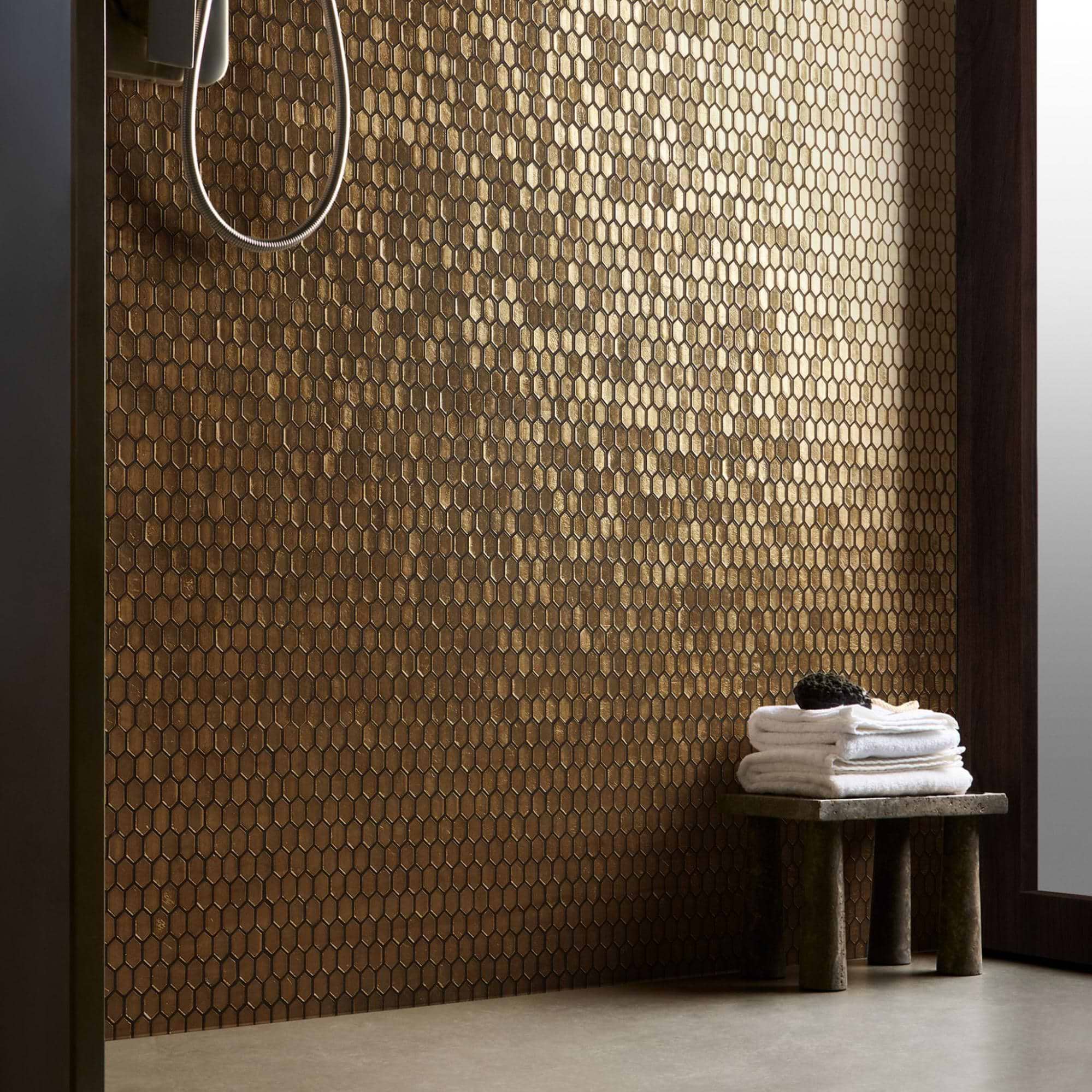
Hexagon tile with high shine brings light, shimmer, and a sense of indulgence to bathroom walls. The slender glass format and luminous finish create movement and reflection, adding a layer of glamour without overwhelming the room. Used as an accent wall, niche detail, or vanity backdrop, it delivers a polished, design-forward statement with subtle drama.
[Choose Your Hexagon Tile Style]
What are the Best Hexagon Tile Bathroom Tips?
Designing with hexagon floor tile goes beyond aesthetics. A few practical considerations can make all the difference:
-
- Choose the right size: Smaller hexagon mosaics offer more grip and intricate detail, while larger formats create a cleaner, more modern look.
- Plan your layout: Dry-laying tiles before installation helps visualize pattern alignment and avoid awkward cuts at walls or thresholds.
- Mind the grout: Grout color dramatically affects the final look. Contrast emphasizes the geometric pattern; tonal grout creates a calmer, more continuous surface.
- Mesh-Backed Designs vs. Individual Installs: Hexagon tiles come in two main installation styles: mesh-backed mosaics and individual pieces. Mesh-backed designs group smaller hex tiles into sheets, making installation faster, easier, and more precise—ideal for achieving consistent spacing and alignment, especially in tight areas like shower floors or backsplashes. Individual hex tiles, often larger, allow for fully custom patterns and layouts, but require more time, skill, and careful planning.
How To Maintain Your Hexagon Floor Tile
Proper care ensures your hexagon floor tile remains beautiful for years to come.
- Regular cleaning: Sweep or vacuum to remove debris, then clean with a pH-neutral tile cleaner.
- Seal when needed: Natural stone hexagon tiles should be sealed periodically to protect against moisture and staining.
- Grout upkeep: Because hexagon mosaics may have more grout lines, occasional grout cleaning helps maintain a fresh appearance.
With the right maintenance routine, hexagon floor tile is as durable as it is design-forward.
Conclusion
Hexagon floor tile continues to prove its staying power in bathroom design. Its adaptability, visual interest, and wide range of material options make it a smart choice for both subtle and statement-making interiors. Whether you’re drawn to classic marble, bold black porcelain, or soft neutral stone-looks, hexagon tiles offer a foundation that feels thoughtful, elevated, and enduring.
Looking to explore your options? Discover how hexagon floor tile can transform your bathroom from the ground up.
[Choose Your Hexagon Tile Style]
FAQ: Frequently Asked Questions About Hexagon Tiles
What are hexagon tiles?
Hexagon tiles are six-sided tiles available in a range of materials, including porcelain, ceramic, marble, and cement. They’re commonly used on bathroom floors, shower walls, and backsplashes to introduce pattern and visual interest without overpowering a design.
What are alternate names for hexagon tiles?
Hexagon tiles are often referred to as hex tiles or honeycomb tiles, a nod to their six-sided geometric shape. In design contexts, they’re also categorized as geometric or mosaic tiles, depending on size and format.
Are the hexagon tiles dated?
Hexagon tiles are considered a design staple rather than a trend. Their longevity comes from versatility—appearing equally at home in historic renovations, modern bathrooms, and minimalist interiors when paired with thoughtful material and color choices.
What are the disadvantages of hexagon tiles?
Hexagon tiles typically require more grout lines than large-format tile, which can increase installation time and ongoing maintenance. Smaller hex mosaics may also highlight uneven subfloors if prep work isn’t done properly. Choosing high-quality tile and professional installation helps mitigate these concerns.
Why are hexagon tiles so expensive?
Hexagon tiles can be more costly due to specialized cutting, mesh mounting, and the labor required to install them precisely. Natural stone hexagon floor tile may also command a higher price because of material sourcing and finishing.
Is it more expensive to lay hexagon tile?
Yes, hexagon floor tile generally costs more to install than standard square or rectangular tile. The intricate layout, alignment requirements, and additional grout lines increase labor time, especially for smaller formats or detailed patterns.
Is a hexagon tile harder to install?
Hexagon tile is more challenging to install than standard tile due to alignment sensitivity and pattern consistency. Proper subfloor preparation and experienced installation are especially important to ensure clean lines and long-term durability.
Do hexagon tiles make a room look bigger?
Hexagon floor tiles can visually expand a space, particularly when used in lighter tones or smaller-scale patterns. Continuous layouts without harsh borders help draw the eye across the floor, creating a more open, cohesive look.
Related Articles
Explore Our
Tilefinder