Visit
Visit 
What Grout Color Should I Use with White Tile?
 Copy Link
 Email
Email
 Twitter
 Pinterest
 Instagram
 Facebook
Grout is like a frame for your tile—the color and material can dramatically impact how the tile looks. This guide helps you decide what type of grout to pair with white tile, including white subway tile. Certain applications will impact your selection (for example, kitchen backsplashes benefit from grouts that won’t stain easily), as will design preferences. In essence, white tile and white grout are the most classic choice, while black or colored grouts make a statement. Here’s what you need to know.
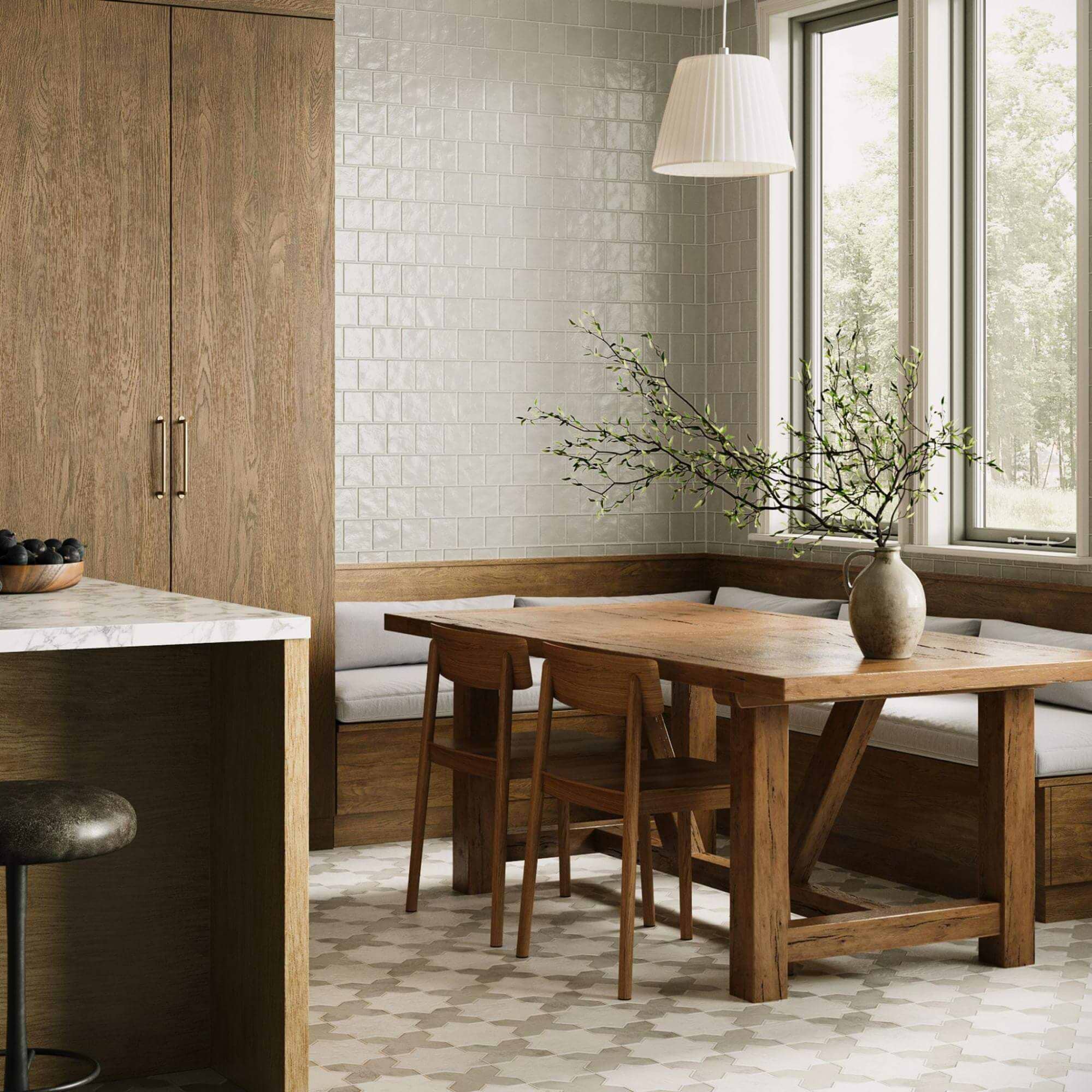
Key Criteria to Consider When Choosing Grout
As you weigh grout material and color options, you’ll need to take the following into account:
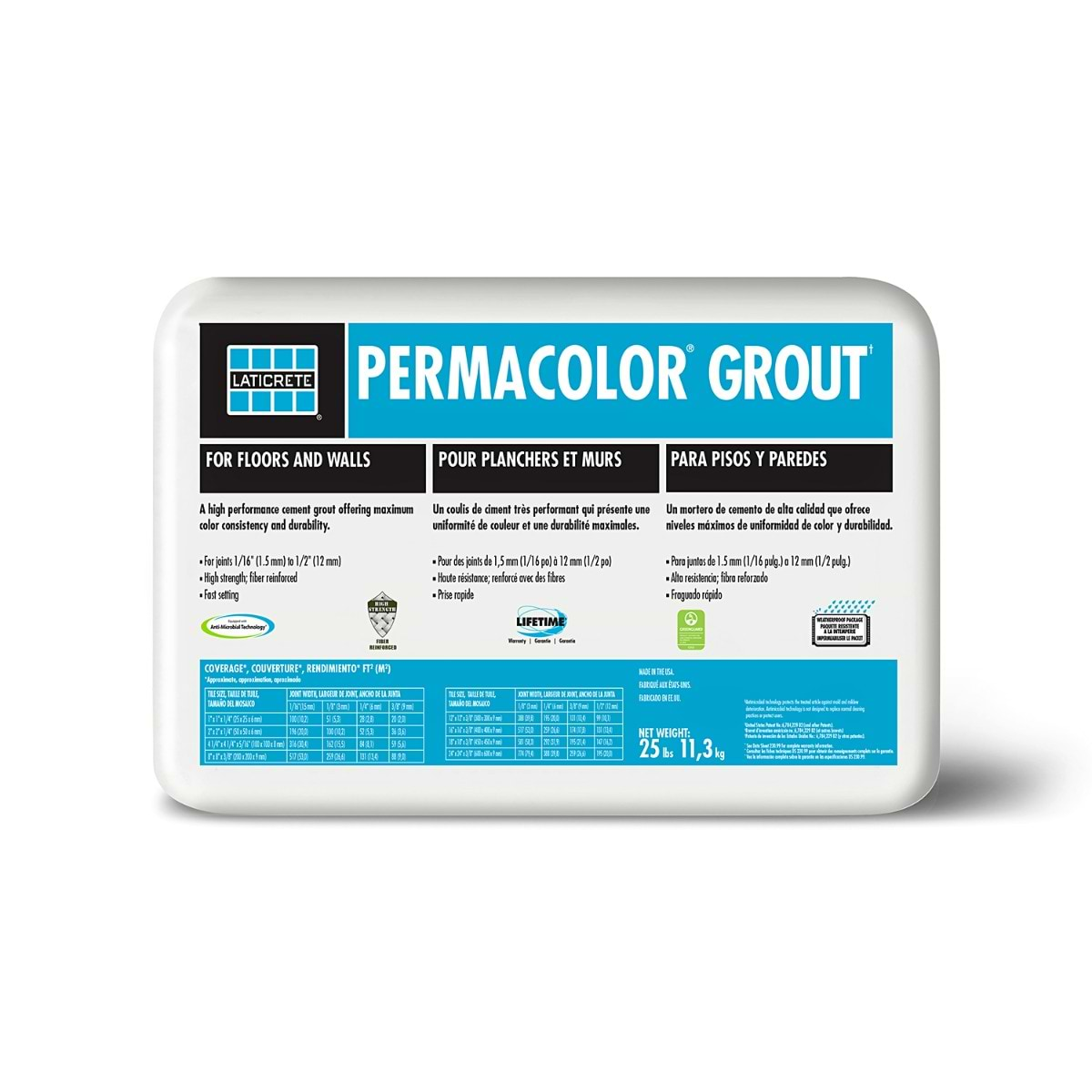
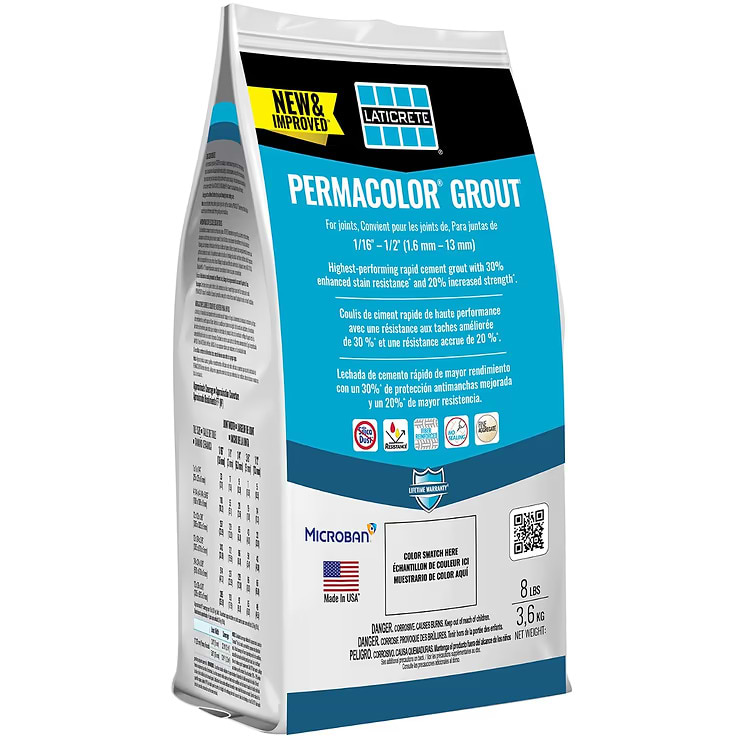
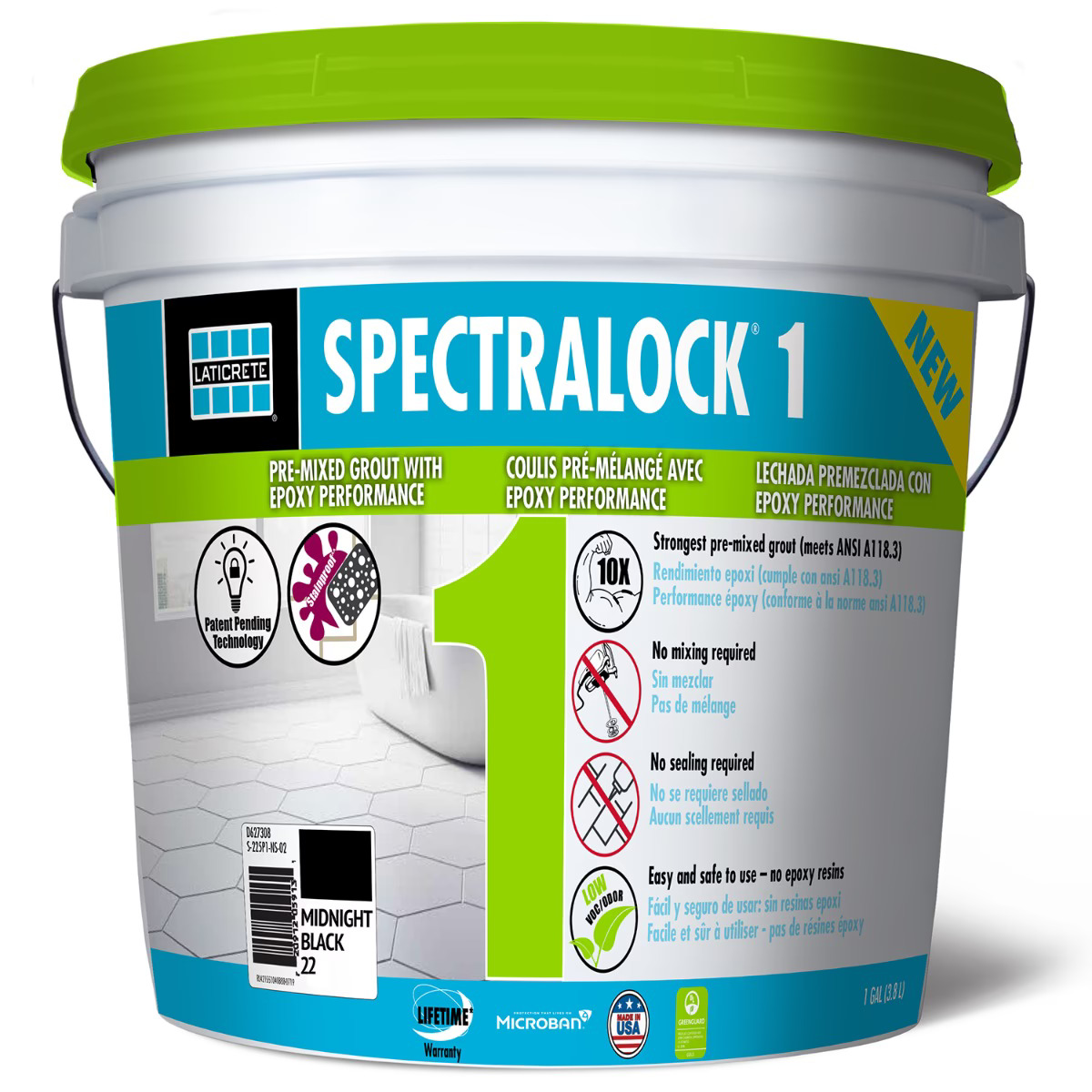
- Grout Material Types: The most important step in selecting a grout is deciding on the material. Offered sanded or unsanded, cementitious grout is the most traditional grout choice. It’s easy to apply and low-cost yet has moderate durability, is porous, and can stain. For projects requiring higher durability and stain resistance, non-porous epoxy grout or urethane grout may be a better—albeit more expensive—option. Epoxy grout resists chemical staining, yet can be challenging to install for DIYers as it requires mixing and hardeners. Urethane grout comes pre-mixed, and application is more forgiving, though it’s generally less robust than epoxy grout. Another option is high-performance cementitious grout, which has chemicals added to make it more durable and stain-resistant.
- Maintenance: How much maintenance are you willing to take on? The lowest-maintenance grout option is epoxy, followed by urethane—both are highly durable and resistant to stains. If you’re opting for cementitious grout in an area exposed to dirt, spills, or grease (for example, in a kitchen or entryway), consider a light-to-dark gray grout, as it will typically hide wear better than white grout. Or if you’re willing to pay a bit more, high-performance cementitious grout will give you additional stain resistance and durability.
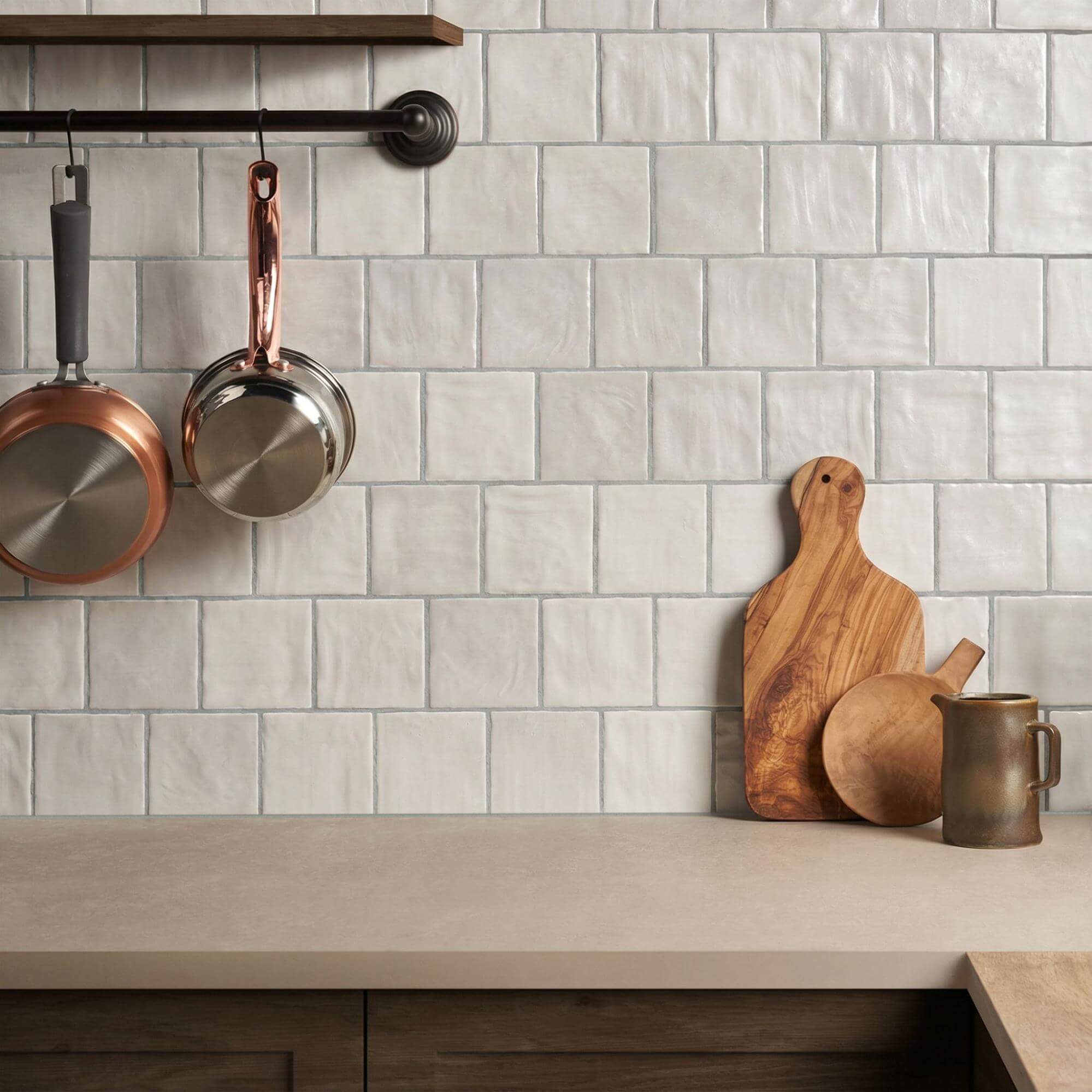
- Moisture Exposure: Is your tile going to be continually exposed to moisture (for example, in a shower)? Then it’s best to avoid porous materials like sanded cementitious grout and instead opt for more moisture-resistant unsanded cementitious grout or non-porous epoxy or urethane grout.
- Blending vs. Contrasting: Do you want something that stands out or blends in? Grout that differs in color from the tile itself acts as a frame, defining and accentuating each tile (for example, white tile with black grout). Alternatively, grout that matches the color of the tile will blend in, creating a continuous “sheet” look (for example, white tile with white grout).
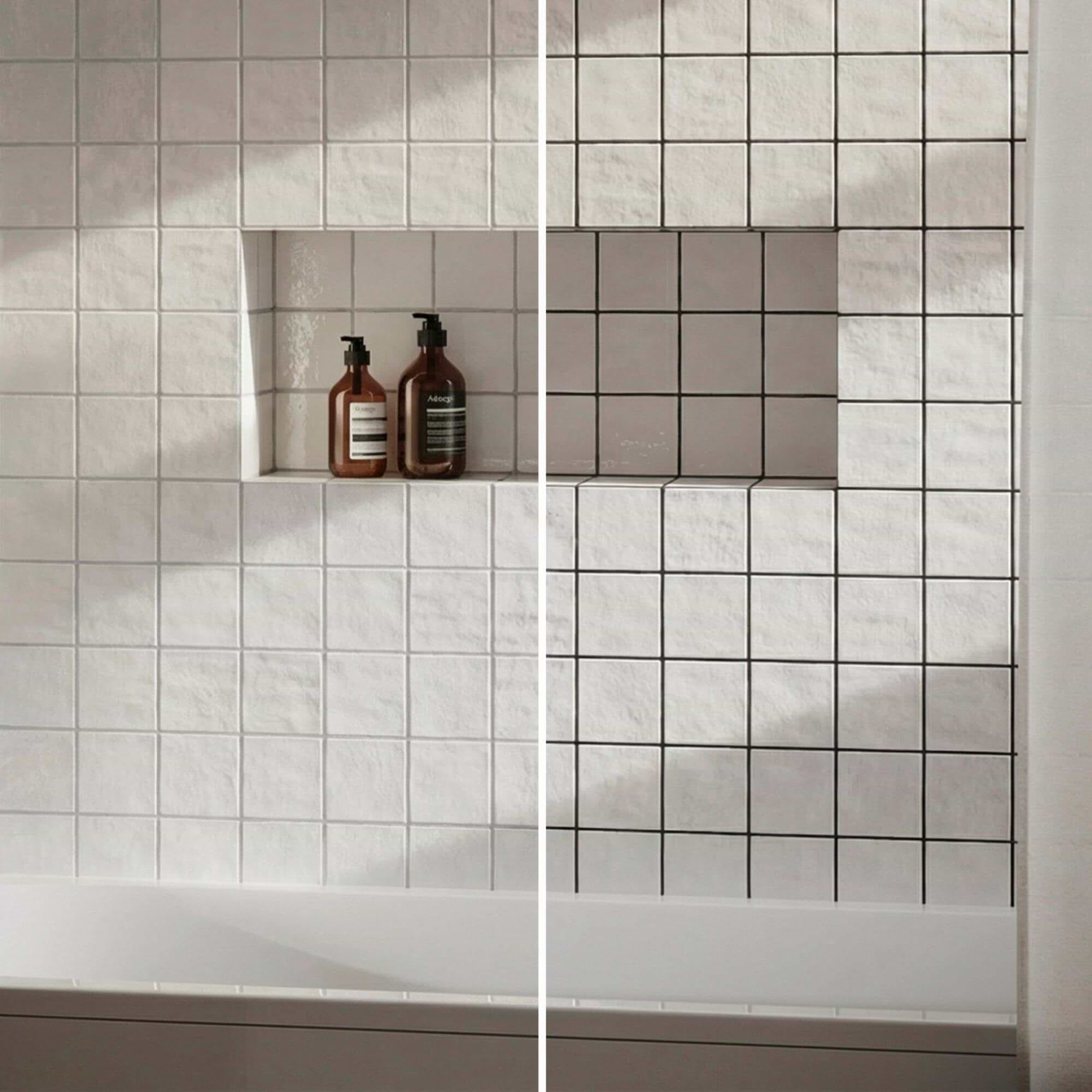
- Joint Width: What grout joint width is needed? Tile joint spacing should be taken into account when selecting a grout, as it affects how much grout is visible. If you’re using cementitious grout, you’ll choose between sanded and unsanded formulations. Sanded grout is used for wider joints (for example, 1/8” or above), and unsanded grout is best for narrower joints (less than 1/8”). Epoxy and urethane grouts can be applied to a wide range of joint widths.
- Surrounding Area: The lighting, materials, and overall design of a space will also impact how the grout color “reads.” Be sure to pick a grout color that harmonizes with cabinets, countertops, hardware, flooring, or any other major design elements (for example, if the overall vibe of a room is dark and moody, a bright white grout might feel jarring).
What Grout Color to Use with White Tile
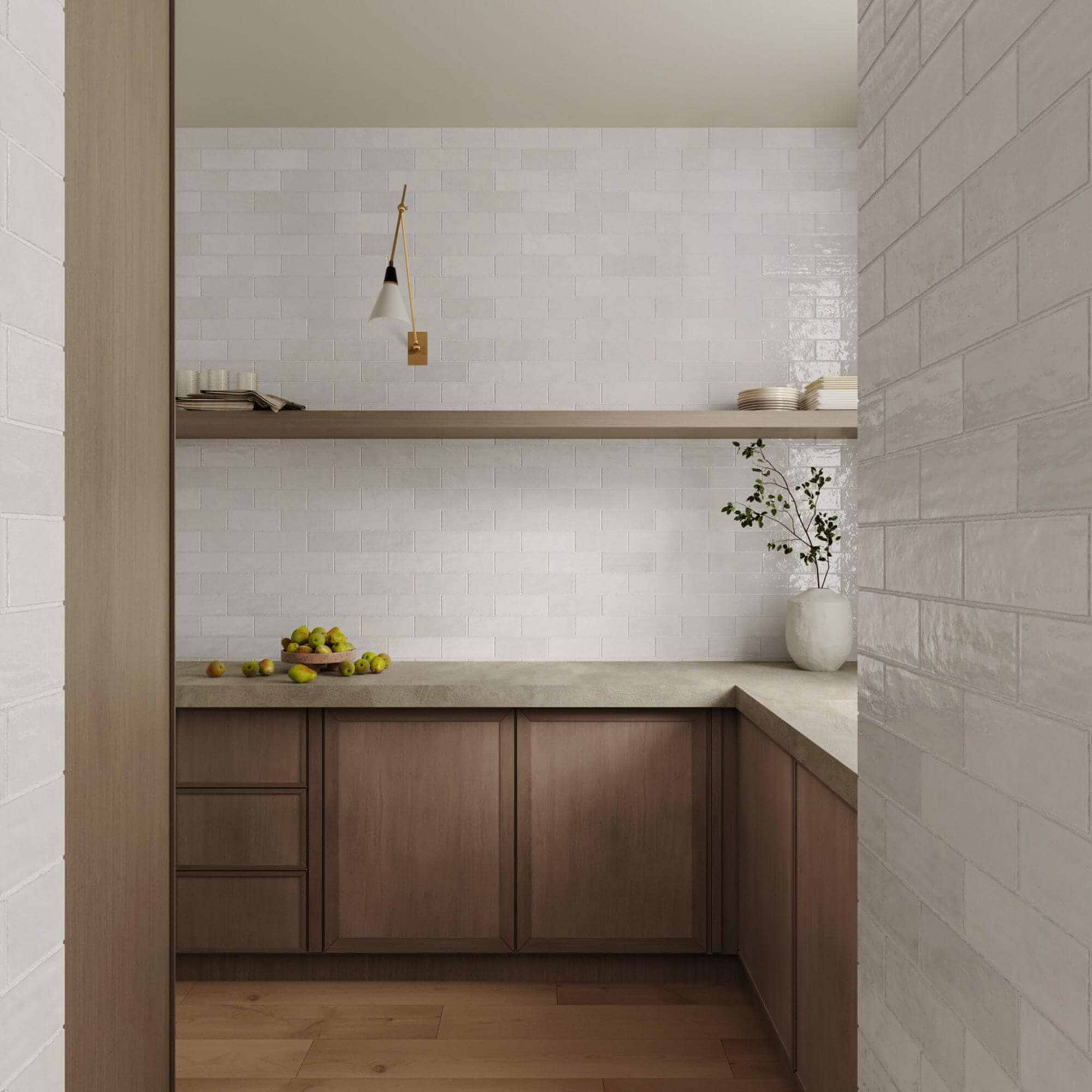
- White Grout: The best part of using white tile or white subway tile is that if you want to keep the look classic, you simply use a matching grout. White tile with white grout lends spaces a light, airy feel. It’s also a great pairing for rooms where you don’t plan to change the overall design very often, like a full kitchen or a primary bathroom.
- Black Grout: Few pairings offer a starker contrast than white tile with black grout. It really outlines the shape of each tile for a look that pops. A major benefit of black grout is that it hides splashes and stains more easily than a lighter grout, which makes upkeep easy. This pairing works best in smaller doses, such as in a powder room or on a bar backsplash.
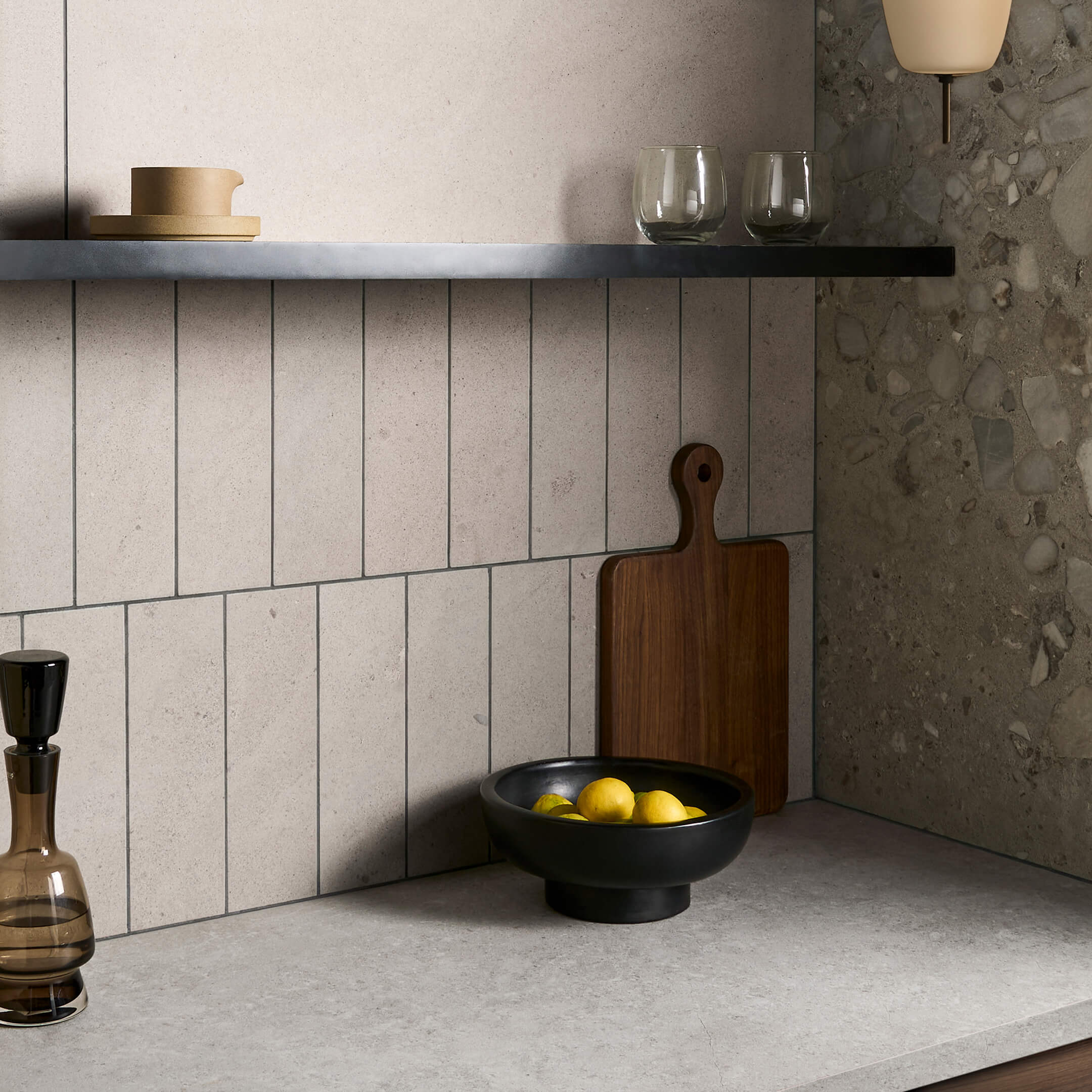
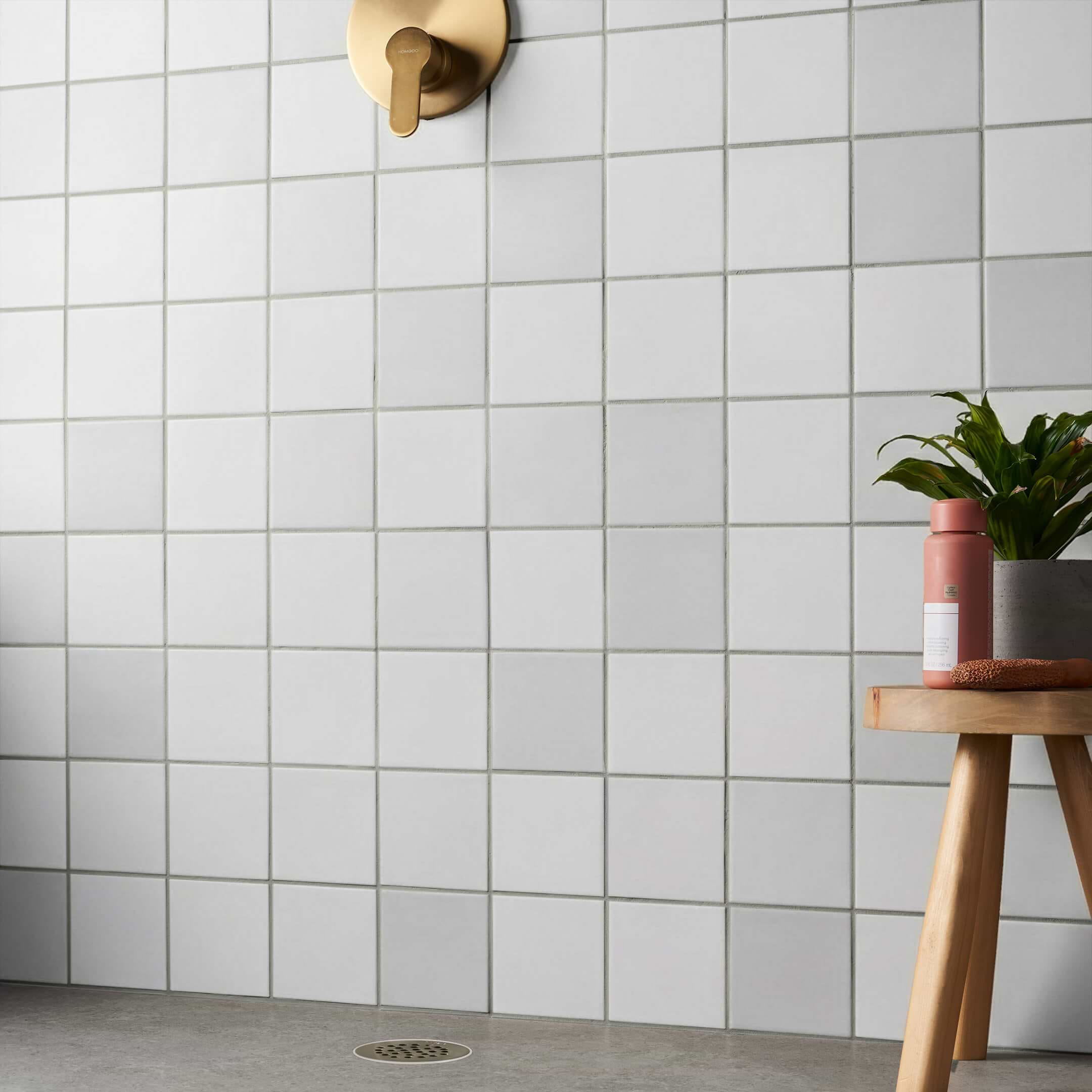
- Gray Grout: If you want to create a pop but in a less drastic way than you’d get with black grout, a light- or medium-gray grout with white tile is the way to go. Gray grout adds a nice contrast without taking center stage, making it ideal for anyone who wants something different without going too bold. This pairing works especially well in showers, entryways, and kitchen backsplashes.
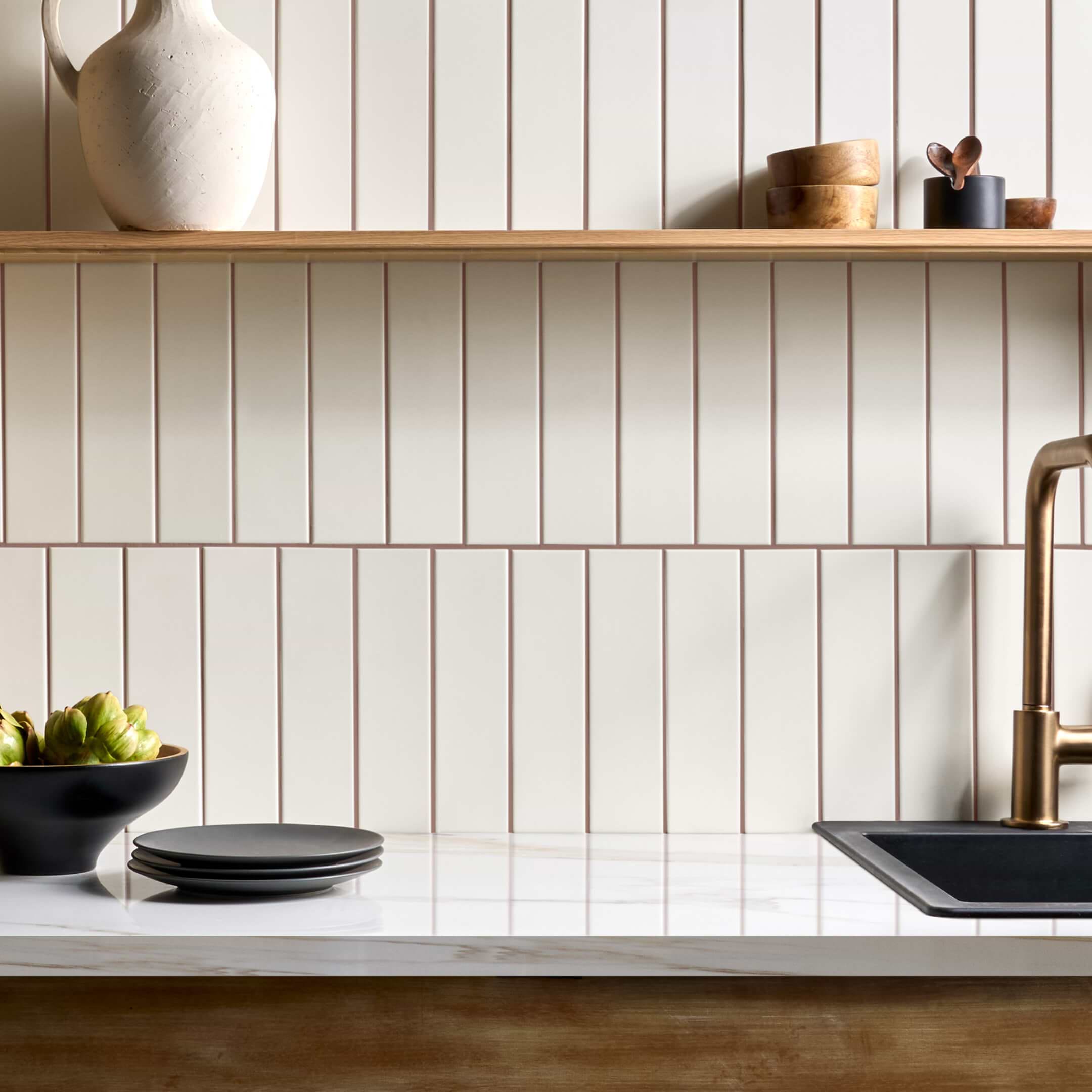
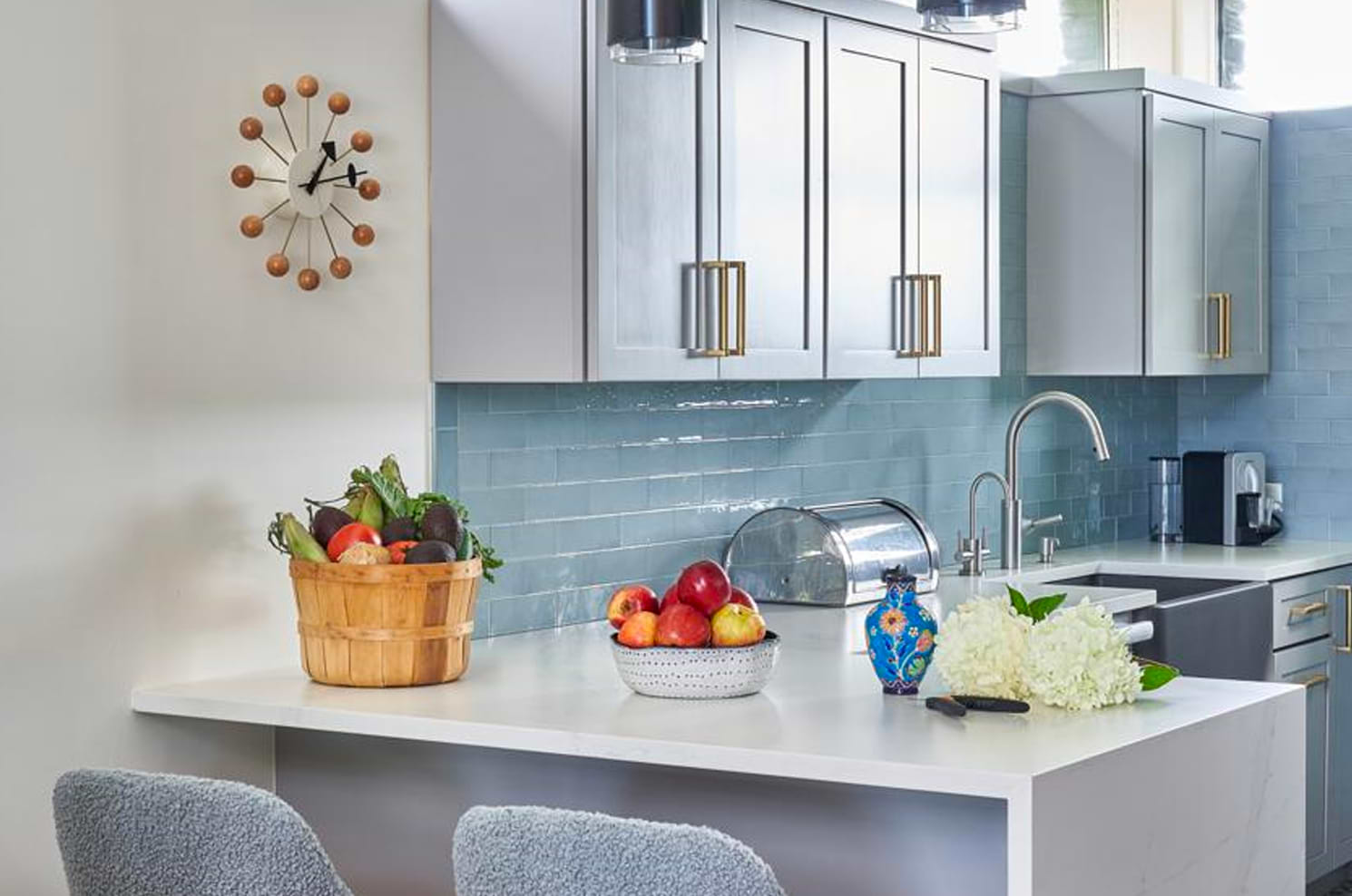
- Colored Grout: If bold is what you’re after, then colored grout may be just the thing. White tile paired with a red, blue, or green grout makes a statement all its own—one that’s playfully bold and modern. Because it stands out so prominently, colored grout with white tile works best as a design focal point, such as on a small backsplash, an accent wall, or in a child’s bathroom.
Conclusion
The ideal grout material and color for white tile depend on your style and the performance your space requires. White tile with white grout is the most classic-looking; white tile with black or colored grout makes the strongest statement, and white tile with gray grout often acts as a happy medium while helping conceal wear.
As for grout material, traditional cementitious grout works in most scenarios since it’s cost-effective and easy to apply—though it’s also the most likely to show wear and staining. Kitchen backsplash tile, entryway tile, shower floor tile, and other high-traffic areas may benefit from the enhanced durability and stain resistance of epoxy, urethane, or high-performance cementitious grout.
Related Articles
 Pinterest
Explore Our
Tilefinder