Visit
Visit 
Best Kitchen Floor Tiles: Top Choices for Style & Durability
 Copy Link
 Email
Email
 Twitter
 Pinterest
 Instagram
 Facebook
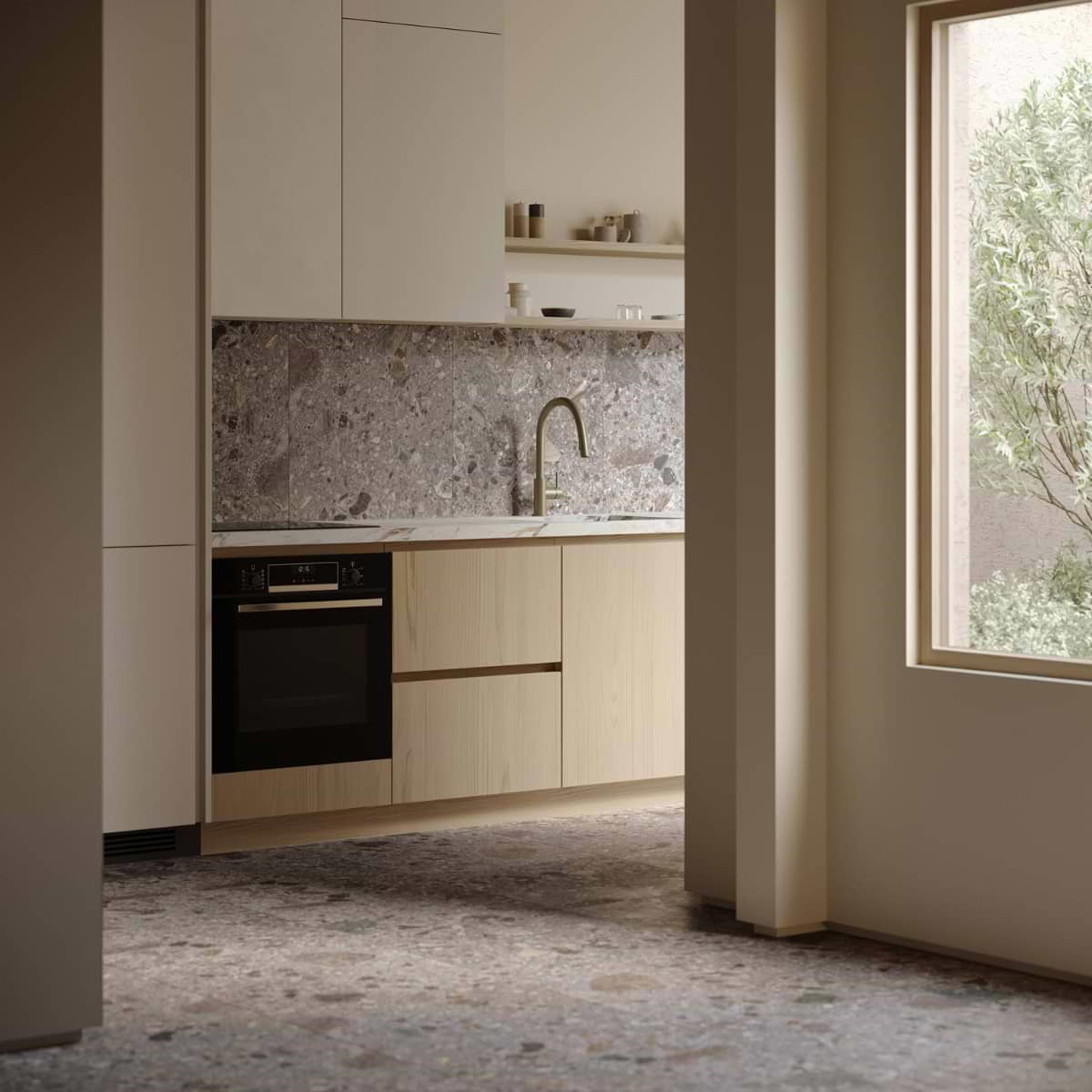
Choosing the right kitchen floor tile is one of the most impactful design decisions you can make. It sets the tone for the entire space, supports daily wear and tear, and quietly influences how functional your kitchen feels over time. From timeless porcelain to pattern-forward statements, today’s kitchen floor tiles embrace warmer tones, natural textures, and statement-making patterns underfoot. Below, we break down the top options to consider—plus how to choose the right one for your space.
Why Does Choosing the Right Kitchen Floor Tile Matter?
Kitchens are among the hardest-working rooms in the home. Spills, heat, foot traffic, dropped cookware—your floor needs to handle it all while still looking good.
When evaluating kitchen floor tiles, consider:
- Durability: resistance to chips, cracks, moisture, and stains
- Slip resistance: especially important in busy households
- Maintenance: ease of cleaning and long-term care
- Design longevity: a look you’ll still love years from now
The best kitchen floor tiles don’t force you to compromise between style and performance—they deliver both.
Which Kitchen Floor Tiles Are Most Durable?
Before diving into design categories, here are the most reliable materials for kitchen flooring:
- Porcelain Tile: Extremely dense, water-resistant, and low maintenance. Porcelain tile is ideal for high-traffic kitchens and open layouts.
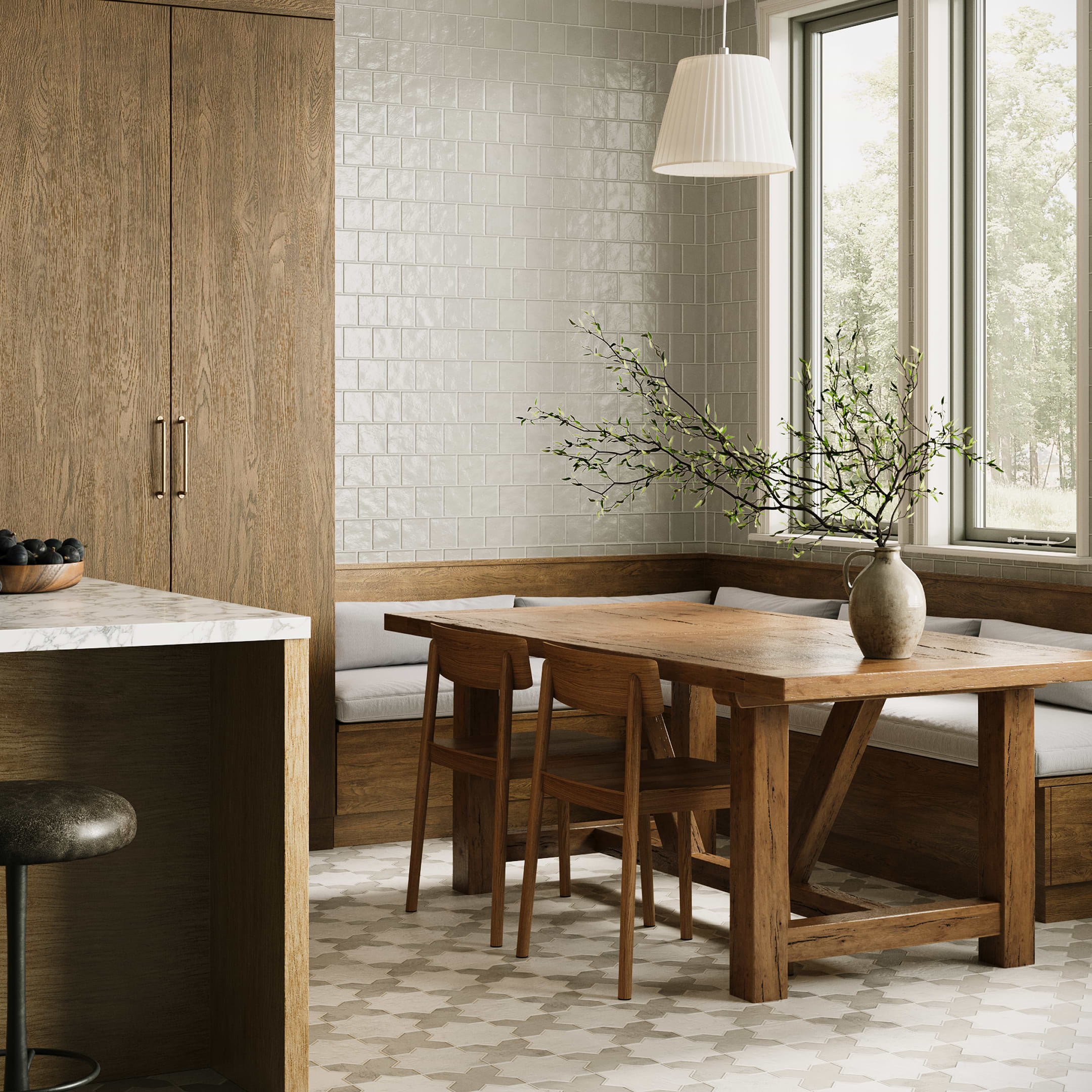
- Ceramic Tile: Slightly softer than porcelain but still durable and versatile. Ceramic tile is great for decorative styles and patterned floors.
- Natural Stone: Marble, limestone, and slate offer natural elegance and enduring character, adding a luxurious touch to any kitchen space. Designers are increasingly favoring honed, brushed, and tumbled finishes over high-polish surfaces for a softer, more forgiving look in kitchens.
- Luxury Vinyl Tile (LVT): Comfortable underfoot and budget-friendly. LVT is best for lighter-use kitchens or renovations with time constraints.
Marble Look Kitchen Floor Tiles
Inspired by the timeless appeal of natural marble, marble-look porcelain tiles capture its signature veining and depth in a highly durable format. They offer a refined aesthetic with added resistance to moisture, stains, and daily wear—making them a practical option for busy kitchens.
Perfect for: Modern kitchens, transitional spaces, and open-concept homes.
White Kitchen Floor Tiles
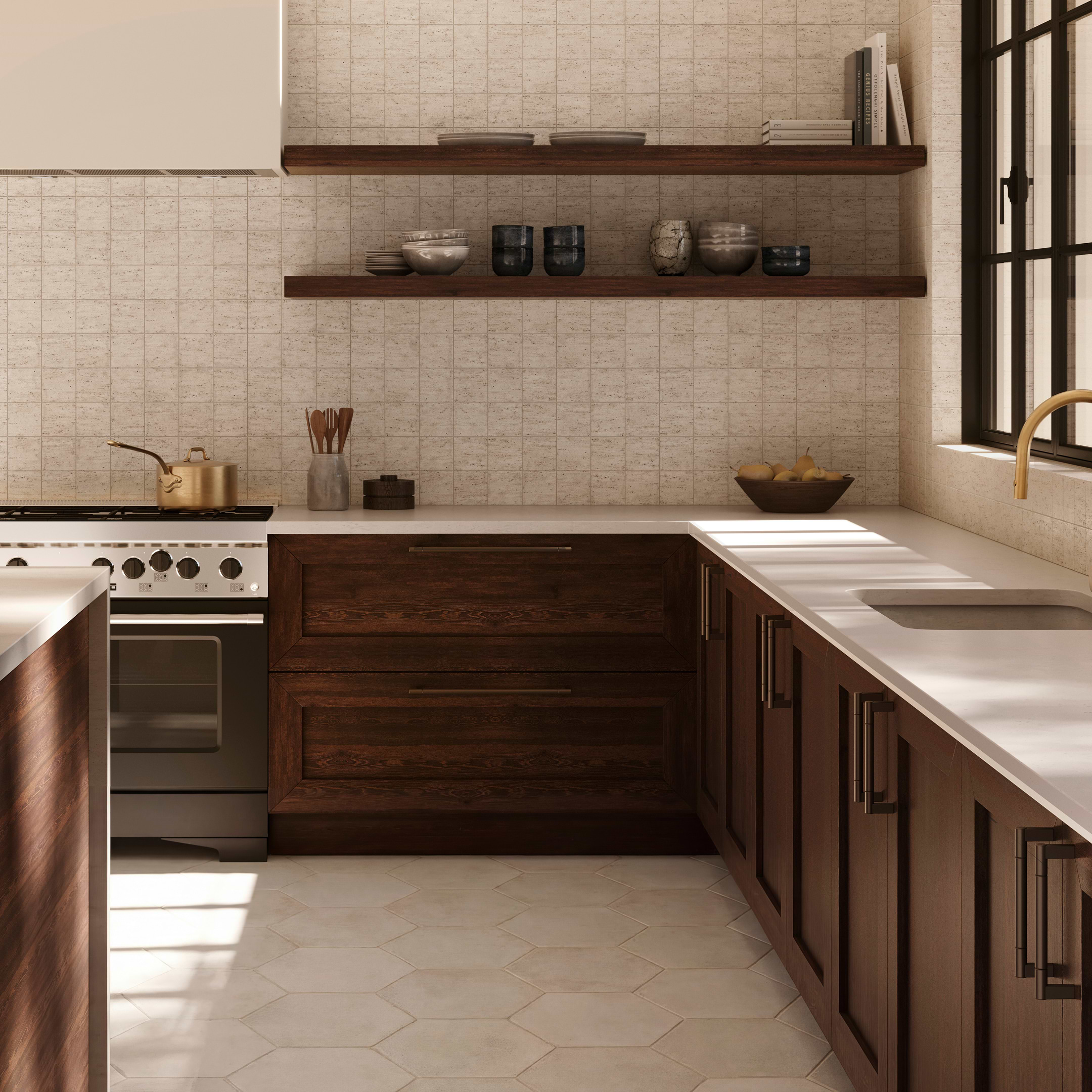
White floor tiles remain a classic for a reason—they brighten spaces, visually expand smaller kitchens, and pair effortlessly with any cabinet color or material. For added depth, consider subtle texture, soft veining, or tonal patterning to prevent the space from feeling flat. While white floors can show dirt and debris more readily, especially in high-traffic kitchens, softer whites and warm undertones are especially popular, helping kitchens feel airy without reading stark or clinical.
Perfect for: Minimal, Scandinavian, coastal, or contemporary kitchens.
Black Kitchen Floor Tiles
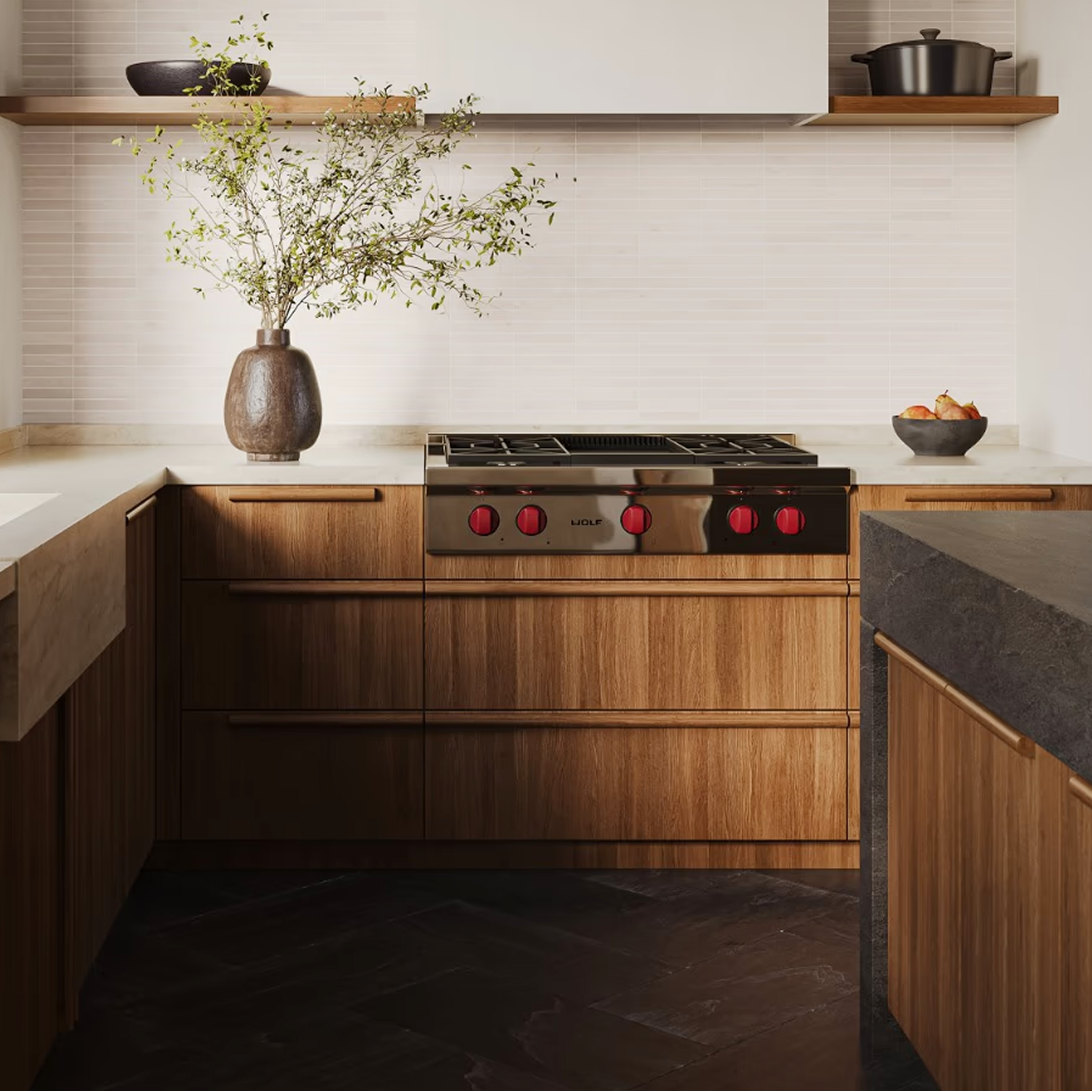
Black kitchen floors bring contrast, drama, and a grounded sense of sophistication. They’re also surprisingly practical, concealing crumbs and wear better than lighter finishes. Choose matte or lightly textured surfaces to improve slip resistance. Larger-format black tiles and subtle geometric layouts are trending for a look that feels bold but intentional rather than overly graphic.
Perfect for: Modern, industrial, and high-contrast interiors.
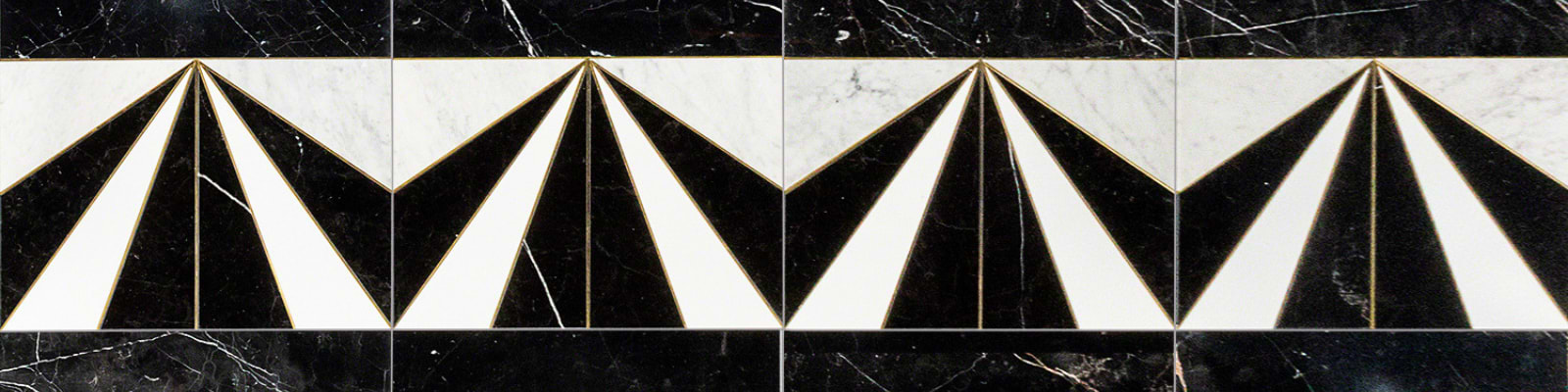
Black & White Kitchen Floor Tiles
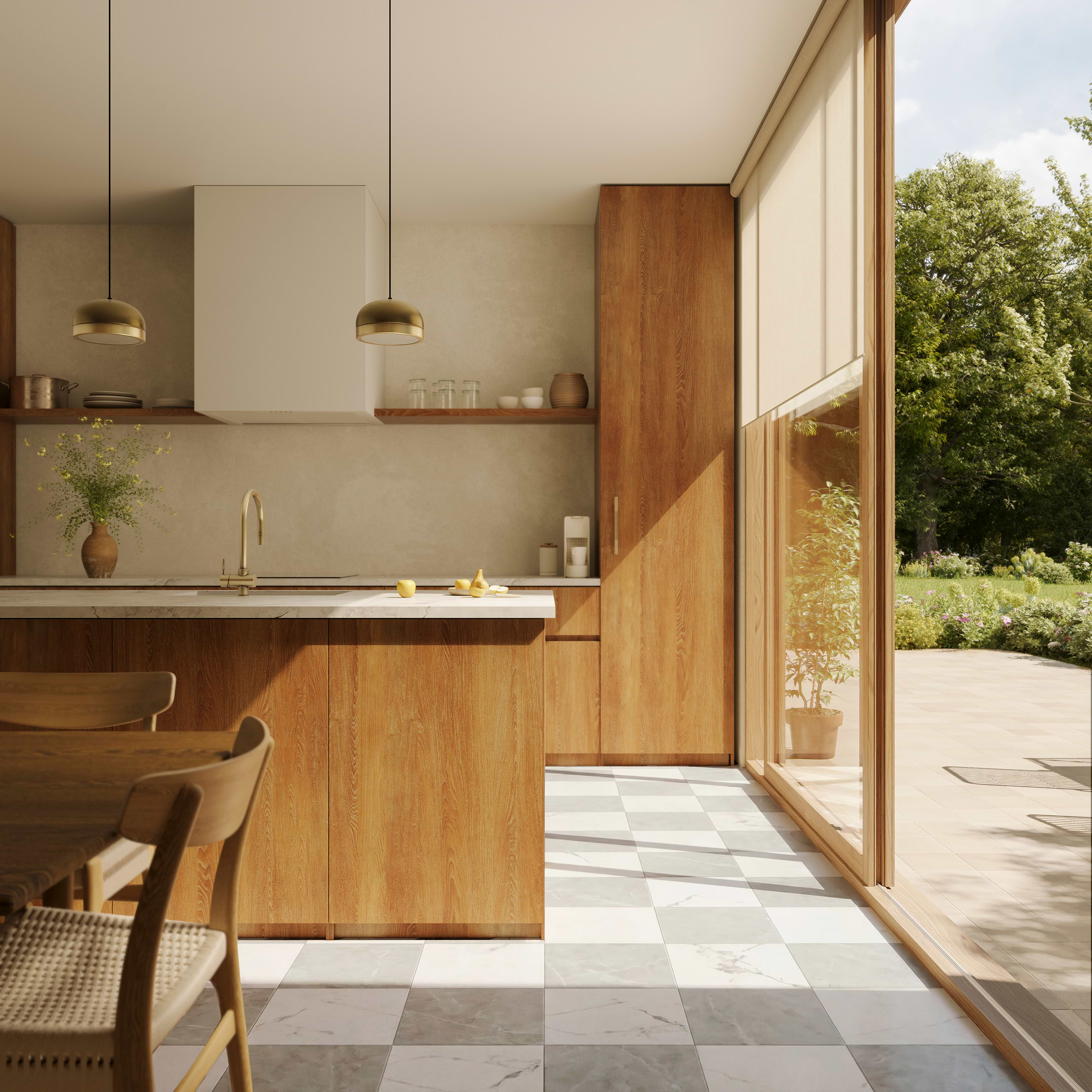
Few combinations are as enduring as black and white. Whether checkerboard, geometric, or mosaic, this pairing offers instant character without feeling trend-driven. Checkerboard layouts in particular are seeing a strong revival, often scaled up in larger tile formats for a cleaner, more updated feel. It’s a great way to add personality without committing to bold color.
Perfect for: Classic kitchens, European-inspired spaces, or statement floors.
Patterned Kitchen Floor Tiles
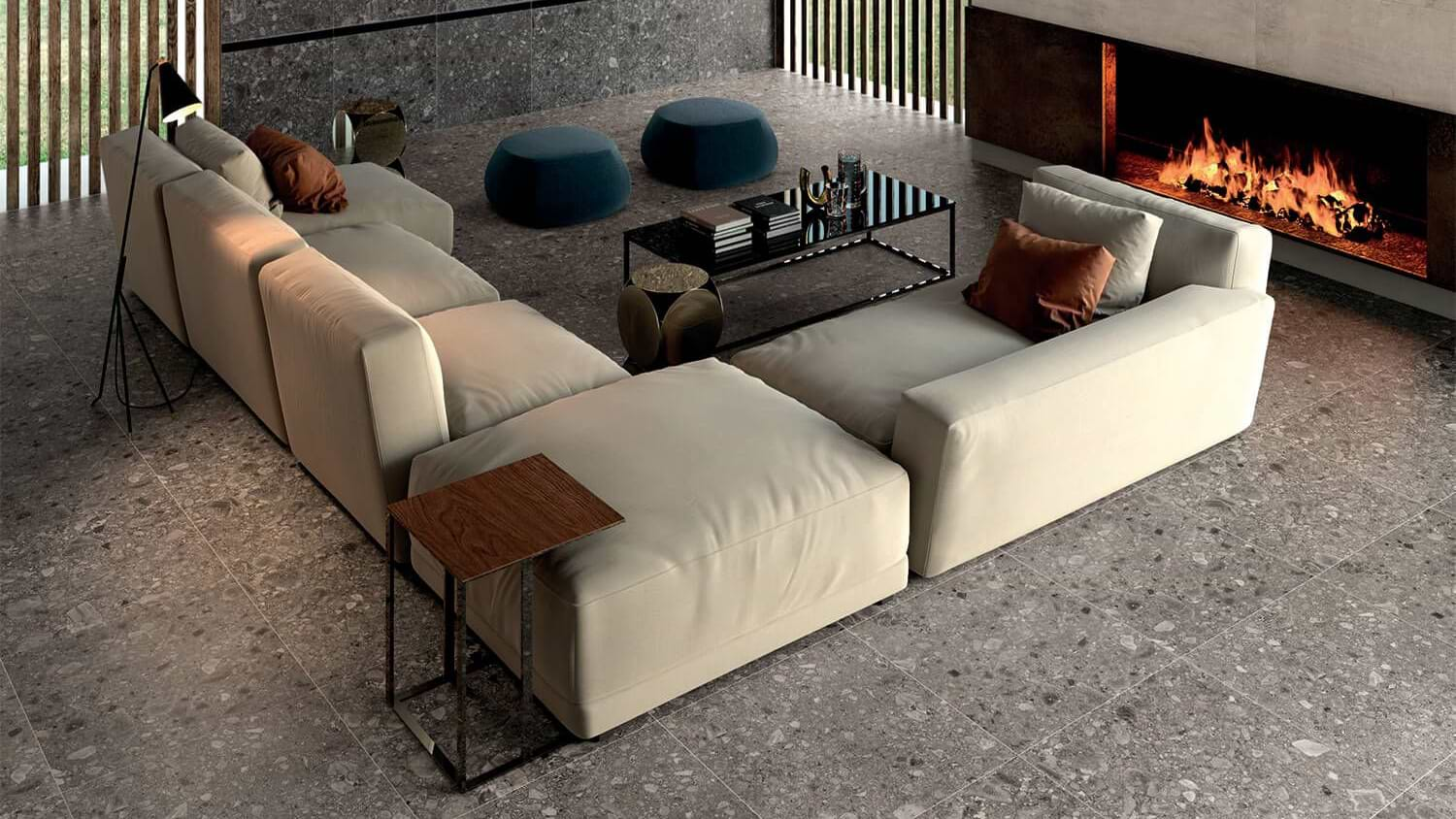
Patterned tiles bring personality and movement underfoot—think terrazzo floors with their signature speckled composition and layered color variation. This material introduces depth and visual rhythm through its multi-tonal stone chips, making it a strong choice for kitchens seeking character and texture, working beautifully in both traditional and contemporary kitchens.[MM1]
Perfect for: Eclectic kitchens, renovations needing a focal point, or compact spaces that benefit from visual interest.
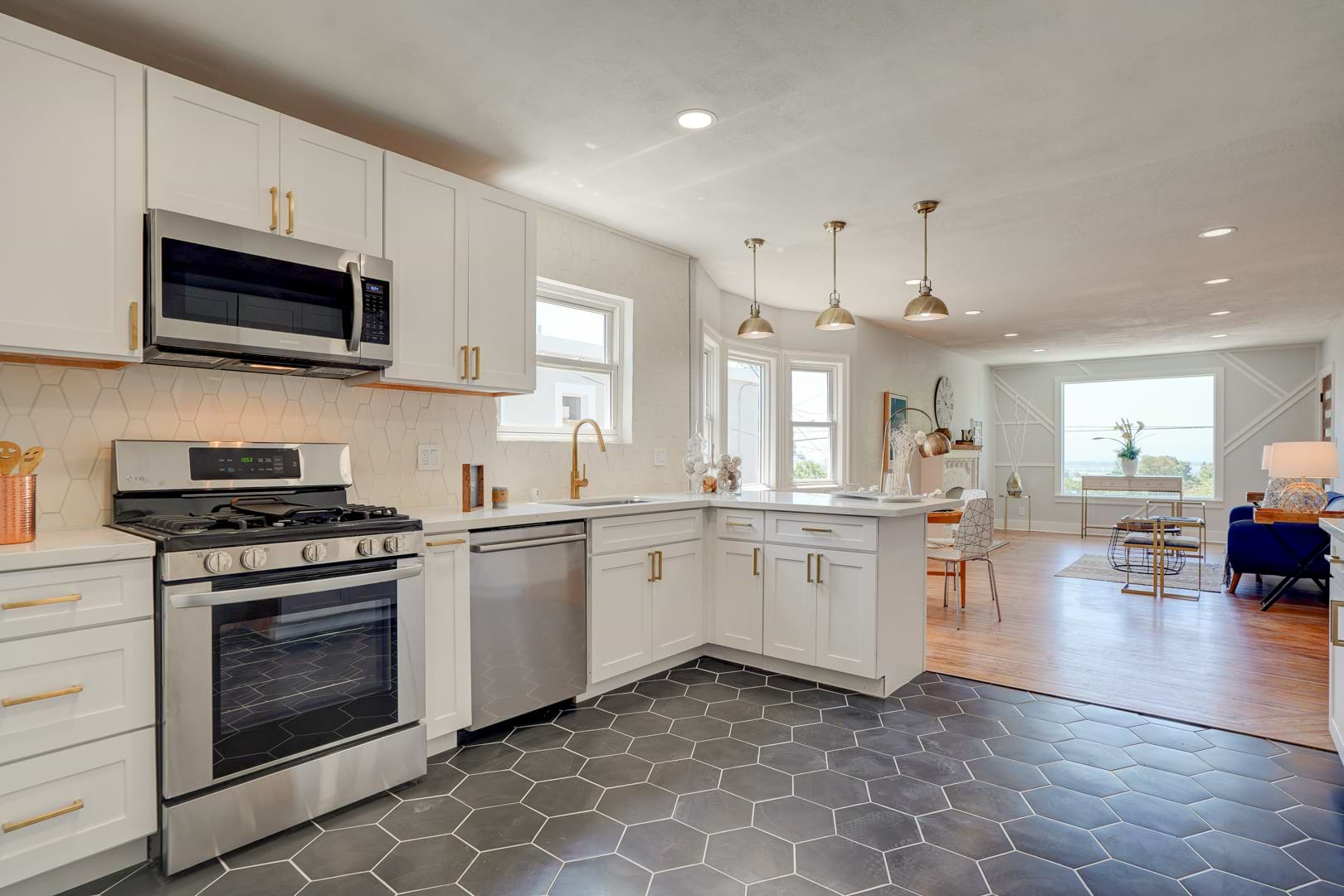
Hexagon Kitchen Floor Tiles
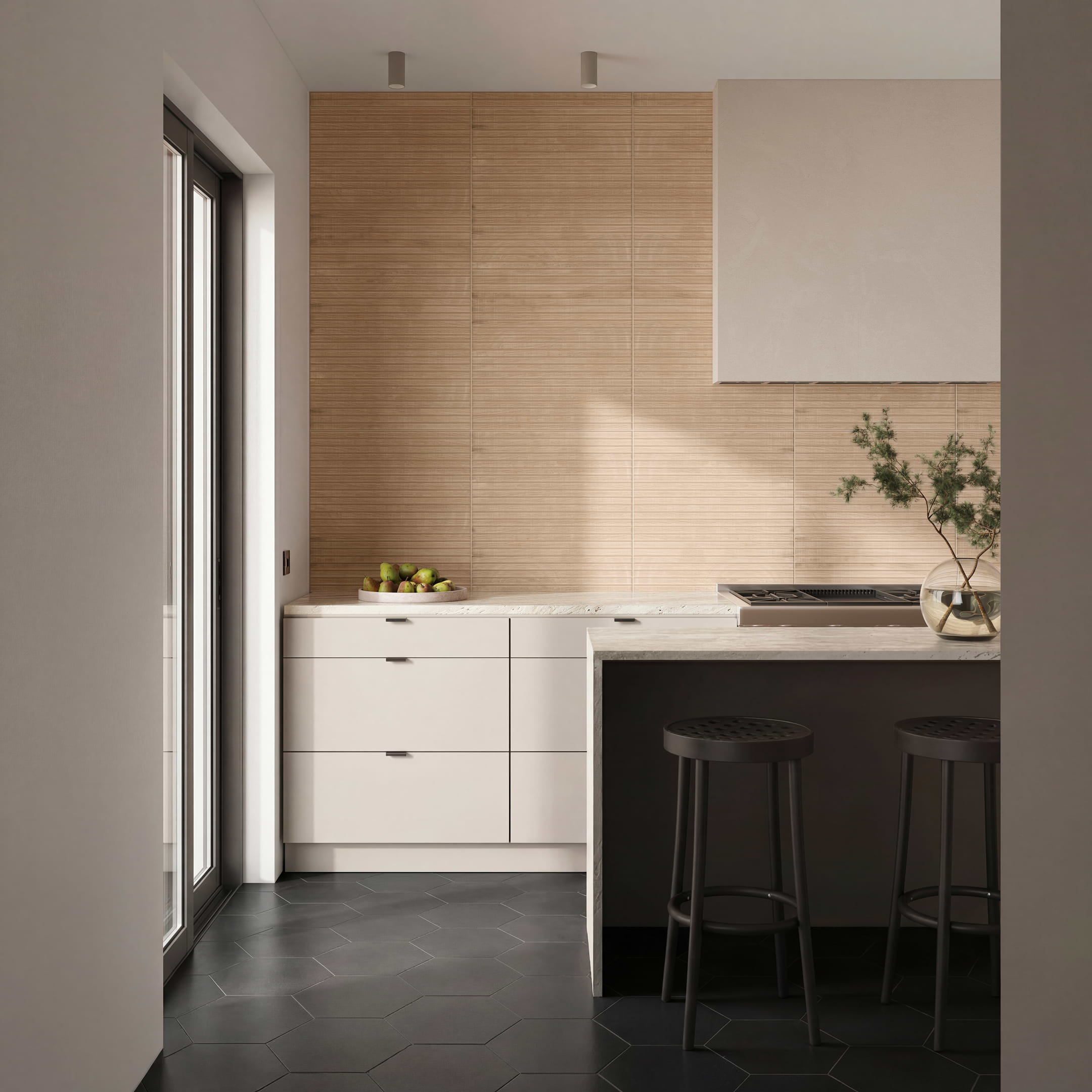
Hex tiles strike a balance between classic and contemporary. They work beautifully in neutral palettes or bold colorways and add subtle geometry without overwhelming the space. Larger hex formats and tonal grout pairings are especially popular, delivering shape and texture while keeping the overall look refined.
Perfect for: Modern kitchens, minimalist designs, or layered neutral schemes.
Encaustic-Look Kitchen Floor Tiles
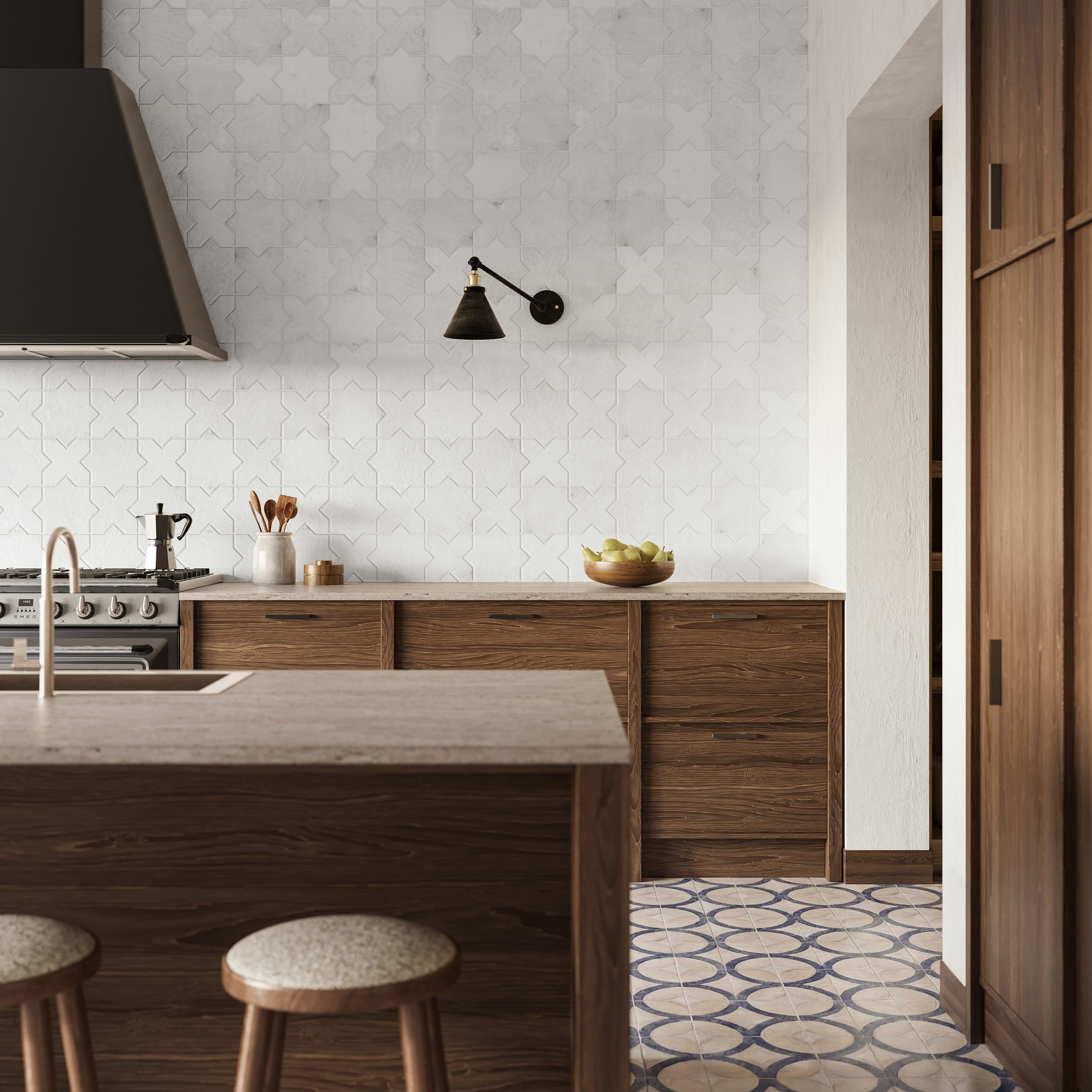
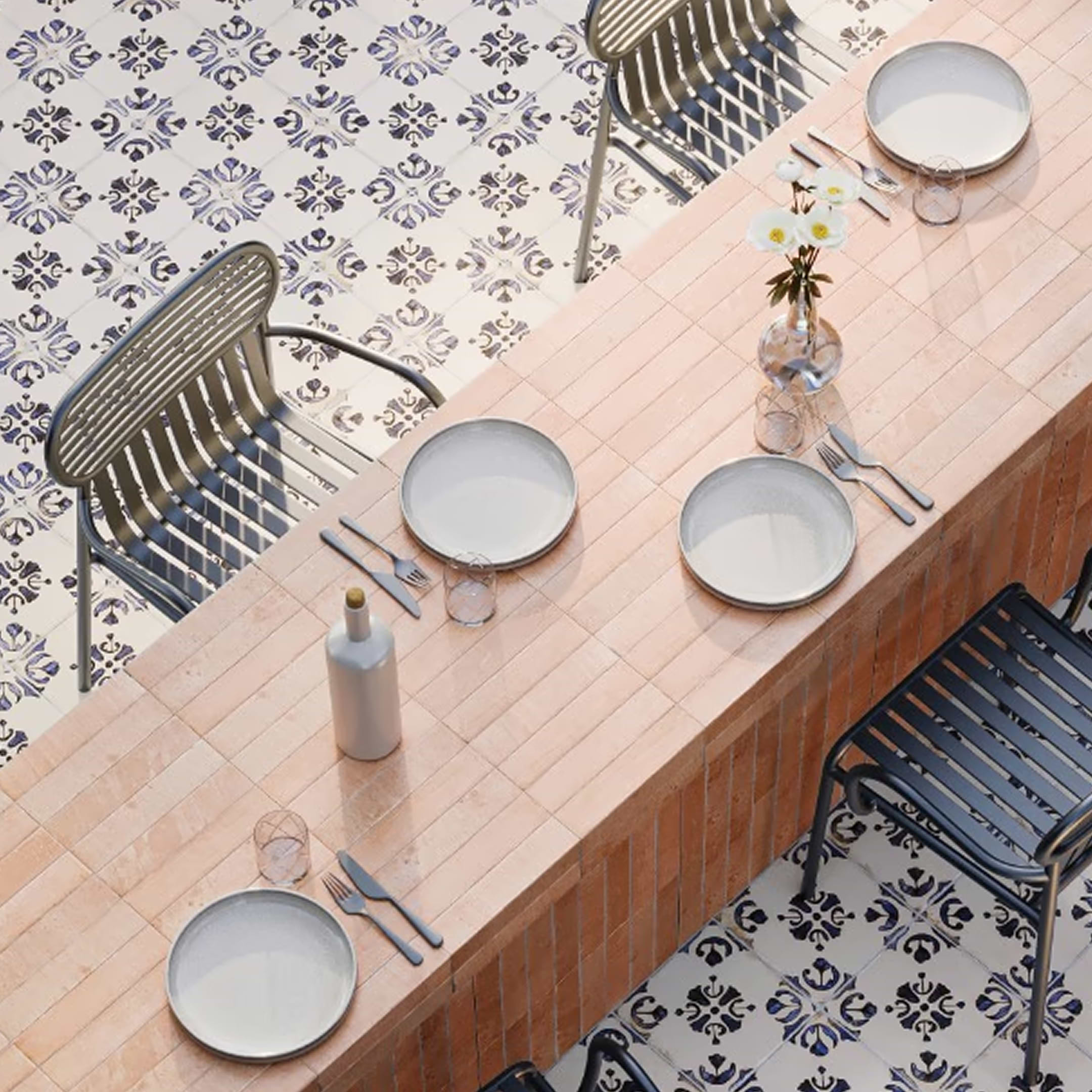
Encaustic-inspired porcelain tiles mimic traditional cement designs but offer easier maintenance and improved durability. They’re ideal as a feature floor or for defining zones in open kitchens. Designers are embracing these heritage-inspired patterns to introduce warmth and character while still maintaining a cohesive, contemporary feel.
Perfect for: Design-forward homes, Mediterranean or vintage-inspired interiors.
Large-Format Neutral Kitchen Floor Tiles
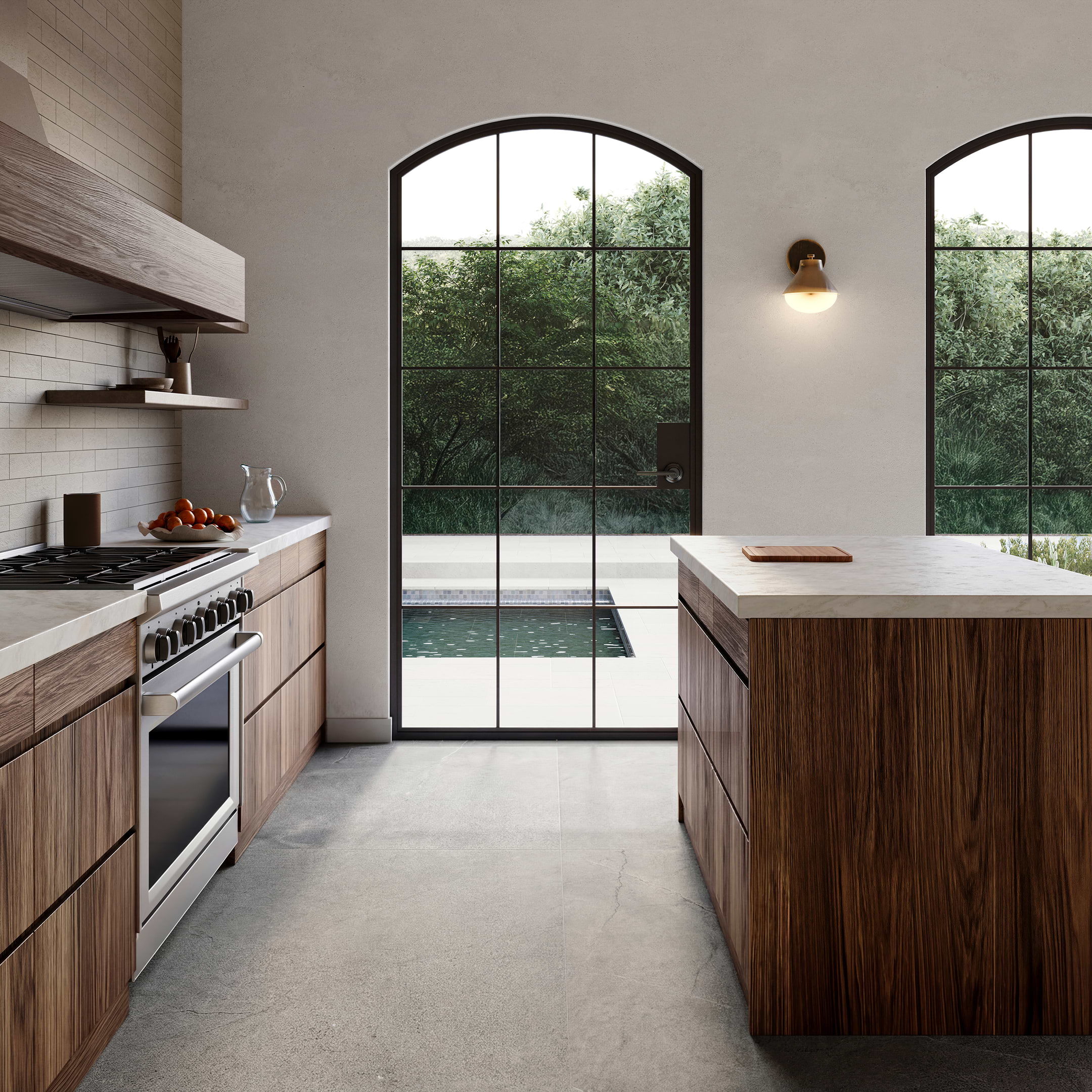
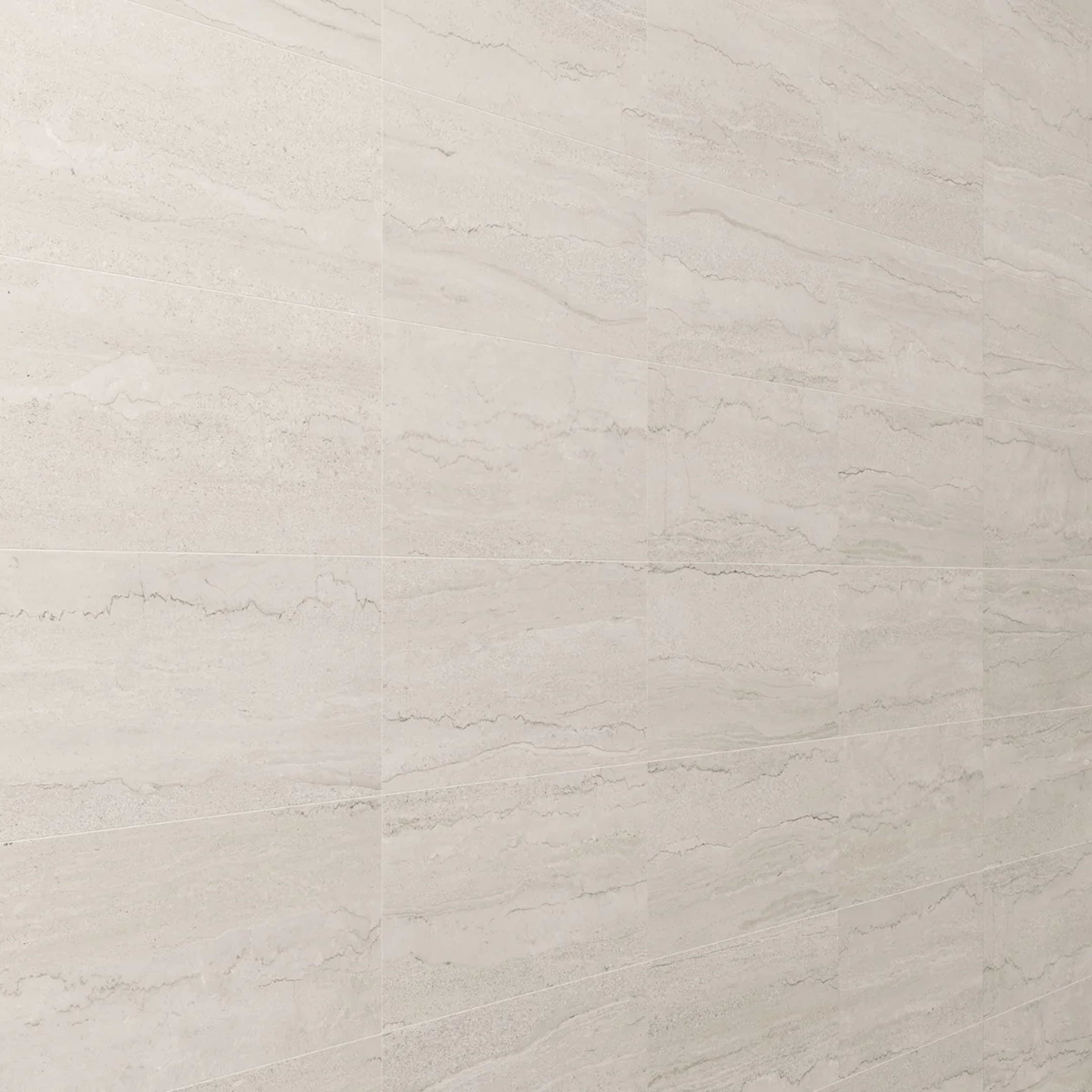
Large-Format porcelain tiles in warm neutrals are one of the strongest current directions in kitchen flooring. Oversized tiles minimize grout lines, creating a cleaner, more expansive look—especially in open-concept layouts. Soft limestone-inspired beiges, warm grays, and subtle stone visuals are favored over stark whites or cool tones, helping kitchens feel layered and lived-in rather than clinical.
Perfect for: Modern kitchens, minimalist designs, or layered neutral palettes.
Green Kitchen Floor Tiles
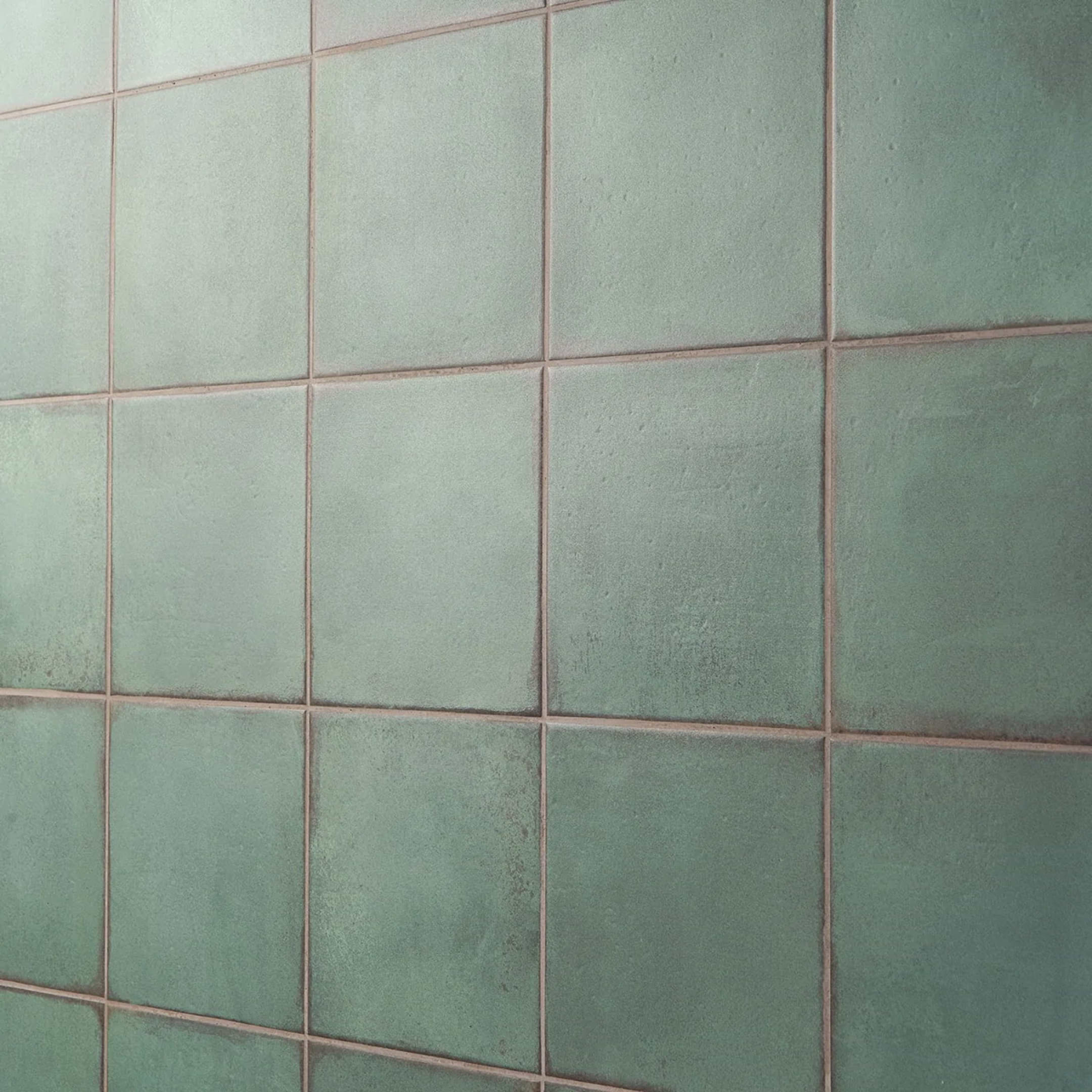
Green tile brings an organic, grounding quality to kitchens. From sage to emerald, it complements wood finishes and natural stone beautifully. Today’s preference leans toward muted, earthy greens and olive undertones rather than saturated jewel tones, reflecting the broader shift toward nature-inspired interiors.
Perfect for: Biophilic designs, warm neutrals, and contemporary organic spaces.
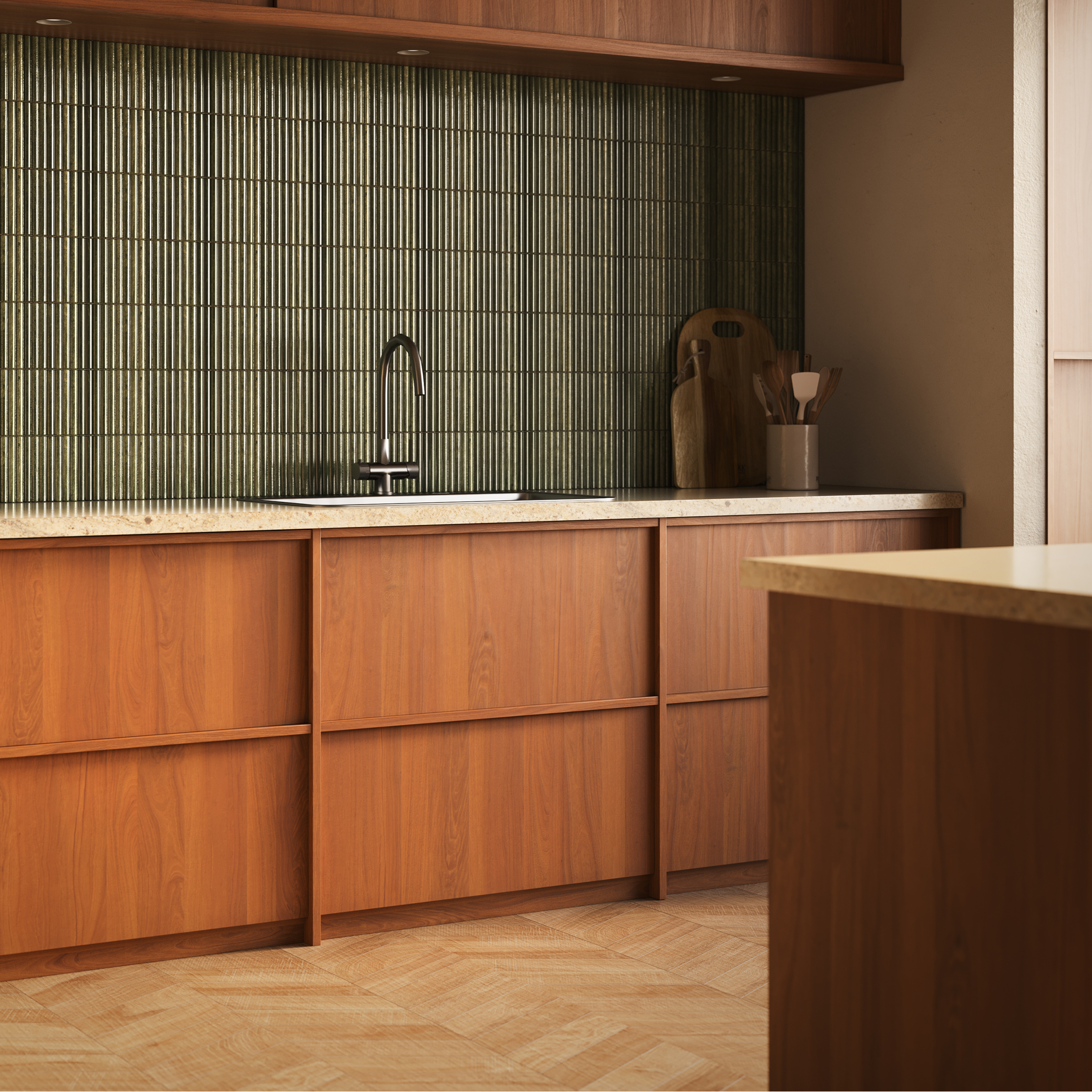
Wood-Look Kitchen Floor Tiles
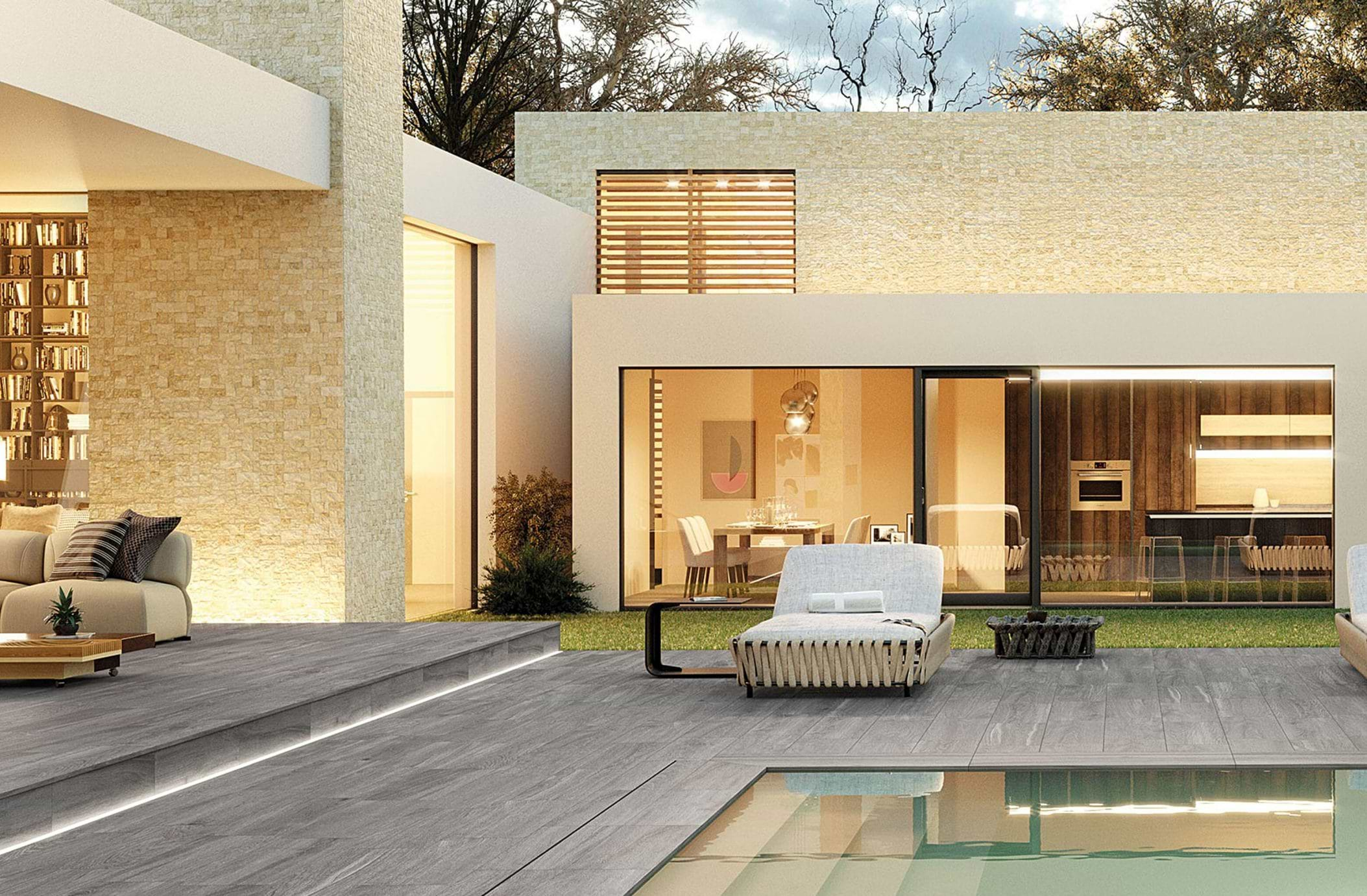
Wood-look porcelain combines the warmth of hardwood with the performance of tile—water resistance, scratch resistance, and easy maintenance. It’s one of the most practical solutions for clients who love natural materials but need kitchen-ready durability. Current preferences lean toward lighter oak-inspired tones and wider plank visuals, creating a relaxed, elevated feel that works well in open-plan homes.
Perfect for: Transitional kitchens, family homes, open-plan layouts.
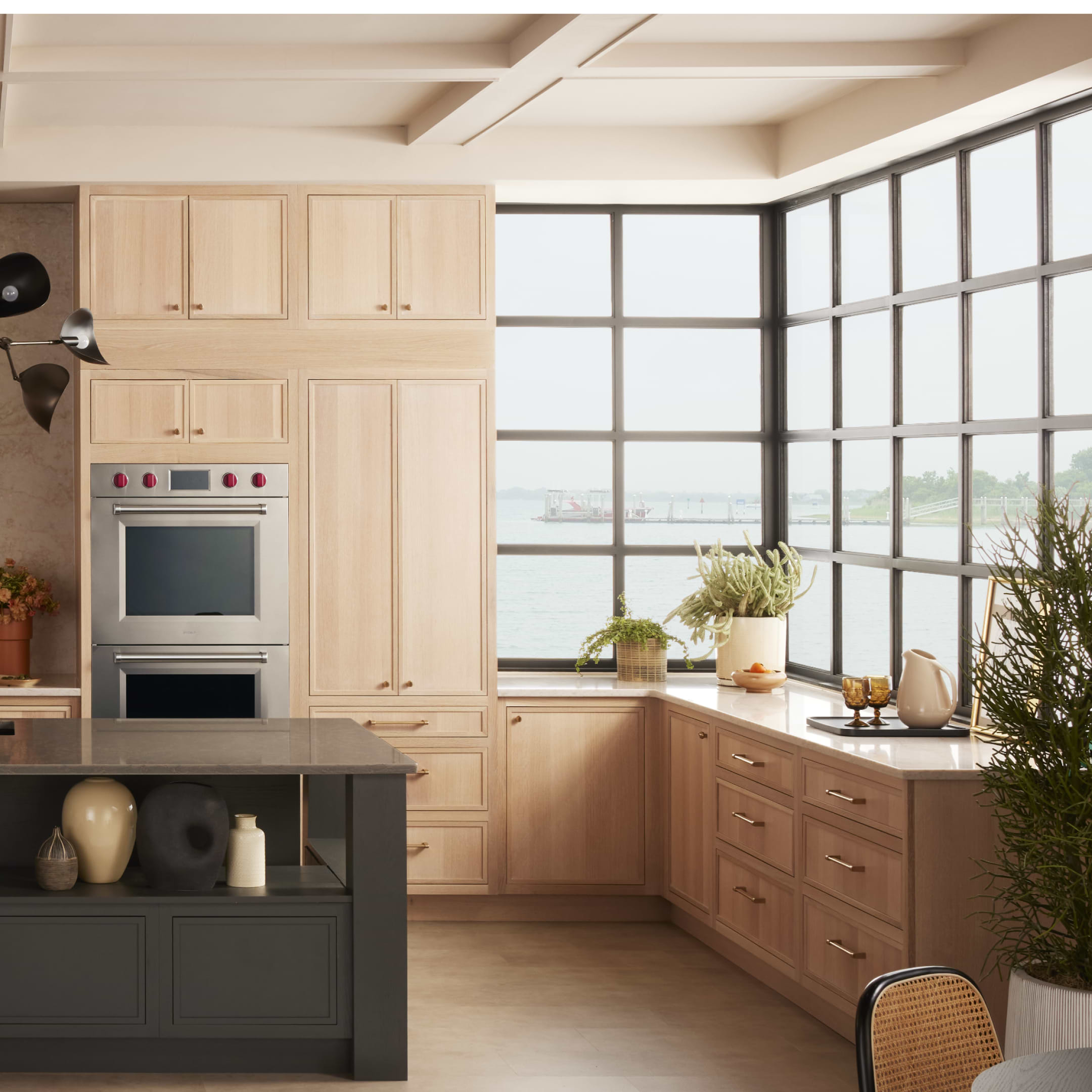
Best Vinyl Tiles for Kitchen Floors
Luxury vinyl tile (LVT) offers comfort, affordability, and fast installation. Modern LVT offers impressive durability and comfort underfoot, making it a practical, stylish choice for busy kitchens.
Best for: Quick transformations, versatile living spaces, and stylish updates on a practical timeline.
FAQ: Common Kitchen Floor Tile Questions
What type of floor tile is best for a kitchen?
Porcelain tile offers the best balance of durability, moisture resistance, and design flexibility.
Is porcelain or ceramic better for kitchens?
Porcelain is more durable and water-resistant, making it ideal for high-traffic kitchens.
Should kitchen floor tiles be matte or glossy?
Matte finishes provide better slip resistance and hide wear more effectively.
Should kitchen floors be lighter or darker than countertops?
Either works—contrast often looks more intentional. Match undertones for cohesion.
Are vinyl tiles good for kitchens?
Yes, for light to moderate use. Porcelain remains the most durable option.
What tile lasts the longest?
Porcelain tile, when properly installed, can last decades.
Related Articles
Explore Our
Tilefinder